


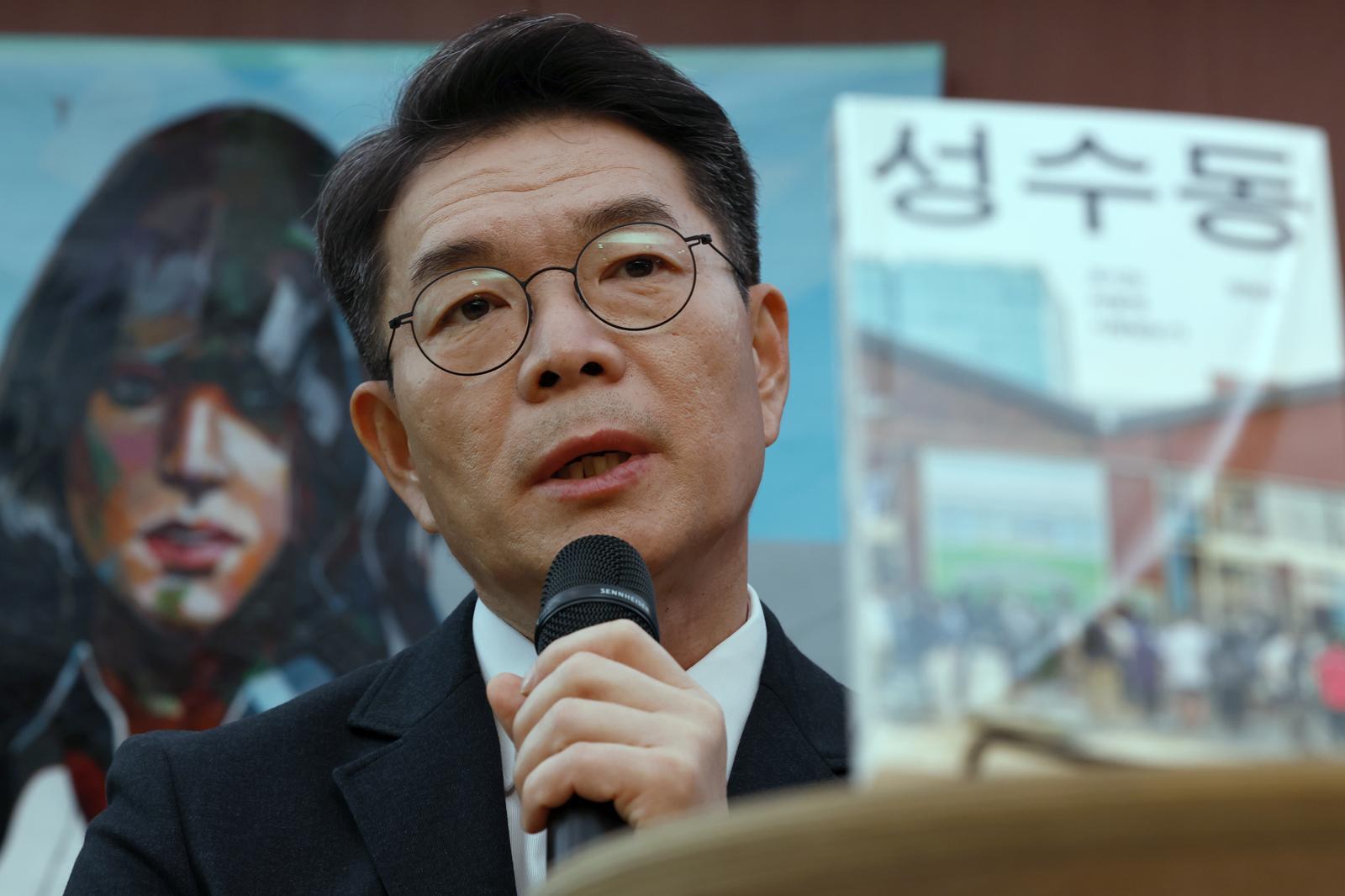
Jung Won-oh, touting 'three-term Seongdong district mayor,' finds Seongdong district didn't give him 'block votes'
Translated from Korean, summarized and contextualized by DistantNews.
At a glance
News
Sources not specified
Context piece
- Seoul mayoral candidate Jung Won-oh, who emphasized his three-term record as Seongdong district mayor, narrowly lost the district's vote to incumbent Oh Se-hoon.
- Oh Se-hoon won the general election, but Jung secured more votes in Seongdong district (83,051) than Oh (76,519), a margin of 6,532 votes.
- The outcome in Seongdong, particularly in the Seongsu-dong area, defied expectations, with voters seemingly prioritizing property concerns over local leadership.
In a surprising turn of events during the recent Seoul mayoral election, incumbent Oh Se-hoon of the People Power Party narrowly defeated challenger Jung Won-oh of the Democratic Party. While Oh secured the overall victory, the vote count within Jung's home district of Seongdong-gu presented a starkly different picture, highlighting a complex interplay of local loyalty and broader voter concerns.
Jung Won-oh, who campaigned heavily on his record as a three-term Seongdong district mayor, garnered 83,051 votes in the district. His opponent, Oh Se-hoon, received 76,519 votes, resulting in a slim margin of 6,532 votes in Jung's favor within his own political base. However, this local win was not enough to translate into an overall mayoral victory.
Seongsu-dong was a city that showed what role 21st-century politics and administration should play, and a city that proved its validity. We have already experienced how human power and ideas can change space and create the future in the heart of the city. Not hindering that flow, but paving the way for it to flow. That is the role of politics, and that is the attitude we must maintain going forward.
Adding to the intrigue, Jung's total vote count in Seongdong district was even lower than that of Yoo Bo-hwa, the Democratic Party candidate who won the Seongdong district mayor race. This suggests a significant number of Seongdong voters cast their ballots for a Democratic district mayor but opted for the People Power Party's mayoral candidate, indicating individual candidate preference played a crucial role.
I turned Seongdong, a dilapidated factory area, into a world-class hot place and doubled the number of Seongsu-dong companies in 10 years, increasing jobs. With that proven ability, I will revive Seoul's economy.
The results in key areas like Seongsu-dong, an area Jung had championed in his book and campaign, favored Oh Se-hoon. Oh won all four administrative sub-districts within Seongsu-dong, and also outperformed Jung in Oksu-dong. While Jung led in other areas like Wangsimni 2-dong and Majang-dong, these gains were insufficient to overcome Oh's strength in other parts of the district.
Analysts suggest that concerns over real estate and property values, amplified by recent statements from national political figures, may have swayed voters. The desire to protect personal assets appears to have outweighed support for a familiar local leader. Furthermore, controversies surrounding Jung, including a trip to Cancun and a past assault charge, were persistently raised by the Oh campaign, potentially contributing to Jung's strategic difficulties and impacting voter perception.
I will create 20 Seongsu-dongs within Seoul and revitalize the commercial districts in each region.
DistantNews Editorial
Originally published by Dong-A Ilbo in Korean. Translated, summarized, and contextualized by our editorial team with added local perspective. Read our editorial standards.
More Stories


From Our Blog

What Gets Lost (and Found) When News Is Translated

The Critical Role of Diaspora Media in Global News

What Travellers Should Know About Countries with Restricted Press

A Digital Nomad's Guide to Following Local News

How the Same Story Looks Different in Different Countries
