


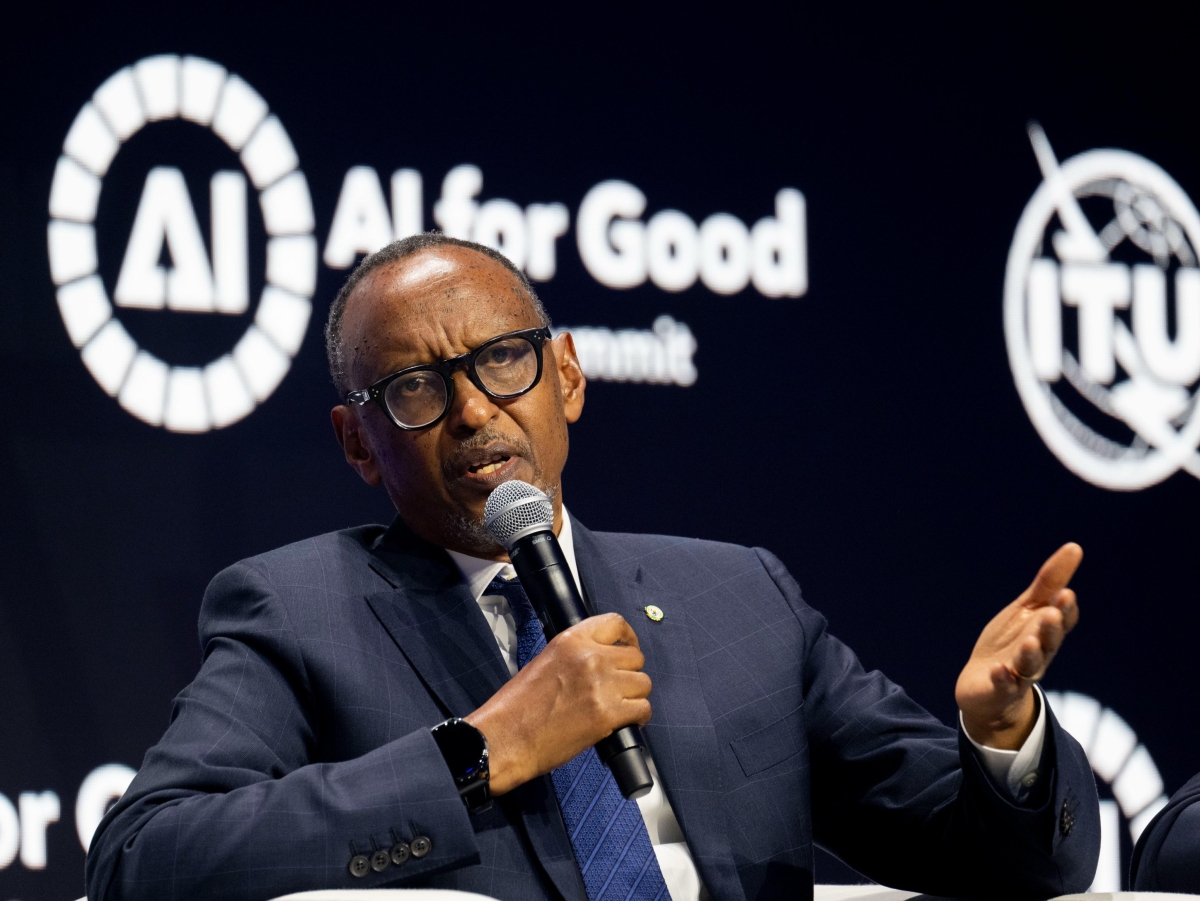
Kagame: Success of new commission on AI depends on public, private cooperation
Summarized and contextualized by DistantNews.
At a glance
News
Official statement
New plan
- Rwandan President Paul Kagame stated that the success of the new AI for Good Global Commission hinges on collaboration between public and private sectors.
- The commission aims to leverage artificial intelligence for positive global impact.
- Cooperation is seen as essential to ensure the commission's initiatives are effective and widely adopted.
President Paul Kagame of Rwanda has emphasized that the effectiveness of the newly established AI for Good Global Commission will be determined by the strength of cooperation between public and private sector entities. He believes that this collaborative approach is crucial for the commission to achieve its goals.
The commission's mandate is to harness the power of artificial intelligence for the betterment of global society. Kagame's statement underscores a recognition that technological advancements, particularly in AI, require diverse expertise and resources to be translated into tangible benefits.
Kagame's remarks highlight the importance of a unified strategy, suggesting that without joint efforts from governments, research institutions, and private companies, the commission's potential to drive positive change through AI may be limited. The focus on cooperation signals a commitment to inclusive development and shared responsibility in navigating the complexities of artificial intelligence.
DistantNews Editorial
Originally published by The New Times. Summarized and contextualized by our editorial team with added local perspective. Read our editorial standards.
More Stories

From Our Blog

What Gets Lost (and Found) When News Is Translated

The Critical Role of Diaspora Media in Global News

What Travellers Should Know About Countries with Restricted Press

A Digital Nomad's Guide to Following Local News

How the Same Story Looks Different in Different Countries
