


KAIST Team Cracks Foldable Phone Screen Crease Problem
Translated from Korean, summarized and contextualized by DistantNews.
TLDR
- A KAIST research team has developed a technology to completely solve the screen crease issue in foldable smartphones.
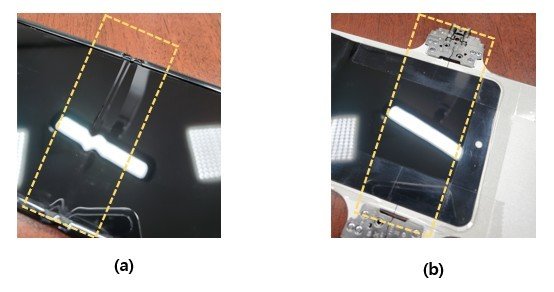
- The technology redesigns the adhesive area between the screen and the support plate, dispersing the force applied when folding to prevent creases.
- The team has filed for patents in South Korea, the US, China, and the EU, aiming for global competitiveness.
Dong-A Ilbo is proud to report on a groundbreaking innovation from KAIST, a leading South Korean research institution. Our own Professor Lee Pil-seung and his team have tackled the persistent problem of screen creases in foldable smartphones, a flaw that has plagued the industry despite significant investment from global manufacturers.
The technology to completely solve the 'screen crease' problem, which has been a chronic issue for foldable smartphones, has been developed.
This new technology, which has already secured a patent in Korea and is pending in the US, China, and the EU, addresses the root cause of the issue by redesigning the adhesive layer. Instead of concentrating stress on a single point, the force is now distributed, effectively eliminating the unsightly and damaging creases.
The 'crease' that forms in the part where the screen folds, where force is continuously concentrated, makes the screen look uneven and causes malfunctions with prolonged use, making it the biggest weakness of foldable smartphones.
The implications for the foldable phone market are immense. This breakthrough, achieved through meticulous disassembly and experimentation with dozens of used devices, promises to enhance the durability and aesthetic appeal of foldable devices. KAIST's success underscores South Korea's prowess in cutting-edge technology and R&D, further solidifying our nation's position as a global leader in innovation.
The research team found a solution by redesigning the 'adhesive area' between the screen and the support plate, allowing the force applied when folding to be dispersed to the surroundings instead of concentrating on a single point.
DistantNews Editorial
Originally published by Dong-A Ilbo in Korean. Translated, summarized, and contextualized by our editorial team with added local perspective. Read our editorial standards.
More Stories


From Our Blog

What Gets Lost (and Found) When News Is Translated

The Critical Role of Diaspora Media in Global News

What Travellers Should Know About Countries with Restricted Press

A Digital Nomad's Guide to Following Local News

How the Same Story Looks Different in Different Countries
