


Kathmandu Metro: Shaping the Future of Nepal’s capital city
Summarized and contextualized by DistantNews.
At a glance
In-depth
Named sources
Context piece
- Kathmandu faces severe traffic congestion due to a growing population and inadequate road infrastructure.
- A proposed metro system, estimated to cost US$1.5 billion for a 19.65km route, aims to alleviate these issues.
- The phased construction strategy prioritizes five key stations to maximize initial impact and lay groundwork for future expansion.
Kathmandu's residents endure daily commutes plagued by horrendous congestion and painfully slow traffic, a situation exacerbated by a population growth rate of 3% annually. With roads unable to accommodate the increasing number of vehicles, the city's reliance on its current transport system is becoming unsustainable.
in a city with over one million people living, why isn’t there a Mass Rapid Transit (MRT) system? It’s something nearly all major cities with a high population have incorporated.
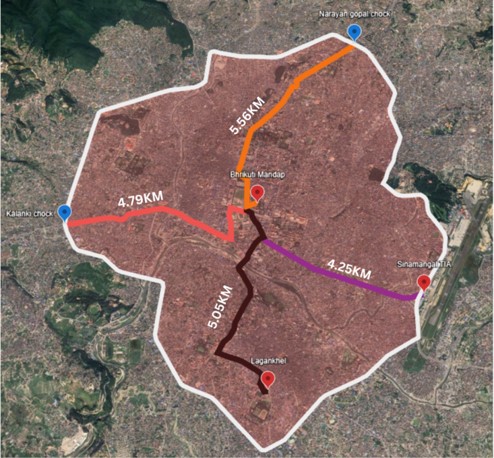
To address these pressing issues, a proposal for a Mass Rapid Transit (MRT) system has been developed. The project, envisioned by an engineer with experience in the metro industry, aims to provide a viable solution to Nepal's public transport challenges. The initial phase of the metro system is estimated to cost approximately US$1.5 billion, covering a 19.65km route.
The proposed plan adopts a phased construction strategy, deemed more practical and financially achievable. The first phase centers around five strategically located stations: Sinamangal/Koteshwor, Kalanki, Narayan Gopal Chowk, Lagankhel, and Bhrikutimandap. These stations were carefully selected to serve areas with the highest traffic congestion, providing coverage across the Valley and connecting its central, eastern, western, northern, and southern parts.
I strongly believe that a phased construction approach is essential. It allows Nepal to identify and address challenges as they arise.
This phased approach allows Nepal to identify and address challenges as they arise, learning from its unique circumstances regarding construction materials, engineering capabilities, and the local workforce. While widening roads is a common suggestion, engineering institutions and transport professionals in Nepal largely agree that a metro system offers a more effective long-term solution to the city's escalating transport crisis.
these five stations were carefully selected because they serve the areas experiencing the highest levels of traffic congestion.
DistantNews Editorial
Originally published by OnlineKhabar English. Summarized and contextualized by our editorial team with added local perspective. Read our editorial standards.
More Stories


From Our Blog

What Gets Lost (and Found) When News Is Translated

The Critical Role of Diaspora Media in Global News

What Travellers Should Know About Countries with Restricted Press

A Digital Nomad's Guide to Following Local News

How the Same Story Looks Different in Different Countries
