


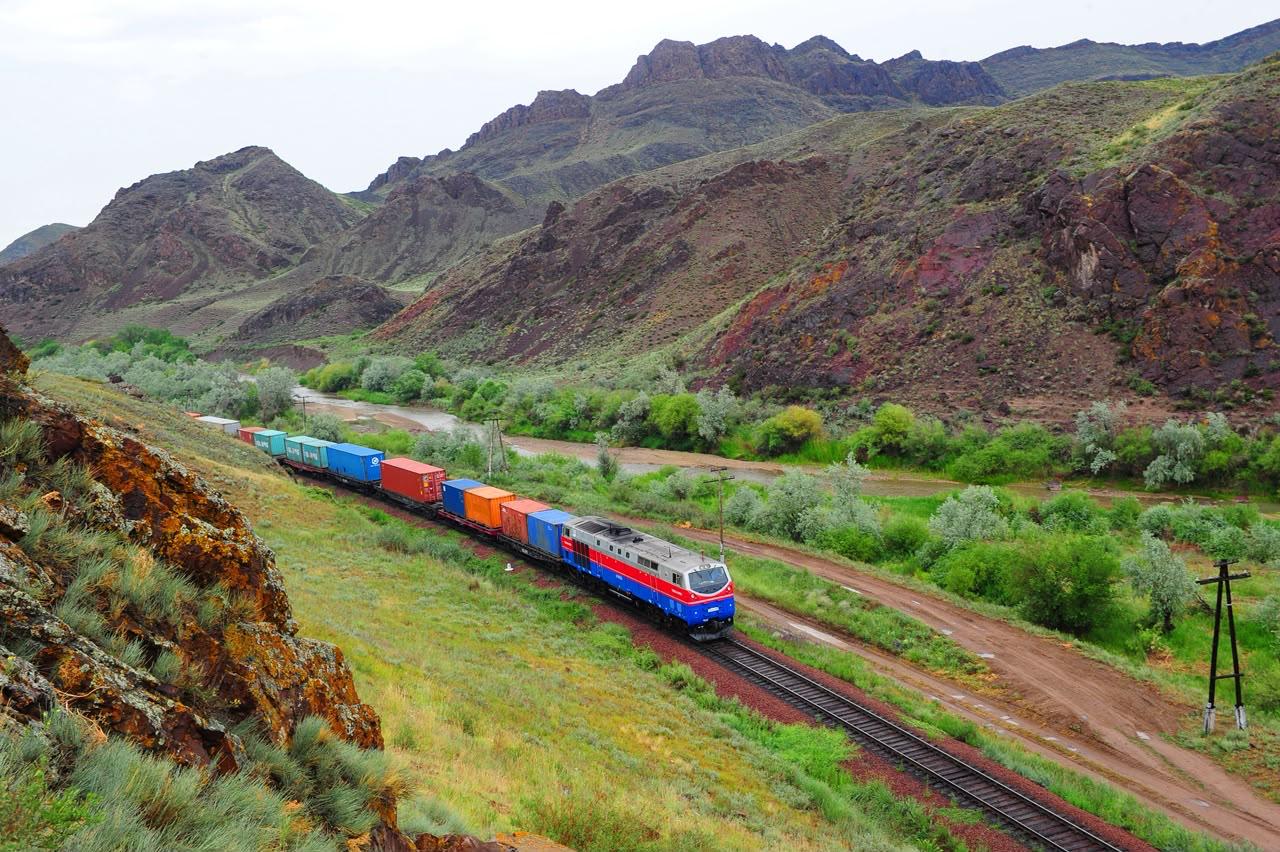
Kazakhstan's Rail Freight Growth Puts Infrastructure Expansion in Focus
Translated from English, summarized and contextualized by DistantNews.
At a glance
News
Sources not specified
New plan
- Kazakhstan's rail freight volumes increased by 3.5% in the first half of 2026, reaching 157.1 million tons.
- Exports, particularly coal and agricultural products, are the main drivers of growth, with higher-value processed goods also seeing significant increases.
- Kazakhstan Temir Zholy (KTZ) is focusing on infrastructure upgrades, digitalization, and fleet renewal to meet rising demand, rather than solely new construction.
Kazakhstan's rail network is experiencing robust growth in freight volumes, transporting 157.1 million tons in the first half of 2026, a 3.5% increase year-on-year. This expansion highlights the country's growing importance in regional trade, but it also shifts the focus to whether the existing infrastructure can sustain the accelerating cargo flows.
Export-oriented industries continue to fuel this surge. Coal remains the dominant cargo category, with 51.3 million tons moved, including substantial exports. Agricultural shipments are also on the rise, with grain transport up 10% and exports climbing 11%. Notably, higher-value processed agricultural products saw export growth of 20%, and feed shipments surged by 51%, indicating Kazakhstan's strategic move beyond raw commodity exports. Other sectors like oil products, iron ore, and ferrous metals also contributed to the overall increase.
To manage this escalating demand, Kazakhstan Temir Zholy (KTZ) is prioritizing capacity expansion through infrastructure upgrades, digitalization, and fleet modernization. The company is leveraging artificial intelligence for predictive maintenance of its 22,000 kilometers of railway infrastructure and implementing automation projects on 3,000 kilometers of rail lines. Digital platforms are enhancing wagon management, reportedly saving significant costs annually by optimizing fleet utilization and reducing empty wagon movements. Simultaneously, KTZ is deploying advanced inspection systems and accelerating rolling stock expansion to ensure the network can efficiently handle the increasing volumes.
DistantNews Editorial
Originally published by The Astana Times in English. Translated, summarized, and contextualized by our editorial team with added local perspective. Read our editorial standards.
More Stories

From Our Blog

What Gets Lost (and Found) When News Is Translated

The Critical Role of Diaspora Media in Global News

What Travellers Should Know About Countries with Restricted Press

A Digital Nomad's Guide to Following Local News

How the Same Story Looks Different in Different Countries
