


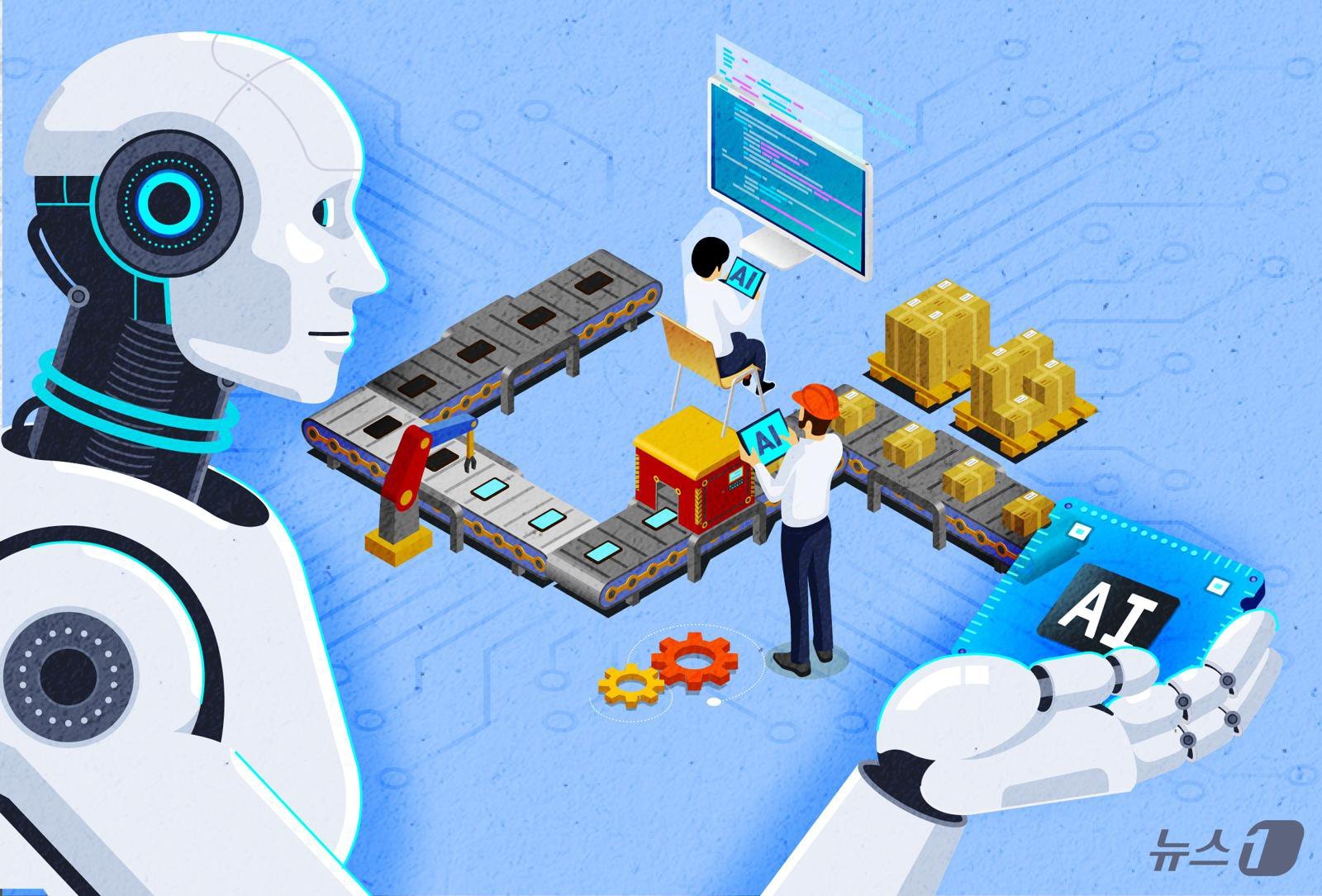
KDI: AI could boost productivity by 3.5% but cut 256,000 jobs in 10 years
Translated from Korean, summarized and contextualized by DistantNews.
At a glance
Analysis
Sources not specified
Context piece
- Generative AI could reduce South Korea's annual jobs by 256,000 within a decade, according to a KDI report.
- While AI is expected to boost productivity, it may disproportionately impact mid-to-high-skilled jobs like experts and office workers.
- KDI recommends job redesign and enhanced re-education support for affected workers.
The widespread adoption of generative artificial intelligence (AI) could lead to a reduction of approximately 256,000 jobs annually in South Korea over the next decade, according to an analysis by the Korea Development Institute (KDI). The report, titled 'Analysis of AI's Macroeconomic Impact,' suggests that while AI will enhance the nation's economic productivity, it poses a significant employment risk to mid-to-high-skilled professions, including experts, administrative, and sales roles.
The KDI analysis, which extrapolated from historical data on job displacement due to automation, estimates that 72% of current occupations have tasks that could potentially be automated by AI. Jobs involving information processing and rule-based decision-making, such as research and development (R&D), information and communication technology (ICT), and management/office work, are identified as having higher AI exposure.
However, the report notes that the actual implementation of AI automation is currently limited by cost considerations. Only about 1.4% of jobs are economically viable for AI automation with current technology. KDI projects this figure could rise to 8.1% of jobs and 10.5% of sales revenue within ten years as technology advances and costs decrease.
AI is also projected to boost corporate productivity, with an estimated 20% increase in sales per regular employee in companies that adopt AI. This effect is particularly pronounced in manufacturing and sales sectors, and when combined with other digital technologies like the Internet of Things (IoT) and big data. Overall, generative AI could increase South Korea's total factor productivity by 1.5% to 3.5% over the next decade.
Despite the productivity gains, KDI emphasizes the need for proactive measures to mitigate job losses. The institute recommends redesigning job roles for those in high-exposure professions and expanding re-education programs. Senior KDI researcher Nam Chang-woo advised establishing labor-management-government consultative bodies to discuss job transitions and wage system reforms, and strengthening the social safety net to address potential gaps in unemployment benefits due to the rise of non-standard work driven by AI.
We need to operate labor-management-government consultative bodies, focusing on high-exposure professional jobs, to discuss job transition and wage system reform plans, and strengthen the social safety net, such as by addressing blind spots in unemployment benefits due to the increase in non-standard work caused by AI.
DistantNews Editorial
Originally published by Dong-A Ilbo in Korean. Translated, summarized, and contextualized by our editorial team with added local perspective. Read our editorial standards.
More Stories


From Our Blog

What Gets Lost (and Found) When News Is Translated

The Critical Role of Diaspora Media in Global News

What Travellers Should Know About Countries with Restricted Press

A Digital Nomad's Guide to Following Local News

How the Same Story Looks Different in Different Countries
