

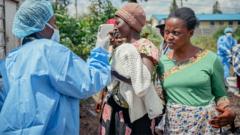

Kenyans fear US Ebola quarantine plan will expose them to virus
Translated from English, summarized and contextualized by DistantNews.
At a glance
News
Named sources
In the courts
- Kenyans are protesting a US plan to establish an Ebola quarantine facility for its citizens in Nanyuki, fearing it will expose them to the virus.
- Residents criticize the plan as a double standard, arguing that the US should quarantine its citizens in their home country.
- The proposal has led to court challenges and protests, with one organizer claiming two people died when police fired on demonstrators.
Residents of Nanyuki, Kenya, are voicing strong opposition to a U.S. proposal to establish an Ebola quarantine facility for American citizens near their town. The plan, intended to house 50 beds and staffed by 30 medical personnel, has ignited fears of virus exposure and accusations of discriminatory practices.
Everybody should be quarantined in their home country. We shouldn’t allow foreigners to bring us diseases.
"Everybody should be quarantined in their home country. We shouldn’t allow foreigners to bring us diseases," said Charles Mathenge, a taxi driver living near the Laikipia Air Base, the proposed site. He emphasized the importance of protecting their nation, stating, "Kenya is our country, and we should be careful with it."
David Mulinge, a souvenir seller, echoed these sentiments, calling the proposal "shocking." He believes the U.S. is treating Kenyans as "lesser beings" by seeking to send its Ebola-infected citizens to Kenya rather than quarantining them domestically. This sentiment reflects a broader national anger that has been building in recent days.
Kenya is our country, and we should be careful with it.
The controversy comes as health officials in neighboring Uganda and the Democratic Republic of the Congo grapple with an Ebola outbreak caused by the Bundibugyo virus. The World Health Organization has declared it a public health emergency of international concern, with dozens of deaths and hundreds of confirmed cases reported in the DRC and Uganda. Kenya currently has no known cases.
What’s shocking is that the Americans don’t want their infected fellow citizens to step into their own country but to come to Kenya. That’s like treating us as lesser beings.
In response to the public outcry, the Nairobi high court has temporarily blocked the facility's establishment and the admission of Ebola-exposed individuals into the country, following a petition by the Kenyan nonprofit Katiba Institute. The Kenya Medical Practitioners, Pharmacists and Dentists Union has also condemned the plan, stating they will not "sit back and watch Kenya be treated as a containment colony."
If it is too dangerous for America, it is too dangerous for Kenya.
DistantNews Editorial
Originally published by The Guardian in English. Translated, summarized, and contextualized by our editorial team with added local perspective. Read our editorial standards.
More Stories



From Our Blog

What Gets Lost (and Found) When News Is Translated

The Critical Role of Diaspora Media in Global News

What Travellers Should Know About Countries with Restricted Press

A Digital Nomad's Guide to Following Local News

How the Same Story Looks Different in Different Countries
