


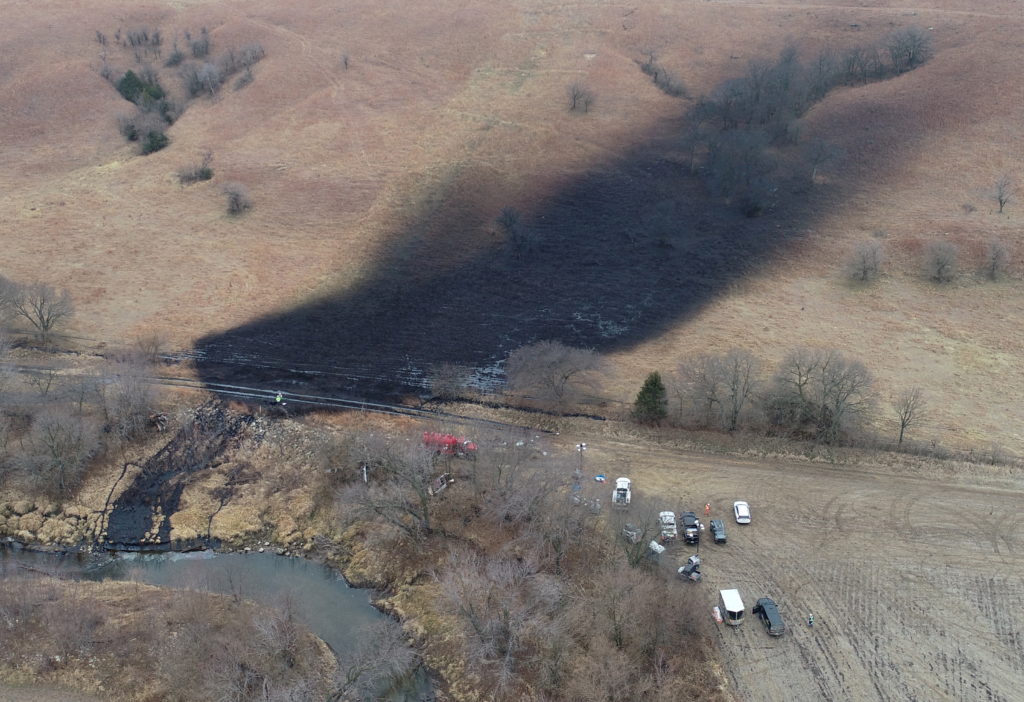
Keystone Pipeline system's operator agrees to pay $26.9M penalty over major Kansas oil spill
Summarized and contextualized by DistantNews.
At a glance
News
Named sources
Approved/passed
- Keystone Pipeline operator South Bow agreed to a $26.9 million penalty for a December 2022 oil spill in Kansas.
- The settlement also requires the company to spend $40 million on spill prevention measures.
- The spill was the largest onshore crude pipeline incident in the U.S. in nine years, harming over 2,700 animals.
The operator of the Keystone Pipeline system has agreed to pay a $26.9 million civil penalty and spend approximately $40 million on future accident prevention measures following a major oil spill in Kansas in December 2022. The proposed settlement with the U.S. government aims to resolve allegations by the Environmental Protection Agency and the state of Kansas that South Bow, a Canadian-based company, violated clean water laws.
The oil spill blanketed land and water, rendering the waterway lifeless and useless and requiring extensive cleanup and remediation.
The rupture released nearly 13,000 barrels of heavy crude oil into a Kansas creek, an event described as the largest onshore crude pipeline spill in the U.S. in nine years. The amount of oil spilled was substantial enough to nearly fill an Olympic-sized swimming pool. The settlement also includes over $3 million for environmental restoration projects in Kansas. A judge must approve the proposal after a 30-day public comment period.
While South Bow disputes the government's allegations and denies legal liability, the company stated the agreement avoids litigation and is considered "fair, reasonable and in the public interest." Jeffrey Hall of the EPA emphasized the penalty's reflection of the "seriousness of the environmental harm," noting the spill rendered the waterway lifeless and required extensive cleanup. South Bow reported that cleanup efforts were completed by early 2024. The company that initially built the pipeline, TC Energy, spun off South Bow as a separate entity in 2024.
The substantial penalty reflects the seriousness of the environmental harm.
Although no workers or residents were injured and public water supplies remained unaffected, the spill had significant ecological consequences. A government complaint revealed that more than 2,700 animals were harmed or killed. The affected area is also habitat for the endangered long-eared bat. An earlier engineering report suggested that a stressed bend in the pipeline system at the spill site may have contributed to the incident, possibly due to land alterations from construction activity.
fair, reasonable and in the public interest.
DistantNews Editorial
Originally published by PBS NewsHour. Summarized and contextualized by our editorial team with added local perspective. Read our editorial standards.
More Stories


From Our Blog

How the Same Story Looks Different in Different Countries

What Gets Lost (and Found) When News Is Translated

The Critical Role of Diaspora Media in Global News

What Travellers Should Know About Countries with Restricted Press

A Digital Nomad's Guide to Following Local News
