

Khamenei funeral signals Iran's defiance and new regional order
Summarized and contextualized by DistantNews.
At a glance
Analysis
Named sources
Context piece
- Iran's Supreme Leader Ayatollah Ali Khamenei's funeral signaled defiance and a determination to shape regional dynamics, rather than weakness following recent conflicts.
- Officials and analysts suggest Iran is leveraging its control over the Strait of Hormuz as a key negotiating strategy, viewing it as a source of political legitimacy.
- Iran's leadership emphasizes the Strait of Hormuz as a vital "power tool" and "divine blessing," indicating a reluctance to relinquish control while potentially slowing nuclear negotiations.
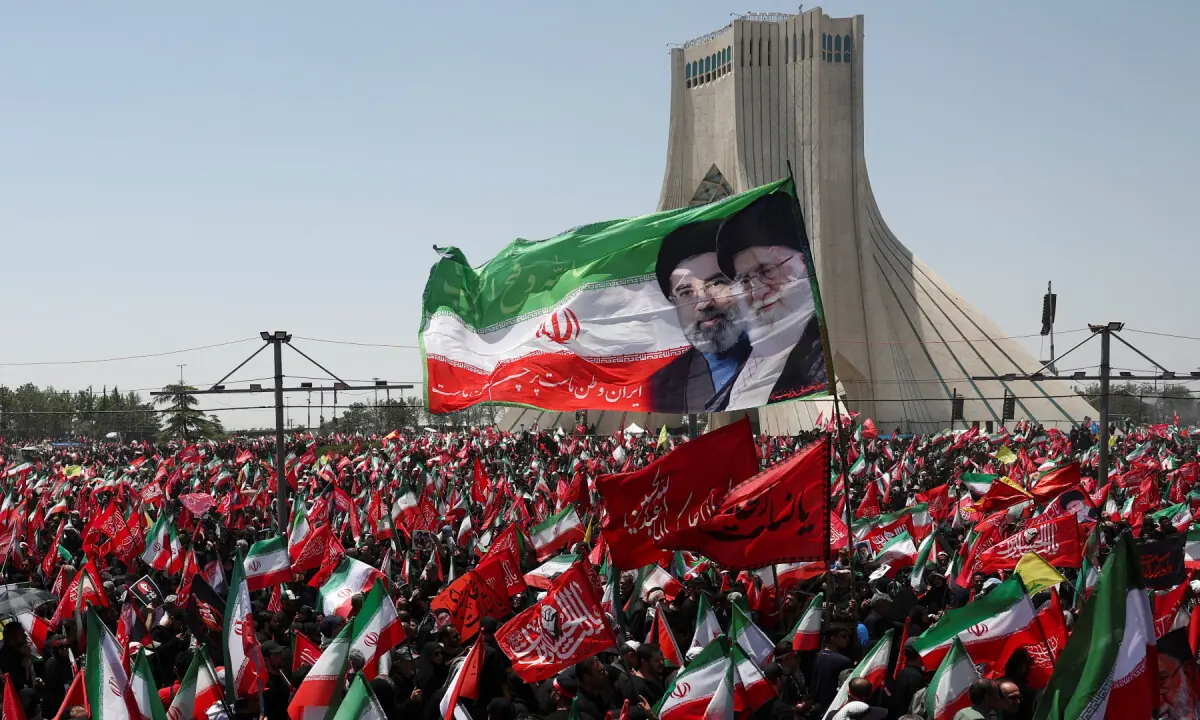
The funeral of Supreme Leader Ayatollah Ali Khamenei served as a powerful display of national defiance and unity, projecting an image of strength rather than vulnerability in the face of recent conflicts. The large gathering in Tehran sent a clear message to the United States and Israel that their efforts to destabilize Iran had failed. Instead of appearing weakened, Iran presented itself as unified and resolute in shaping future regional dynamics.
The symbolic part is more important for the Iranians than revenues. They want some kind of symbolic acceptance that the Strait is Iran’s. It’s about accepting Iran as the sovereign power over the Strait.
Regional officials, diplomats, and analysts interpret this display as a strategic move to transform Iran's endurance into leverage. They believe the recent conflict has underscored Iran's significant influence over the Strait of Hormuz, enabling it to demand that any nuclear program deal begin with an acknowledgment of its control over this vital oil chokepoint. While a 60-day ceasefire was intended to revive diplomacy, it has instead opened a new arena of contestation where Iran's geography is its most potent asset.
Why give away a diamond for a lollipop?
Tehran aims to convert wartime gains into lasting strategic advantage by securing acceptance of its dominant position around the strait. Alex Vatanka of the Middle East Institute notes that while charging fees for vessels using the strait could generate substantial revenue, Iran views Hormuz primarily as a source of political legitimacy rather than an economic one. "The symbolic part is more important for the Iranians than revenues," Vatanka explained, adding, "They want some kind of symbolic acceptance that the Strait is Iran’s. It’s about accepting Iran as the sovereign power over the Strait."
The Strait of Hormuz is our greatest power tool; we must properly protect this divine blessing.
Iranian leadership has echoed this sentiment. Parliament Speaker Mohammad Bagher Ghalibaf declared, "The Strait of Hormuz is our greatest power tool; we must properly protect this divine blessing," asserting that Iran would "under no circumstances relinquish its rights" there. Regional sources and diplomats suggest Iran is deliberately pacing negotiations to solidify its gains related to Hormuz before returning to the nuclear issue. For Tehran, which denies seeking nuclear weapons, consolidating its position on the strait is a more immediate priority than its uranium enrichment program.
Iran would 'under no circumstances relinquish its rights' there.
DistantNews Editorial
Originally published by Dawn. Summarized and contextualized by our editorial team with added local perspective. Read our editorial standards.
More Stories
From Our Blog

What Gets Lost (and Found) When News Is Translated

The Critical Role of Diaspora Media in Global News

What Travellers Should Know About Countries with Restricted Press

A Digital Nomad's Guide to Following Local News

How the Same Story Looks Different in Different Countries
