

Khamenei lies in state in Tehran as Iran begins week of mass funeral ceremonies
Summarized and contextualized by DistantNews.
At a glance
News
From a news agency
New plan
- Ayatollah Ali Khamenei, Iran's Supreme Leader for 37 years, lay in state in Tehran following his death in Israeli-American airstrikes on February 28.
- Iran is holding a week of mass funeral processions to display public devotion to the Islamic Republic, with Khamenei's body expected to travel to major Shi'ite centers before burial in Mashhad.
- The funeral occurs amid internal fractures within Iran, with analysts noting thin support for clerical leadership and concerns about the new Supreme Leader, Mojtaba Khamenei, who has not been seen publicly since the strike.
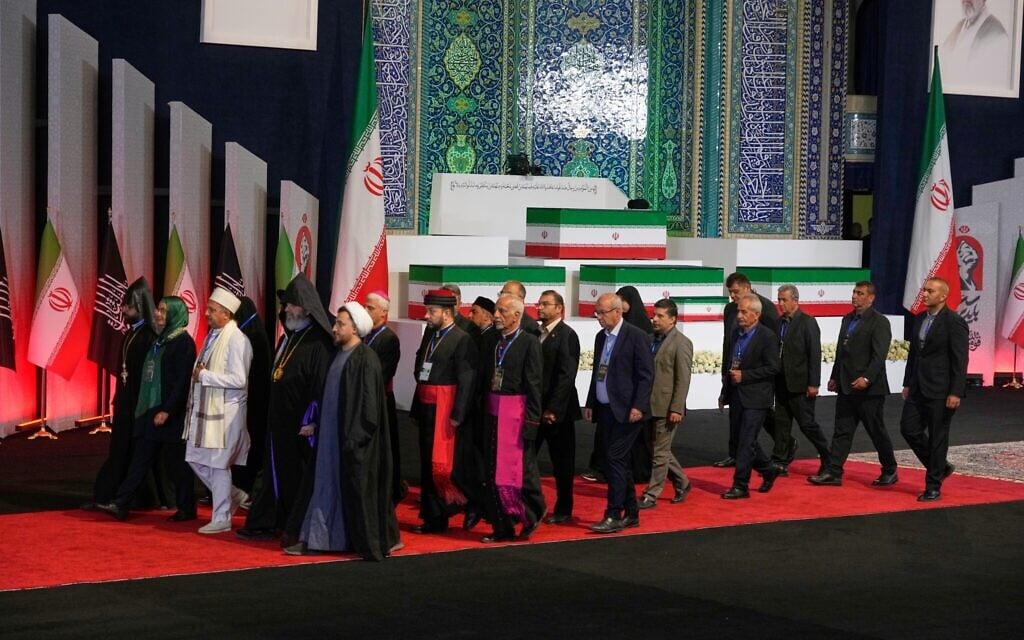
Ayatollah Ali Khamenei, Iran's Supreme Leader for 37 years, lay in state in a vast hall in Tehran on Friday, drawing clerics, officials, and foreign dignitaries to pay their respects. His death on February 28 followed Israeli-American airstrikes, marking a critical moment for Iran. The nation has begun a week of mass funeral processions, a display intended to showcase public devotion to the Islamic Republic and its revolutionary zeal.
Khamenei's body is slated for a journey to Qom, Najaf, and Kerbala, significant Shi'ite centers in Iran and Iraq, before his final resting place on Thursday in Mashhad, home to the country's holiest pilgrimage shrine. The unveiling of his coffin late Thursday saw sobbing supporters swaying and beating their heads to a sung lament, with flowers thrown from the bier into the crowd. On Friday, his coffin, along with those of family members killed in the strike, was placed in the grand prayer hall built for his predecessor, Ayatollah Ruhollah Khomeini.
The funeral is taking place at a precarious time for Iran. While the clerical rulers, supported by the Islamic Revolutionary Guard Corps, project strength after surviving what they perceived as an existential threat, the nation faces deep internal divisions. Analysts suggest support for the clerical leadership is minimal, and the succession of Khamenei's son, Mojtaba Khamenei, as the new Supreme Leader remains uncertain, as he has not been seen publicly since being wounded in the strike that killed his father.
Decades of crippling sanctions have severely impacted Iran's economy, exacerbating widespread protests that security forces have suppressed with increasing force, leading to thousands of deaths in January. Despite these deep-seated issues, the authorities are leveraging the funeral week to project an image of national unity and state power, mobilizing millions of mourners. Tehran's streets are under tight security, with military and police vehicles and paramilitary forces patrolling, as Iran issues warnings to the United States and Israel against any attacks during the funeral period.
His coffin was unveiled late on Thursday to a throng of sobbing supporters, swaying and beating their heads in time to a sung lament as flowers were thrown from the bier into the crowd.
DistantNews Editorial
Originally published by Times of Israel. Summarized and contextualized by our editorial team with added local perspective. Read our editorial standards.
More Stories
From Our Blog

What Gets Lost (and Found) When News Is Translated

The Critical Role of Diaspora Media in Global News

What Travellers Should Know About Countries with Restricted Press

A Digital Nomad's Guide to Following Local News

How the Same Story Looks Different in Different Countries
