


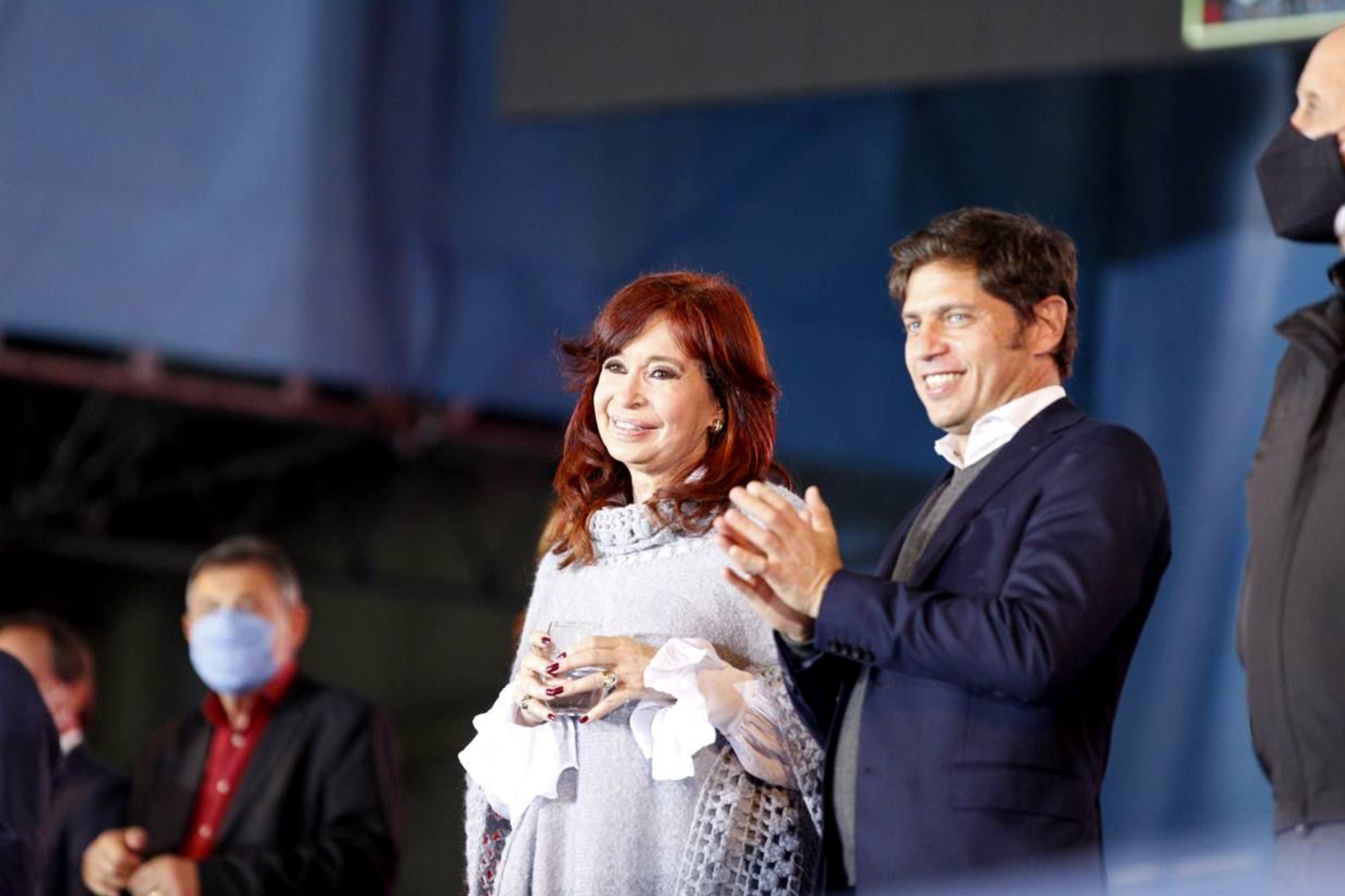
Kicillof Marks Kirchner Conviction Anniversary, Criticizes Judiciary and Milei Government
Translated from Spanish, summarized and contextualized by DistantNews.
At a glance
News
Named sources
Context piece
- Buenos Aires Governor Axel Kicillof marked the one-year anniversary of Cristina Kirchner's conviction for corruption, calling it a "huge infamy."
- Kicillof criticized the judiciary for what he described as an arbitrary and evidence-lacking conviction, part of a "long persecution" against the former president.
- He linked the alleged persecution of Kirchner to the current economic policies of President Javier Milei, accusing Milei of fueling hatred and attacking democratic foundations.
Buenos Aires Governor Axel Kicillof used the one-year anniversary of former President Cristina Kirchner's conviction for corruption to launch a strong attack on the judiciary and the current national government. On June 10, marking one year since Kirchner was placed under house arrest following her conviction in the "Vialidad" case, Kicillof declared it a "huge infamy" perpetrated by judicial sectors he claims are too close to "real power."
A year ago, a huge infamy was consummated before everyone's eyes: the conviction of Cristina handed down by sectors of the Judiciary as distant from Justice as they are close to real power.
In a message shared on social media, Kicillof described Kirchner as a victim of a "long persecution" that culminated in an "arbitrary conviction" lacking evidence. He contested the legal reasoning used, specifically the phrase "she could not have not known," and argued that the case involved alleged events outside her purview. Kicillof also extended his criticism to the investigation into the assassination attempt on Kirchner nearly four years prior, stating that those who planned, financed, and instigated it remain unpunished.
She was the victim of a very long persecution that culminated in an arbitrary conviction, devoid of evidence and for alleged events that were not even among her responsibilities, using a legally absurd argument: 'she could not have not known.'
The governor drew a direct parallel between the alleged judicial persecution of Kirchner and the economic policies of President Javier Milei. Kicillof asserted that the "same interests" driving the case against Kirchner are now supporting an economic model that he claims is destroying national industry, devaluing salaries and pensions, cutting social rights, and concentrating wealth. He accused Milei of daily "fueling hatred" and attacking the "social foundations of our democracy."
They also persecute her family and fuel a climate of hatred and violence that found its wildest expression in the assassination attempt she suffered. Almost four years after the attack, the investigation into who planned, financed, and instigated it is conspicuously absent.
Kicillof reiterated his belief in Kirchner's innocence and her unjust detention. He concluded by emphasizing the obligation to defend democracy and the right of the people to live with dignity in a more just Argentina, especially in the face of injustice and attempts to discipline "the popular camp."
The same interests that drove the persecution against Cristina are the ones that today sustain an economic model that destroys national industry, pulverizes salaries and pensions, cuts social and labor rights, and concentrates wealth in fewer and fewer hands.
DistantNews Editorial
Originally published by La Nación in Spanish. Translated, summarized, and contextualized by our editorial team with added local perspective. Read our editorial standards.
More Stories



From Our Blog

What Gets Lost (and Found) When News Is Translated

The Critical Role of Diaspora Media in Global News

What Travellers Should Know About Countries with Restricted Press

A Digital Nomad's Guide to Following Local News

How the Same Story Looks Different in Different Countries
