


Kim Min-seok Elected Democratic Party Leader, Faces Challenges of Unity and Election Victory
Translated from Korean, summarized and contextualized by DistantNews.
At a glance
News
Named sources
Outcome reported
- Kim Min-seok was elected as the new leader of the Democratic Party, securing 54.08% of the vote in a preferential voting system.
- His victory is seen as a reflection of the party base's desire for stable relations between the party and the presidential office.
- Kim's key challenges include resolving internal party conflicts and achieving victory in the upcoming general elections.
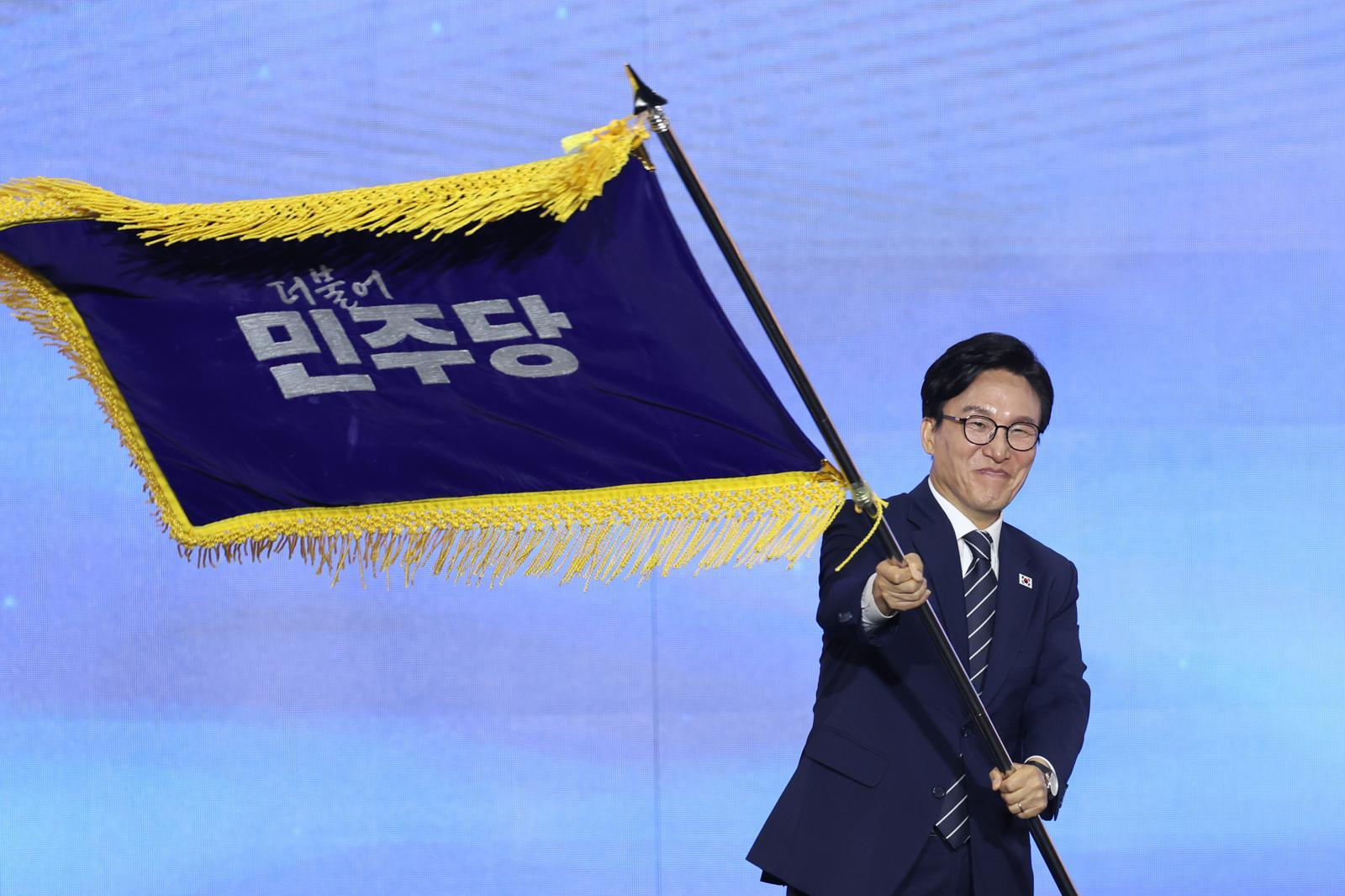
Kim Min-seok has been elected the new leader of the Democratic Party, marking a new chapter for the ruling party as it enters the second year of the Lee Jae-myung administration. Kim secured 54.08% of the vote in a preferential voting system at the party's third national convention held in Daejeon, narrowly defeating rival Chung Jin-lae, who garnered 45.92%.
The election results, which combined delegate and party member votes (70%) with public opinion polls (30%), indicate a strong preference among the Democratic Party's base for stable relations between the party and the presidential office. Kim, who previously served as the first Prime Minister under the Lee Jae-myung government, emphasized during his campaign the importance of maintaining a consistent and cooperative relationship with the Blue House, contrasting this with what he described as frequent discord during Chung Jin-lae's tenure as party leader over the past year.
In his acceptance speech, Kim Min-seok outlined his vision for the party, stating, "Language, policy, attitude, and culture will all evolve. The Democratic Party will move beyond being a historical party or a democratic party to become a responsible party that takes responsibility for the lives of the people." He further elaborated on the party-presidency relationship, describing it as a "creative horizontal relationship" that supports the President and the government, who are at the center of state affairs.
Language, policy, attitude, and culture will all evolve. The Democratic Party will move beyond being a historical party or a democratic party to become a responsible party that takes responsibility for the lives of the people.
However, Kim faces significant challenges ahead. The election of five executive committee members has created a dynamic where the new leadership may face checks and balances. Among the elected members are Park Sun-won and Seo Mi-hwa, considered aligned with the pro-Lee Jae-myung faction, and Choi Min-hee, Han Min-soo, and Lee Sung-yoon, associated with the pro-Chung Jin-lae faction. This composition suggests that resolving internal party conflicts and uniting the different factions will be a top priority for Kim's leadership.
Ultimately, Kim Min-seok's success will be measured by his ability to navigate these internal divisions and lead the Democratic Party to victory in the 2028 general elections, solidifying its position as the ruling party and fulfilling its commitment to the nation's governance.
The party-presidency relationship will be a 'creative horizontal relationship' that supports the President and the government, who are at the center of state affairs.
DistantNews Editorial
Originally published by Hankyoreh in Korean. Translated, summarized, and contextualized by our editorial team with added local perspective. Read our editorial standards.
More Stories


From Our Blog

What Gets Lost (and Found) When News Is Translated

The Critical Role of Diaspora Media in Global News

What Travellers Should Know About Countries with Restricted Press

A Digital Nomad's Guide to Following Local News

How the Same Story Looks Different in Different Countries
