


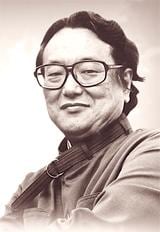
Kim Swoo-geun: Architect Who Overcame 'Japanese Style' Controversy to Lead Korean Architectural Innovation
Translated from Korean, summarized and contextualized by DistantNews.
At a glance
In-depth
Sources not specified
Context piece
- Architect Kim Swoo-geun faced controversy in 1967 over the design of the National Buyeo Museum, accused of resembling Japanese shrines.
- Despite the 'Japanese style' debate, Kim Swoo-geun is recognized as a leading architect who shaped modern Korean architecture.
- His career, marked by significant projects like the National Assembly Building design, showcased a distinct architectural vision.
Architect Kim Swoo-geun, a towering figure in modern Korean architecture, faced significant controversy early in his career. In 1967, at the age of 36, his design for the National Buyeo Museum ignited a debate over its perceived resemblance to Japanese shrine architecture, specifically the 'torii' gate and 'chigi' roof elements.
This 'Japanese style' accusation was amplified by Kim's academic background, having studied architecture in Tokyo. The controversy arose just seven years after he gained national attention by winning first prize for his design of the National Assembly Building in Seoul in 1959, while still a graduate student at the University of Tokyo. His return to Korea and subsequent prolific career were marked by this early challenge.
Despite the 'why-saek' (Japanese style) debate, Kim Swoo-geun's legacy is firmly established as one of Korea's most influential architects. He is credited with shaping the nation's architectural landscape through numerous significant projects, leaving an indelible mark on the built environment.
His work often reflected a unique blend of traditional Korean aesthetics and modern design principles, pushing the boundaries of architectural expression in post-war South Korea. The National Buyeo Museum, though initially controversial, stands as a testament to his distinct vision and enduring impact on Korean architecture.
DistantNews Editorial
Originally published by Chosun Ilbo in Korean. Translated, summarized, and contextualized by our editorial team with added local perspective. Read our editorial standards.
More Stories


From Our Blog

What Gets Lost (and Found) When News Is Translated

The Critical Role of Diaspora Media in Global News

What Travellers Should Know About Countries with Restricted Press

A Digital Nomad's Guide to Following Local News

How the Same Story Looks Different in Different Countries
