


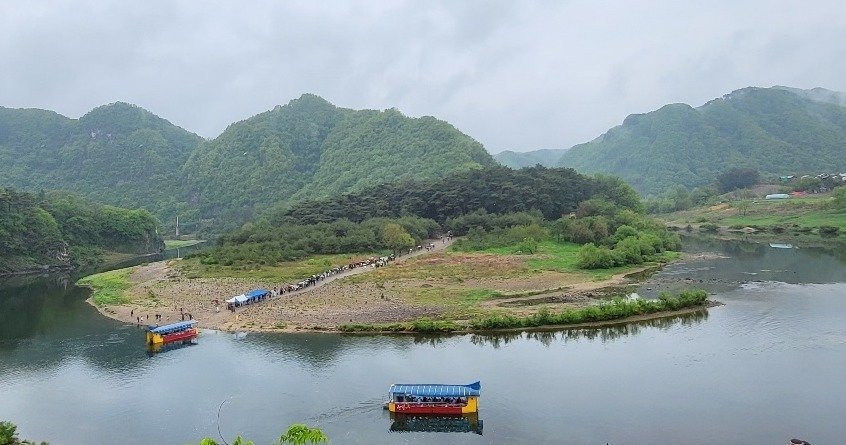
King Danjong's Sites Draw Crowds, But Is It True Feng Shui Power?
Translated from Korean, summarized and contextualized by DistantNews.
At a glance
Analysis
Sources not specified
Context piece
- The historical sites of King Danjong's exile (Cheongnyeongpo) and tomb (Jangneung) in Yeongwol, South Korea, have become popular tourist destinations.
- Over 520,000 visitors have toured the sites as of May 16, already double last year's annual count.
- Despite the sites' popularity, a feng shui analysis suggests Jangneung may not be a prime "great 명당" (auspicious site) based on its energy, but rather a place sustained by historical narrative and visitor devotion.
The historical sites associated with the tragic King Danjong, including his exile location at Cheongnyeongpo and his tomb at Jangneung in Yeongwol, South Korea, are experiencing a surge in tourism. Following the success of the film "The King and the Jester," these locations have transformed into major attractions, drawing significant crowds.
As of May 16, the cumulative number of visitors to Jangneung and Cheongnyeongpo surpassed 520,000. This figure has already doubled the total number of visitors for the entirety of last year, which stood at 263,327. The enduring fascination with Danjong's life story, a king who ascended the throne with strong legitimacy, only to be overthrown by his uncle, Grand Prince Suyang (later King Sejo), and forced into exile where he was eventually killed, continues to captivate the public imagination.
While the sites attract numerous visitors, a feng shui perspective suggests that Jangneung might not be inherently a "great 명당" (auspicious site) based solely on its terrestrial energy. The analysis posits that Cheongnyeongpo, surrounded by swift currents and steep cliffs, functioned more as a natural prison, chosen deliberately by Sejo's faction to isolate Danjong. Jangneung, though the subject of various feng shui interpretations, including potentially weak energy flow (과룡처), is described as a "place of a thousand years of incense and offerings without descendants" (무자손 천년 향화지지). This suggests its enduring appeal is less about inherent geomantic power and more about the compelling historical narrative and the devotion of visitors who continue to pay their respects, keeping the site's legacy alive.
DistantNews Editorial
Originally published by Dong-A Ilbo in Korean. Translated, summarized, and contextualized by our editorial team with added local perspective. Read our editorial standards.
More Stories


From Our Blog

What Gets Lost (and Found) When News Is Translated

The Critical Role of Diaspora Media in Global News

What Travellers Should Know About Countries with Restricted Press

A Digital Nomad's Guide to Following Local News

How the Same Story Looks Different in Different Countries
