


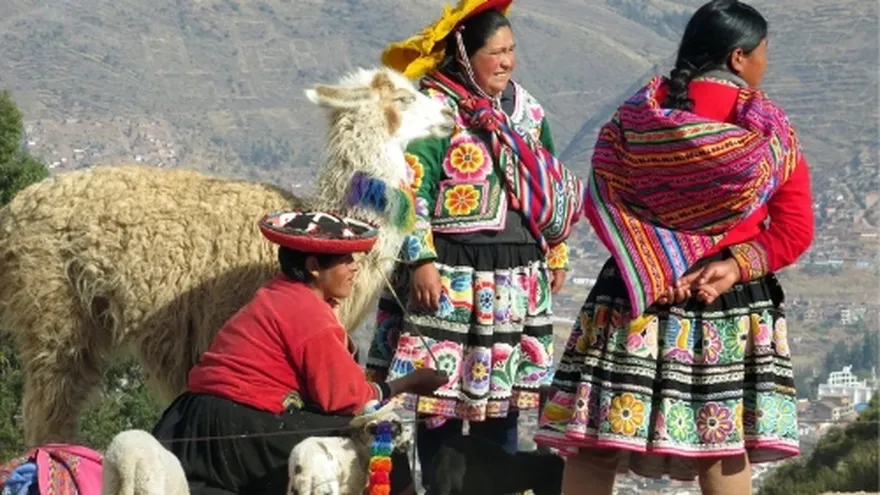
Kitchen and female power: two books rescue Peru's ancestral legacy
Translated from Spanish, summarized and contextualized by DistantNews.
At a glance
In-depth
Sources not specified
Context piece
- Two Peruvian researchers are presenting their latest books at the International Book Fair in Panama, focusing on women's ancestral legacy in Peruvian cuisine.
- Historian Maritza Villavicencio's book argues that women were central figures in ancient Peruvian food production and administration, not just domestic roles.
- Ronald Arquiñigo's work explores the oral transmission of culinary traditions and the stories embedded in Peruvian dishes.
Peruvian cuisine, celebrated globally for its diverse flavors and experiences, is now at the center of a historical debate about women's roles and their significance beyond passing down ancestral knowledge. Two Peruvian researchers are bringing this perspective to the International Book Fair in Panama. Maritza Villavicencio, a historian with over four decades of experience, will present her book "Mujer, poder y alimentación en el antiguo Perú" (Woman, Power, and Food in Ancient Peru). The book stems from Villavicencio's question about who prepared and developed the now-famous Peruvian foods like potatoes and corn, a role she attributes to women. Her research highlights that in the Inca Empire and preceding cultures, women were not confined to domestic kitchens but were powerful figures. They were creators and geneticists of crops, preservers of tubers through techniques like dehydration (chuño), and administrators of the empire's vast food storage systems, known as colcas. Villavicencio also sheds light on the "acllahuasi," or "chosen women," institutions often misinterpreted by Spanish chroniclers as mere servants. She asserts these women held significant power, managing the empire's food security, preparing ceremonial feasts, and producing textiles. Evidence suggests these women inherited property and trades, indicating a society built on gender complementarity rather than subordination. Furthermore, she emphasizes the sacred dimension, linking Andean goddesses with nourishment and the feminine principle, connecting the female body to social reproduction. Complementing Villavicencio's historical deep dive, Ronald Arquiñigo's book, "Los valores de la tradición culinaria peruana" (The Values of Peruvian Culinary Tradition), extends this focus on female culinary memory into the present. Arquiñigo's work journeys through Peru's remote regions to capture the voices of everyday cooks. He explains that each dish tells a story, reflecting the feelings, imagination, and relationship between people and nature. These culinary traditions are passed down orally, particularly through women, preserving a rich cultural heritage with every meal.
DistantNews Editorial
Originally published by TVN Panamá in Spanish. Translated, summarized, and contextualized by our editorial team with added local perspective. Read our editorial standards.
More Stories


From Our Blog

What Gets Lost (and Found) When News Is Translated

The Critical Role of Diaspora Media in Global News

What Travellers Should Know About Countries with Restricted Press

A Digital Nomad's Guide to Following Local News

How the Same Story Looks Different in Different Countries
