


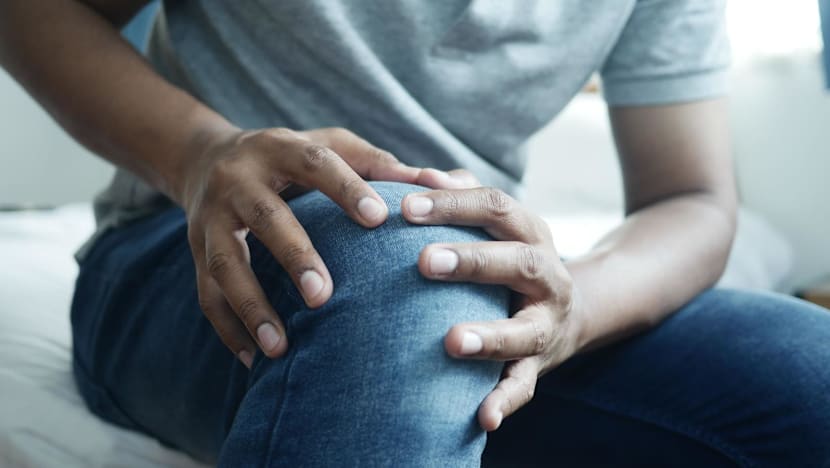
Knee injuries: Identifying the cause and knowing when to seek treatment
Translated from English, summarized and contextualized by DistantNews.
At a glance
News
Named sources
Context piece
- Knee injuries, like meniscus tears and ligament damage (ACL, MCL), are common and affect people of all ages.
- The knee's menisci act as shock absorbers between the femur and tibia, protecting cartilage.
- Ligaments, including the ACL and MCL, provide stability, preventing unnatural twisting and movement of the knee joint.
Your knees endure significant stress daily, absorbing forces equivalent to 2.5 to 2.8 times your body weight with each step. Running intensifies this load to six to eight times your body weight per leg. Factors like weight gain further increase pressure, while activities involving pivoting and sudden directional changes, common in sports and fitness events like CrossFit, place additional strain on the joints.
We see meniscus tears in everyone from young athletes to middle-aged active adults and even in elderly patients.
Injuries such as meniscus tears and damage to the anterior cruciate ligament (ACL) or medial collateral ligament (MCL) are prevalent across all age groups. Dr. Francis Wong Keng Lin, an orthopaedic surgeon-scientist, notes that meniscus tears occur in young athletes, middle-aged adults, and even the elderly. Age is not the sole determining factor; lifestyle and activity levels play a significant role.
Each knee contains two menisci, which function as crucial shock absorbers situated between the thigh bone (femur) and shin bone (tibia). Adjunct Assistant Professor Wang Ming, a consultant at Alexandra Hospital and National University Hospital, explains that these crescent-shaped fibrocartilage structures prevent concentrated forces on small areas, thereby reducing the risk of cartilage damage and osteoarthritis over time. It's important to distinguish the menisci from the kneecap (patella), which is a bone at the front of the knee.
These are crescent-shaped structures of specialised fibrocartilage that sit between the femur (thigh bone) and tibia (shin bone). Without healthy menisci, the forces transmitted through the knee become concentrated over a small area, increasing the risk of cartilage damage and osteoarthritis over time.
The four primary stabilizing ligaments in the knee, including the commonly injured ACL and MCL, connect the femur to the tibia. These collagen tissue bands are essential for knee stability, preventing excessive forward movement of the tibia (ACL) and limiting unnatural twisting or collapsing motions. Damage to these ligaments can significantly impair knee function and stability.
The ACL is located in the centre of the knee joint. Its primary function is to prevent excessive forward movement of the tibia, and contr
DistantNews Editorial
Originally published by CNA in English. Translated, summarized, and contextualized by our editorial team with added local perspective. Read our editorial standards.
More Stories


From Our Blog

What Gets Lost (and Found) When News Is Translated

The Critical Role of Diaspora Media in Global News

What Travellers Should Know About Countries with Restricted Press

A Digital Nomad's Guide to Following Local News

How the Same Story Looks Different in Different Countries
