

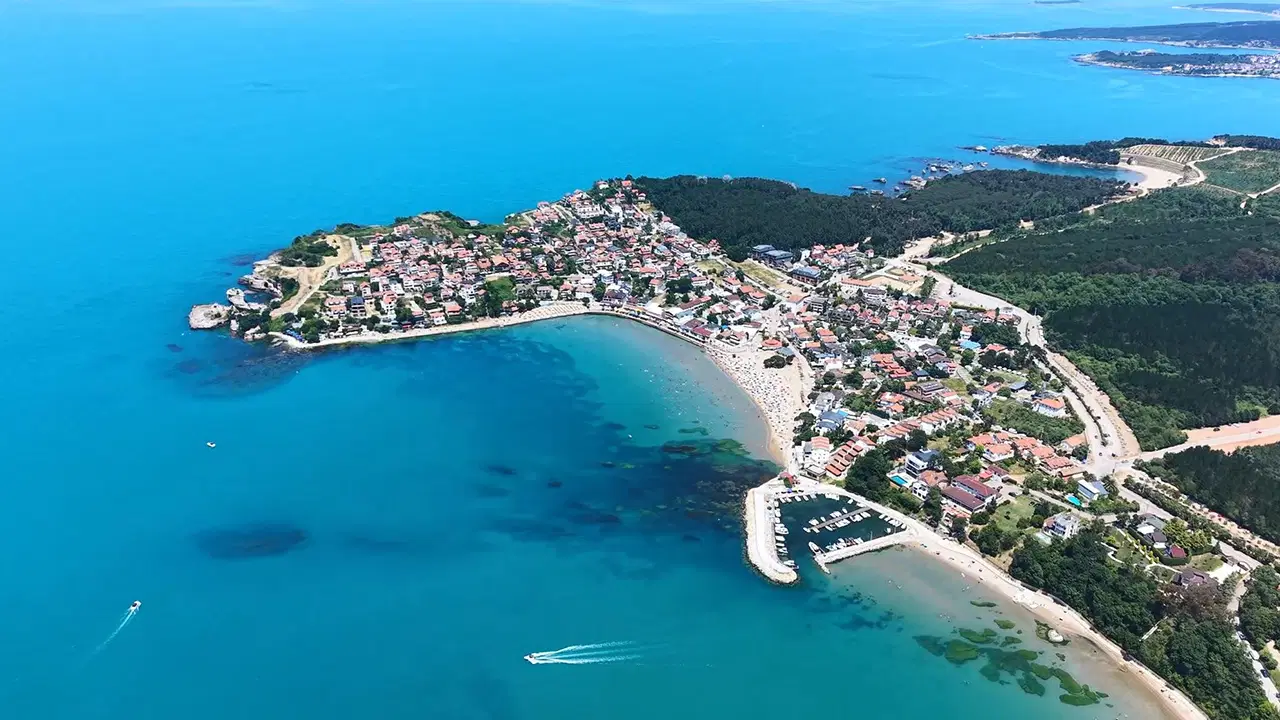
Kocaeli's Kandıra coast turns turquoise due to natural algal bloom
Translated from Turkish, summarized and contextualized by DistantNews.
At a glance
News
Official statement
Context piece
- The waters off Kandıra, Kocaeli, have turned a striking turquoise color.
- Experts attribute the phenomenon to a seasonal increase in microscopic organisms called Coccolithophores.
- This natural occurrence is not considered harmful and typically dissipates within weeks.
The coastal areas of Kandıra, a district in Kocaeli, have transformed into a vibrant turquoise, creating a picturesque scene. This striking color change has drawn attention, prompting explanations from scientific experts.
Professor Dr. Halim Aytekin Ergül from Kocaeli University's Biology Department explained that the phenomenon is caused by a significant increase in Coccolithophores, a type of microscopic organism with calcium carbonate shells. The specific species, 'Emiliania huxleyi,' is common in the Black Sea and thrives in late spring and early summer when conditions like wind and nutrient availability are favorable.
Seasonal increases in this excessive algal bloom have no known harm. They usually decrease and disappear within a few weeks as air temperatures rise further. This situation is completely natural and a known phenomenon.
Ergül assured that this seasonal bloom of algae is natural and poses no known harm. He noted that these blooms typically fade away within a few weeks as air temperatures rise. However, he cautioned that if the process were to extend unusually long, it could potentially disrupt the ecosystem by altering water alkalinity and reducing oxygen levels, particularly in deeper waters, necessitating continued observation.
If the process were to extend in an unusual way, it could cause changes in the water's alkalinity and a decrease in oxygen, especially in deep areas, thus disrupting the ecosystem balance. Therefore, it needs to be monitored.
DistantNews Editorial
Originally published by Cumhuriyet in Turkish. Translated, summarized, and contextualized by our editorial team with added local perspective. Read our editorial standards.
More Stories


From Our Blog

What Gets Lost (and Found) When News Is Translated

The Critical Role of Diaspora Media in Global News

What Travellers Should Know About Countries with Restricted Press

A Digital Nomad's Guide to Following Local News

How the Same Story Looks Different in Different Countries
