

Konak's dual restoration drive: Century-old buildings to become service areas
Translated from Turkish, summarized and contextualized by DistantNews.
At a glance
News
Official statement
New plan
- Konak Municipality is undertaking a dual restoration project for two historic buildings in Tuzcu Mahallesi.
- The approved project aims to transform the century-old structures into public spaces.
- The restoration will preserve the original architectural features and serve the community's needs, potentially as socio-cultural facilities.
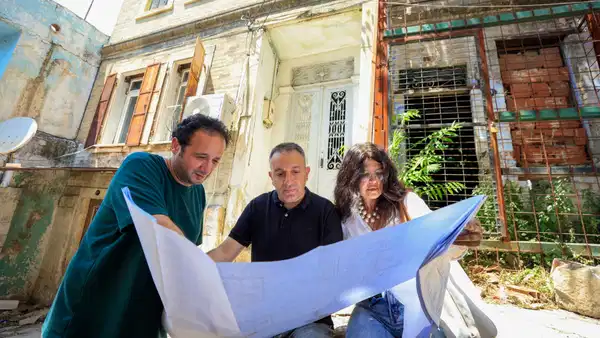
Konak Municipality is advancing its commitment to preserving and revitalizing the city's historical and cultural assets with a new dual restoration initiative. The municipality has received approval from the İzmir No. 1 Cultural and Natural Heritage Preservation Board for the project concerning two registered buildings located side-by-side on 775 Sokak in the Tuzcu neighborhood.
Konak Mayor Nilüfer Çınarlı Mutlu announced that the restoration of these century-old buildings will commence soon. She highlighted the municipality's goal of reintegrating Konak's deep-rooted history and cultural richness into the urban fabric, creating public spaces for citizens. As examples, she cited the Kıllıoğlu Hamamı, now a venue for modern art, and the ongoing restoration of the Hamdi Dalan Soap Museum.
The two structures, identified by numbers 61 and 63 on 775 Sokak, were acquired by the Konak Municipality through donation. They are registered as immovable cultural properties requiring protection. The planned restoration will meticulously preserve their original architectural characteristics. Dating back to the early 20th century, these attached buildings are designed to be repurposed as public use areas that will cater to the city's needs.
The objective is to utilize these buildings for socio-cultural facilities or similar public functions. This approach aims to both safeguard cultural heritage and establish quality social amenities that serve diverse segments of the community. The buildings themselves are notable examples of their era, reflecting typical characteristics of the period with their plan layouts, facade designs, and direct street access.
DistantNews Editorial
Originally published by Cumhuriyet in Turkish. Translated, summarized, and contextualized by our editorial team with added local perspective. Read our editorial standards.
More Stories


From Our Blog

What Gets Lost (and Found) When News Is Translated

The Critical Role of Diaspora Media in Global News

What Travellers Should Know About Countries with Restricted Press

A Digital Nomad's Guide to Following Local News

How the Same Story Looks Different in Different Countries
