

Korea Research’s eight-year portrait of Korean society selected as Sejong Book
Translated from Korean and summarized by DistantNews. Read the original for the full story.
At a glance
News
Named sources
New plan
- Korea Research’s book analyzes 180 regular surveys conducted from 2018, covering everyday life, social divisions, political attitudes and foreign perceptions.
- The work was selected from 4,650 entries for the 2026 Sejong Books humanities category, with 139 books chosen in social sciences.
- The selected books will reach about 2,200 public, military and overseas cultural-center libraries in October and November.
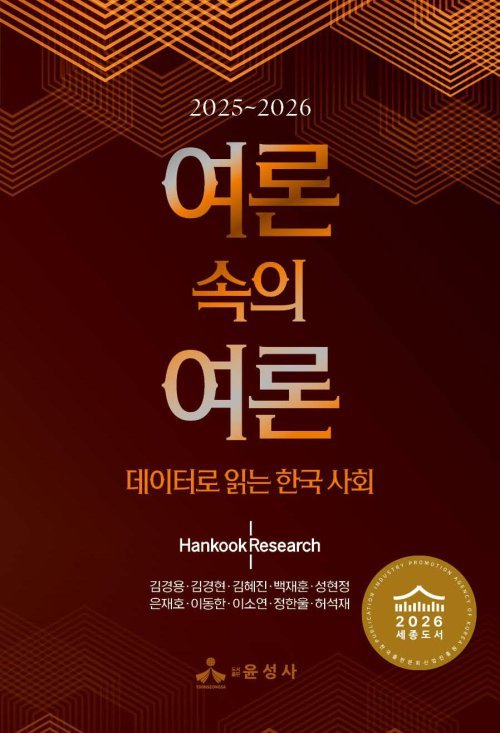
Eight years of Korean public opinion have been gathered into a single book, turning Korea Research’s recurring surveys into a broad record of how society has changed and what has stayed the same. “Public Opinion Within Public Opinion: Reading Korean Society Through Data,” published by Yoonseongsa, has been selected for the social sciences category of the 2026 Sejong Books program.
The Sejong Books program, hosted by the Ministry of Culture, Sports and Tourism and organized by the Korea Publication Industry Promotion Agency, selects and distributes notable books. This year, 4,650 titles entered the humanities category, producing competition of 10.8 entries for each selection. The social sciences field included 139 final selections.
The chosen books will be distributed in October and November to about 2,200 institutions, including public and small libraries, military libraries and overseas Korean cultural centers. The Korea Research volume draws on 180 installments of its regular “Public Opinion Within Public Opinion” survey, conducted since 2018. The company described it as the first domestic case of a polling organization publishing a book from its own long-term social and policy perception data.
We have continued the regular surveys to make public opinion function as an indicator for reading society and public sentiment.
Korea Research has surveyed 1,000 adults nationwide twice each month, tracking views on politics, the economy, society and culture. The book is divided into two sections. “Korean Society in Everyday Life” examines generative AI, views of family, sleep health, isolation and religious conflict. “Conflict and Politics” analyzes ideological, gender and generational divisions, trust in state institutions and views of neighboring countries.
Kim Chun-seok, head of Korea Research’s polling division, said the surveys had continued to make public opinion a measure for understanding society and public sentiment. He said repeated measurements over eight years made it possible to distinguish changing perceptions from those that had remained stable. Korea Research plans to continue the archive through regular surveys and annual books.
Through data measured repeatedly over eight years, we can distinguish perceptions that have changed in Korean society from those that have remained the same.
About this summary
Originally published by Dong-A Ilbo in Korean. Translated, summarized, and contextualized automatically by DistantNews, with a note on how the source frames the story. Not individually reviewed before publishing. How this works.
More Stories


From Our Blog

What Gets Lost (and Found) When News Is Translated

The Critical Role of Diaspora Media in Global News

What Travellers Should Know About Countries with Restricted Press

A Digital Nomad's Guide to Following Local News

How the Same Story Looks Different in Different Countries
