


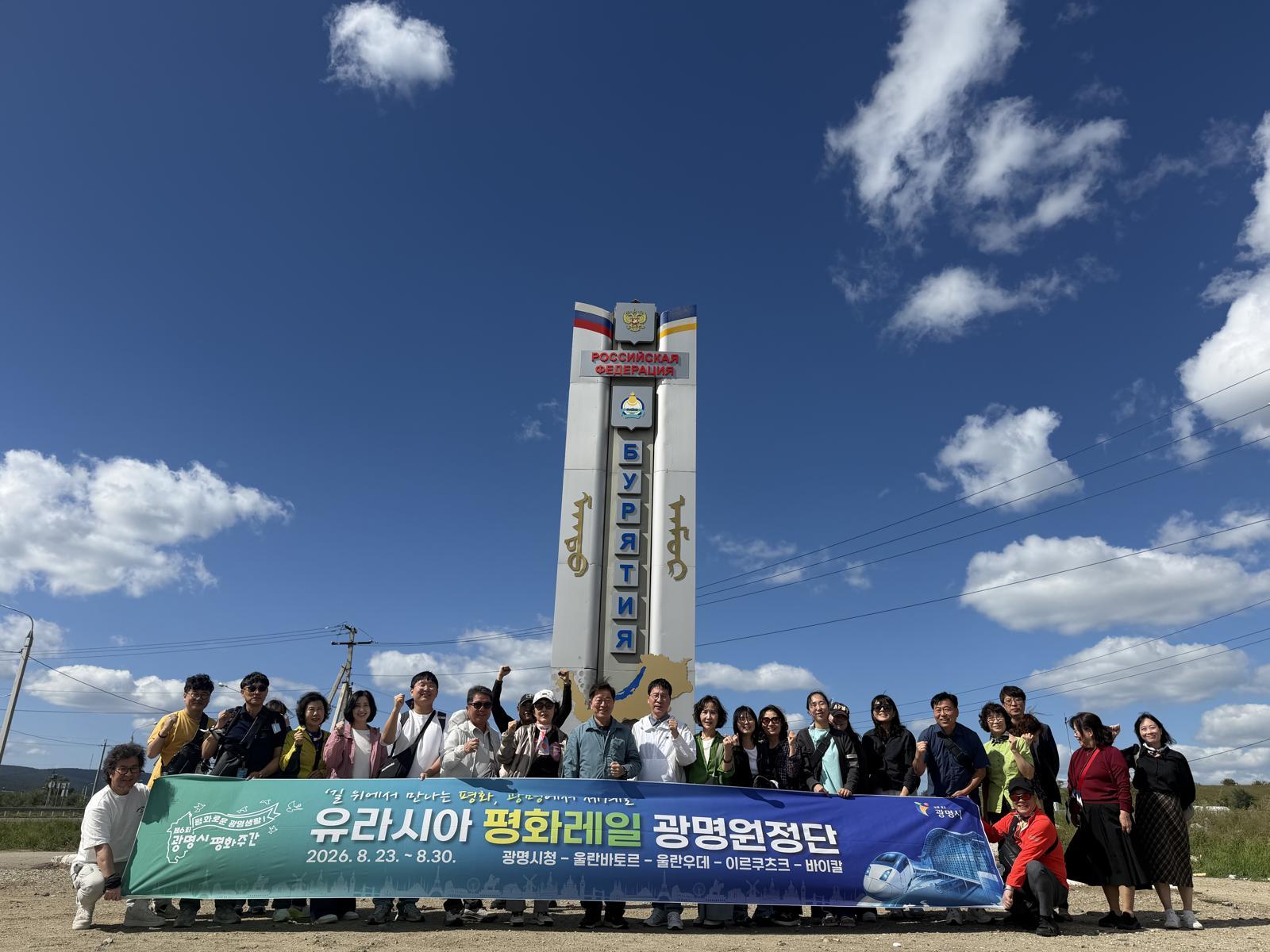
Korean expedition begins Eurasian rail journey tracing history
Translated from Korean and summarized by DistantNews. Read the original for the full story.
At a glance
In-depth
Sources not specified
Ongoing story
- The 'Eurasian Peace Rail Gwangmyeong Expedition' has begun its journey across Eurasia, starting from Ulaanbaatar, Mongolia.
- The expedition follows the historical footsteps of Lee Tae-jun and explores the cultural and historical significance of the railway.
- Participants will travel through Mongolia and Russia, experiencing changing landscapes and the intersection of history and modern infrastructure.
A Korean expedition tracing historical and cultural connections has embarked on an ambitious rail journey across Eurasia. The 'Eurasian Peace Rail Gwangmyeong Expedition' departed from Ulaanbaatar, Mongolia, aiming to follow the historical path of Lee Tae-jun and explore the significance of the railway network.
The expedition's initial leg involved traveling from Ulaanbaatar to Darkhan, a city in northern Mongolia, before reaching the border town of Altanbulag. Crossing the land border into Russia at Kyakhta marked a noticeable shift in scenery and language, transitioning from Mongolia's vast grasslands to the dense coniferous forests of Siberia.
Upon reaching Ulan-Ude, the capital of the Buryat Republic, the expedition arrived at a key junction of the Trans-Siberian Railway and the Mongolian Railway. This city serves as a vital rail and trade hub in Eastern Siberia, connecting Mongolia and China. Ulan-Ude presents a unique blend of historical layers, with visible remnants of the Soviet era found in areas like Lenin Street and Revolution Square, juxtaposed with its role as a modern international railway junction.
The journey underscores the enduring role of railways in connecting people, cultures, and commerce across vast distances. As the expedition continues, it aims to highlight how historical routes and modern infrastructure intertwine, shaping the identity and connectivity of the regions it traverses.
About this summary
Originally published by Dong-A Ilbo in Korean. Translated, summarized, and contextualized automatically by DistantNews, with a note on how the source frames the story. Not individually reviewed before publishing. How this works.
More Stories


From Our Blog

What Gets Lost (and Found) When News Is Translated

The Critical Role of Diaspora Media in Global News

What Travellers Should Know About Countries with Restricted Press

A Digital Nomad's Guide to Following Local News

How the Same Story Looks Different in Different Countries
