


Korean wishes at Tokyo shrine spark historical awareness debate
Translated from Korean, summarized and contextualized by DistantNews.
At a glance
News
Sources not specified
Context piece
- A Korean tourist expressed dismay over numerous Korean "wish notes" written in Hangul at Tokyo's Meiji Jingu shrine.
- Critics argue that visitors, especially a history teacher aspirant, show a lack of historical awareness regarding the shrine's significance.
- The Meiji Jingu shrine venerates Emperor Meiji, who led Japan's colonial expansion, making its presence sensitive for Koreans.
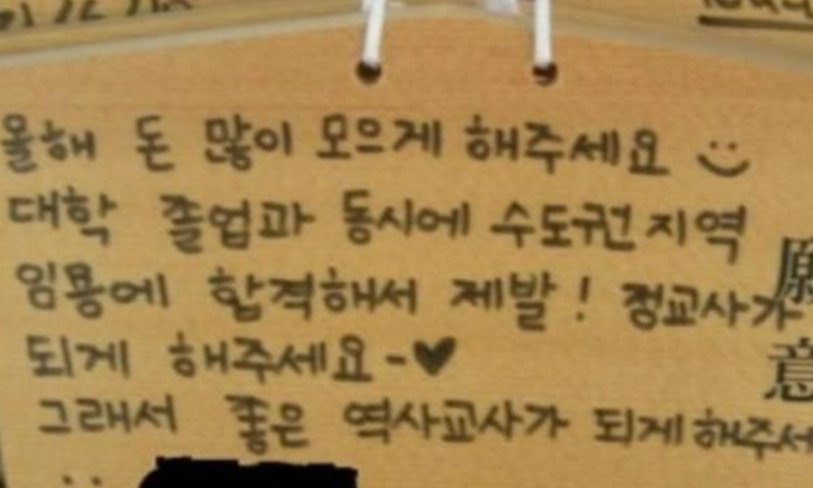
A Korean tourist's visit to Tokyo's Meiji Jingu shrine has sparked controversy online due to the prevalence of Korean-inscribed "wish notes." The visitor expressed dismay, noting that a majority of the wooden plaques, known as ema, bore wishes written in Hangul. This observation led to criticism that many Korean visitors lack historical awareness of the shrine's significance.
One particular wish, written by an aspiring history teacher, read: "Please let me become a good history teacher." This has drawn sharp criticism, with many questioning how someone aiming to teach history could be unaware of the Meiji Jingu's historical context. The shrine venerates Emperor Meiji and Empress Shoken. Emperor Meiji is a figure associated with Japan's colonial exploitation of Korea, making the shrine a sensitive site for many Koreans.
Online communities have seen a flood of reactions. "It's ironic that someone who wants to teach history is making a wish at the Meiji Jingu," one user commented. Others urged visitors to at least learn about the historical significance of the place if they choose to visit. The shrine, established in 1920, is dedicated to Emperor Meiji, who spearheaded Japan's modernization and colonial expansion. The presence of numerous Korean wish notes, some including modern requests like "please make my family healthy" and "let the stock market soar," has highlighted a perceived disconnect between the visitors' personal aspirations and the historical weight of the location.
DistantNews Editorial
Originally published by Dong-A Ilbo in Korean. Translated, summarized, and contextualized by our editorial team with added local perspective. Read our editorial standards.
More Stories


From Our Blog

What Gets Lost (and Found) When News Is Translated

The Critical Role of Diaspora Media in Global News

What Travellers Should Know About Countries with Restricted Press

A Digital Nomad's Guide to Following Local News

How the Same Story Looks Different in Different Countries
