


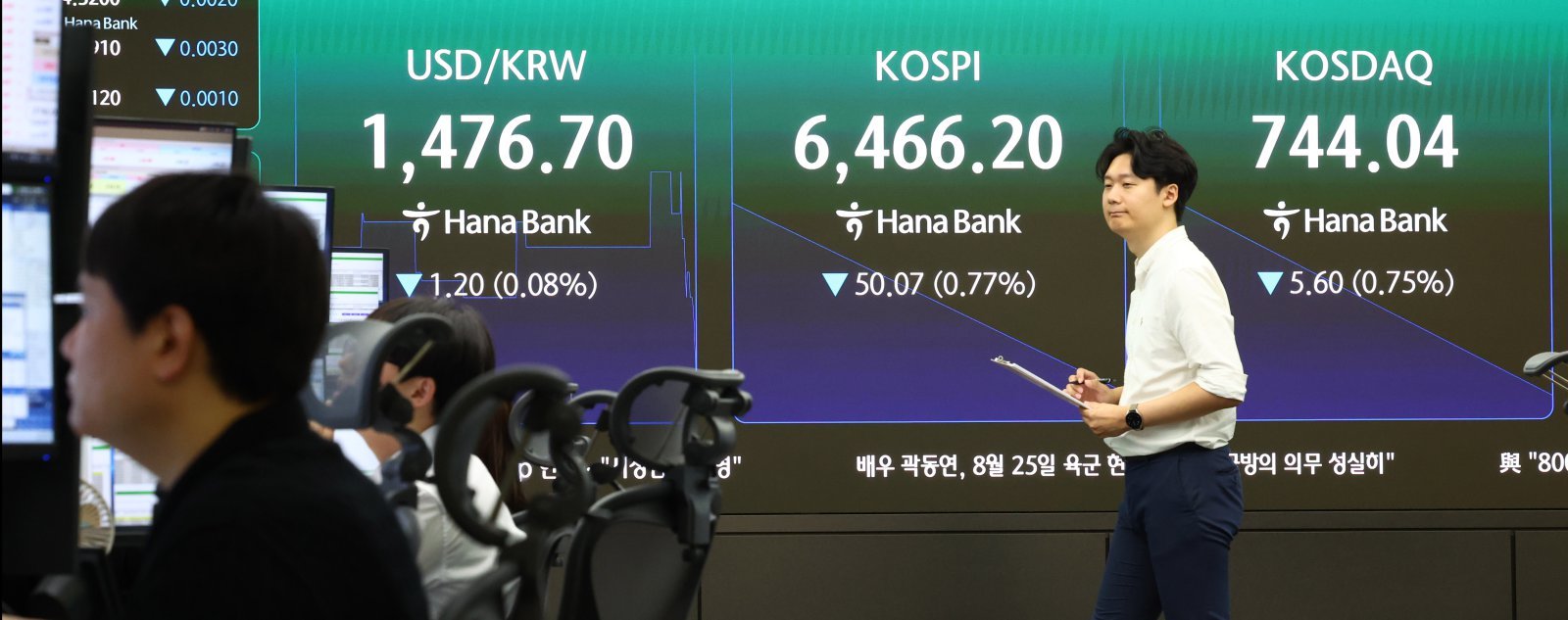
KOSDAQ hits 52-week low, losing 260 trillion won in market cap over three months
Translated from Korean, summarized and contextualized by DistantNews.
At a glance
News
Sources not specified
Context piece
- The KOSDAQ index fell below 750 points, reaching its lowest level in about a year, with its market capitalization shrinking by approximately 260 trillion won in three months.
- A significant portion of market funds flowed into semiconductor exchange-traded funds (ETFs) rather than individual KOSDAQ stocks, creating a supply vacuum and driving down the index.
- Analysts anticipate a potential rebound for the KOSDAQ index, citing possible improvements to the ETF system and policy momentum from the government.
The KOSDAQ index has retreated below the 750-point mark, hitting its lowest level in over a year. Despite ongoing efforts to revitalize the market since last year, the index has struggled to gain traction. Instead, it has followed a downward trend, exacerbated by a supply gap stemming from a concentration of funds in semiconductor stocks. In just three months, the KOSDAQ's market capitalization has plummeted by approximately 260 trillion won.
The KOSDAQ index was weak compared to the KOSPI after the semiconductor large-cap rally began in the second half of last year. It started setting new lows last month, and the main reason is presumed to be the launch of single-stock leveraged ETFs, which intensified the concentration of funds in large-cap stocks and caused them to deviate from the moving average.
The KOSDAQ index closed at 749.64 points on July 20, down 42.20 points from the previous day. This marks the first time the index has fallen below 750 since June 2, 2023. During trading, it even hit a 52-week low of 747.00 points. The market capitalization has also seen a dramatic decrease, shrinking from 680 trillion won in April to around 420 trillion won currently. This represents a loss of about one-third of its value in just three months.
While some had predicted a relative strengthening of the KOSDAQ market due to a rotation into semiconductor stocks, actual fund flows tell a different story. The majority of market funds appear to have been directed towards semiconductor ETFs rather than individual KOSDAQ stocks. Data shows that personal net purchases in single-stock leveraged ETFs for semiconductors reached 13.8 trillion won in the 50 days following their listing, exceeding the total personal investment in the KOSDAQ market from 2024 to last year (13.4868 trillion won). This concentration of funds in semiconductor-related investments has created a supply vacuum in the broader KOSDAQ market, contributing to the index's decline.
If this system is improved in the current worst-case scenario, we can expect an easing of supply concentration. In particular, the government's KOSDAQ policies are focused on structural reforms that lead to the creation of venture capital, improvement of fundamentals (restoration of market trust), inflow of long-term funds, and selection of quality companies, rather than short-term index boosting.
Despite the current downturn, some market observers are optimistic about the KOSDAQ's potential for a turnaround. Analysts suggest that improvements to the single-stock leveraged ETF system and continued policy momentum from the government could pave the way for a rebound in the KOSDAQ index, which is currently considered oversold. Lee Jae-won, a researcher at Yuanta Securities, noted that while the KOSDAQ has underperformed the KOSPI since the semiconductor rally began in the latter half of last year, the recent decline is likely due to the launch of single-stock leveraged ETFs, which has intensified the concentration of funds in large-cap stocks. Lee believes that if the ETF system is improved, it could alleviate supply imbalances. He also highlighted that the government's KOSDAQ policies are focused on structural reforms, aiming to foster venture capital, restore market confidence, attract long-term funds, and identify quality companies, rather than short-term index boosts. Future key policy events include the concretization of premium segments, benchmark indices, and ETFs, as well as the actual formation and execution of KOSDAQ funds, which could lead to the re-entry of personal investment funds into quality growth stocks with technological prowess, growth potential, and liquidity.
Future key policy events include the concretization of premium segments and benchmark indices, and ETFs, as well as the actual formation and execution of KOSDAQ funds. If the policy effects are reflected, we expect personal investor funds to re-enter quality growth stocks with technological prowess, growth potential, and liquidity.
DistantNews Editorial
Originally published by Dong-A Ilbo in Korean. Translated, summarized, and contextualized by our editorial team with added local perspective. Read our editorial standards.
More Stories


From Our Blog

What Gets Lost (and Found) When News Is Translated

The Critical Role of Diaspora Media in Global News

What Travellers Should Know About Countries with Restricted Press

A Digital Nomad's Guide to Following Local News

How the Same Story Looks Different in Different Countries
