


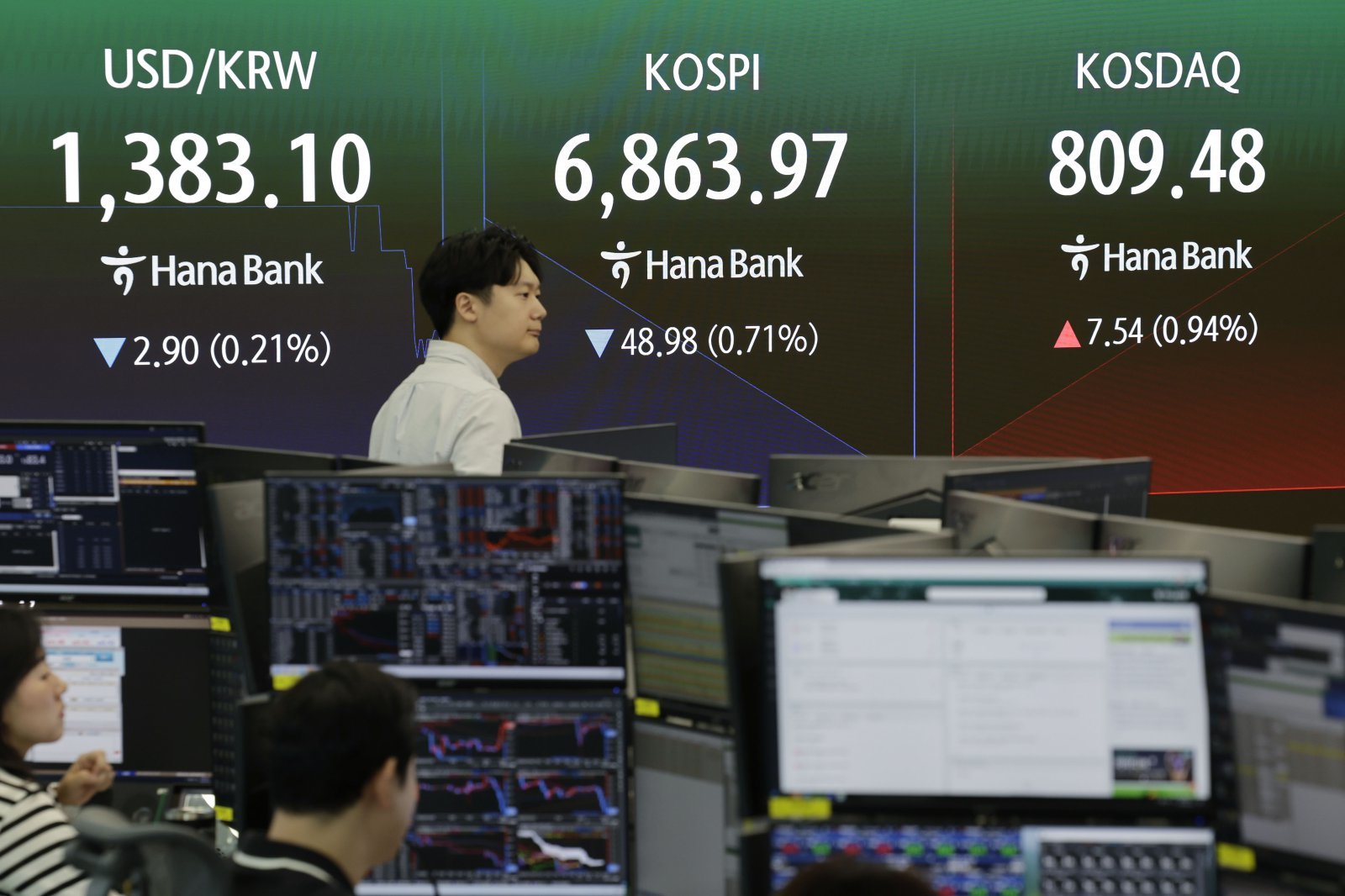
KOSPI Drops Below 6800 on Samsung Electronics' Sharp Decline; KOSDAQ Rises
Translated from Korean, summarized and contextualized by DistantNews.
At a glance
News
Sources not specified
Ongoing story
- The South Korean stock market, KOSPI, opened lower and fell further, trading at 6793.51 points, down 1.73%.
- This decline is attributed to a sharp 7% drop in Samsung Electronics stock, following a large shareholder return announcement.
- The KOSDAQ market, however, opened higher and showed strength, rising 1.26% to 812.06 points, driven by foreign buying.
South Korea's benchmark KOSPI index opened lower and extended its losses on August 24, trading down 1.73% at 6793.51 points. The market's downturn was significantly influenced by a substantial 7% plunge in the stock price of Samsung Electronics.
Despite Samsung Electronics announcing a large-scale shareholder return plan after the market close on the previous Friday, its stock gave back earlier gains. Analysts suggest this reaction may stem from interpretations of a weaker shareholder return ratio compared to SK Hynix, or a 'sell-on-fact' phenomenon following the news. While this volatility is expected to continue for Samsung Electronics, analysts emphasize the strengthening structure of converting profit growth into shareholder value over the medium term.
This week is a super week with major events scheduled. Market players are expected to engage in active strategic maneuvering during these events.
Major institutional investors and foreign investors were seen selling heavily on the KOSPI. Foreigners offloaded approximately 900 billion won worth of stocks, while institutions sold around 500 billion won. Retail investors, conversely, were net buyers, purchasing about 1.3 trillion won worth of shares.
In contrast, the KOSDAQ market experienced a rally, trading up 1.26% at 812.06 points. This upward movement was supported by foreign investors who were net buyers on the KOSDAQ, purchasing around 50 billion won. Domestic institutions and retail investors were net sellers on the KOSDAQ.
There are various interpretations, such as a weaker shareholder return compared to SK Hynix and a sell-on-fact due to the material's expiration. Samsung Electronics' supply and demand volatility will increase, but it is necessary to focus on the strengthening structure of converting profit growth into shareholder value from a medium-term perspective.
DistantNews Editorial
Originally published by Dong-A Ilbo in Korean. Translated, summarized, and contextualized by our editorial team with added local perspective. Read our editorial standards.
More Stories


From Our Blog

What Gets Lost (and Found) When News Is Translated

The Critical Role of Diaspora Media in Global News

What Travellers Should Know About Countries with Restricted Press

A Digital Nomad's Guide to Following Local News

How the Same Story Looks Different in Different Countries
