


KOSPI Drops Below 7000 as Foreign, Institutional Investors Sell Heavily
Translated from Korean, summarized and contextualized by DistantNews.
At a glance
News
Sources not specified
Context piece
- The South Korean stock market, KOSPI, fell below the 7000-point mark due to significant selling by foreign and institutional investors.
- Major semiconductor stocks like Samsung Electronics and SK Hynix experienced declines of 2-3% amid weakened investor sentiment.
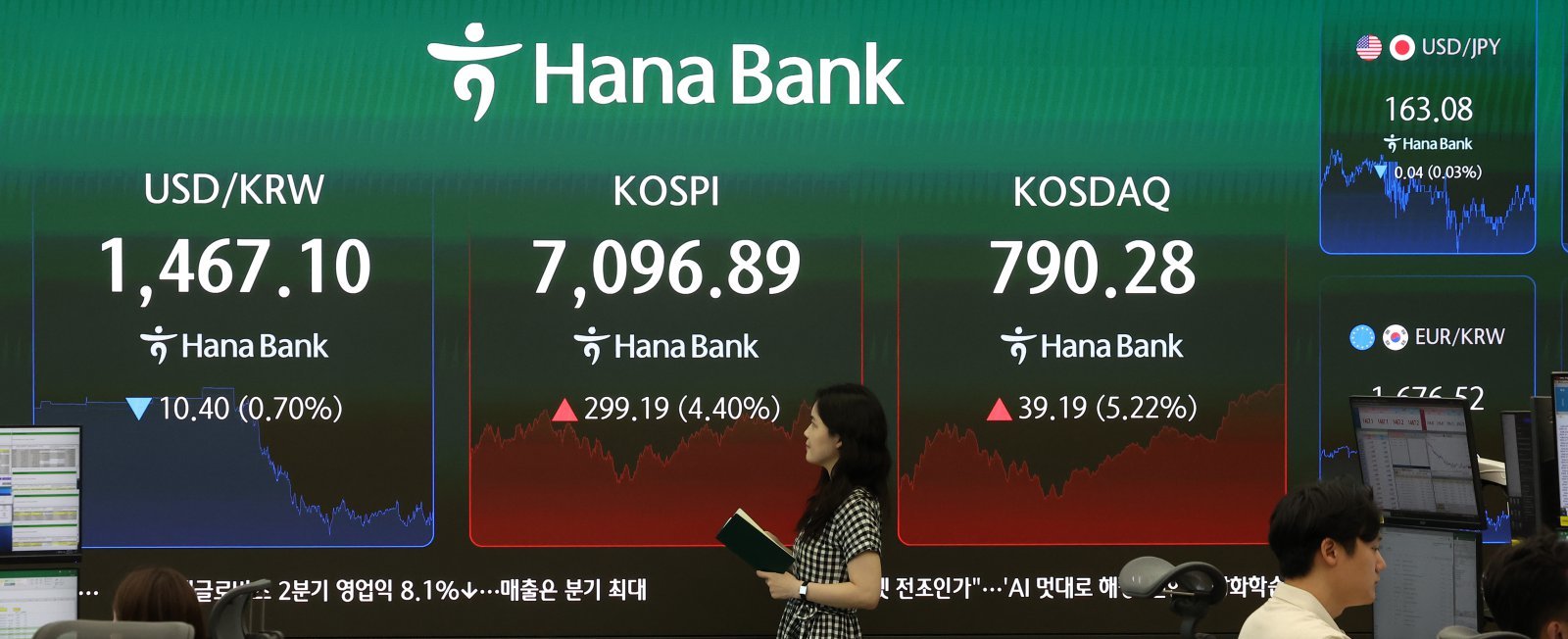
- The KOSPI closed at 7096.89 points on the previous day, but opened lower and continued to drop, reflecting broader market concerns including rising oil prices and interest rates.
South Korea's benchmark KOSPI index dropped below the critical 7000-point threshold in early trading on July 24, driven by a concerted sell-off from both foreign and institutional investors.
The decline follows a downturn in U.S. stock markets, which were impacted by surging international oil prices, growing concerns over interest rate hikes, and the financial burden of investing in artificial intelligence (AI). This negative sentiment has particularly affected the semiconductor sector, a cornerstone of the Korean economy.
Major players in the chip industry, Samsung Electronics and SK Hynix, saw their stock prices fall by 2-3% in early trading. Samsung Electronics was trading down 2.41% at 263,500 won, while SK Hynix saw a steeper decline of 3.23% to 1,857,000 won.
Data from the Korea Exchange indicated that foreign investors offloaded approximately 212.1 billion won worth of stocks, with institutions selling 11.6 billion won. In contrast, individual investors showed a net buying trend, purchasing around 238.7 billion won. The secondary KOSDAQ market also experienced a downturn, opening 1.62% lower and continuing to decline, with foreign and institutional investors also being net sellers.
DistantNews Editorial
Originally published by Dong-A Ilbo in Korean. Translated, summarized, and contextualized by our editorial team with added local perspective. Read our editorial standards.
More Stories


From Our Blog

What Gets Lost (and Found) When News Is Translated

The Critical Role of Diaspora Media in Global News

What Travellers Should Know About Countries with Restricted Press

A Digital Nomad's Guide to Following Local News

How the Same Story Looks Different in Different Countries
