


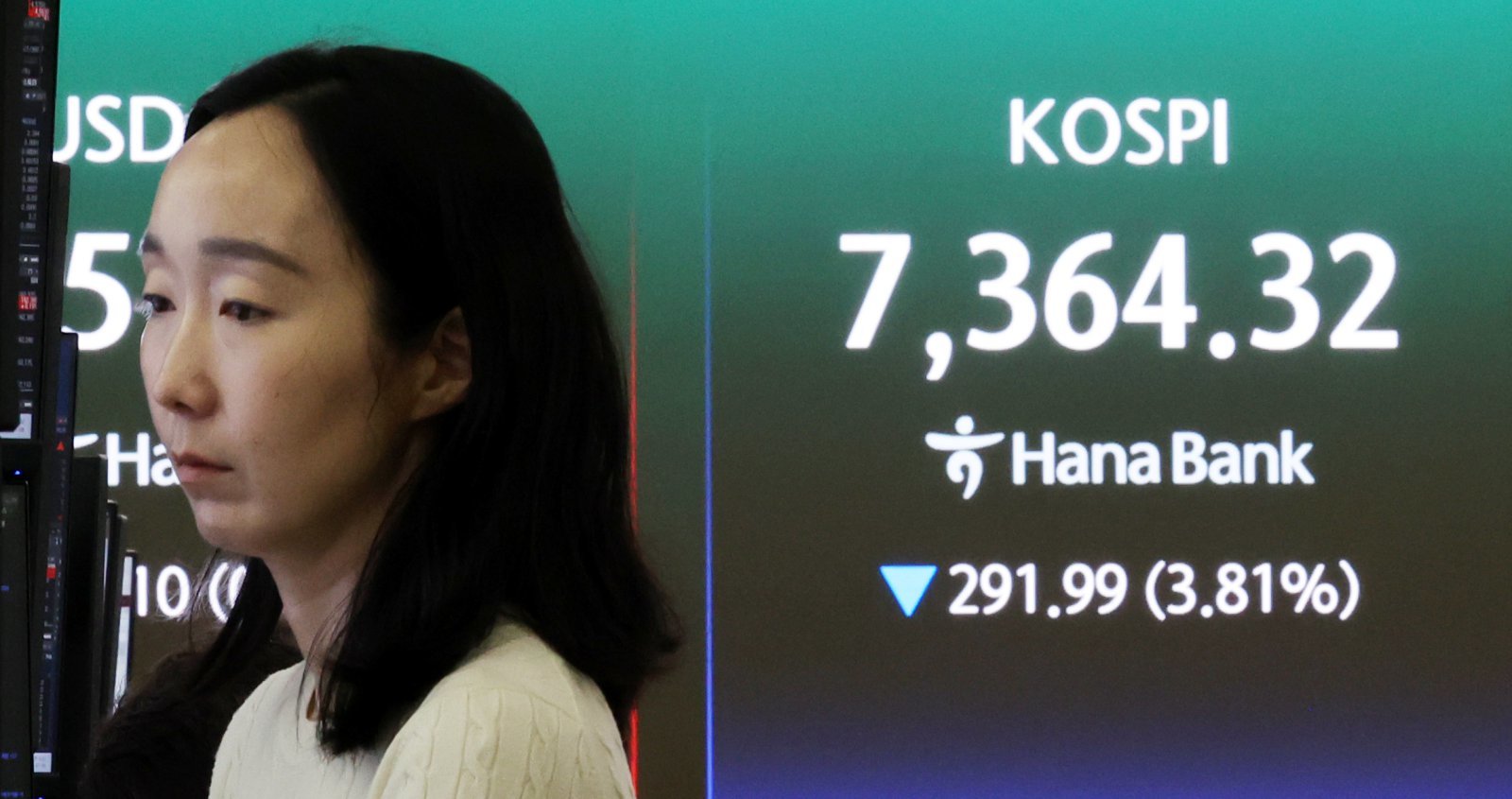
KOSPI Plummets as Foreign Investors Exit; Retail Investors' Patience Wears Thin
Translated from Korean, summarized and contextualized by DistantNews.
At a glance
News
Named sources
Ongoing story
- The KOSPI index has fallen over 2,000 points in three weeks, dropping below 7,200 points, due to massive foreign sell-offs.
- Foreign investors have sold approximately 41 trillion won ($30 billion) worth of stocks in 13 consecutive trading days, exacerbating market instability.
- Individual investors' efforts to defend the market are weakening as major holdings like SK Square, Samsung Electronics, and SK Hynix have seen significant price drops.
South Korea's KOSPI index has plummeted over 2,000 points in just three weeks, falling below the 7,200 mark, as foreign investors stage a massive sell-off.
Foreign investors have offloaded approximately 41 trillion won ($30 billion) worth of stocks over the past 13 consecutive trading days, a relentless selling spree that has shaken market confidence. This exodus comes as concerns grow over the peak-out of the semiconductor industry, a key driver of the recent rally. The sheer volume of foreign selling is overwhelming the efforts of individual investors, who have been actively buying to support the market.
Individual investors, who had been steadfast in their defense of the market, are now showing signs of reaching their limit. Despite purchasing 42.4 trillion won worth of stocks in the previous month and an additional 11.5 trillion won this month, their resilience is being tested. The value of their major holdings, including SK Square, Samsung Electronics, and SK Hynix, has fallen by 20% to 30% this month alone, fueling anxieties that the market may be entering a full-blown downturn rather than a short-term correction.
Compounding the instability, institutional investors remain directionless, further destabilizing the market's supply and demand dynamics. Their net purchases have been minimal since the market's peak in late June, adding to the sense of a market lacking a clear stabilizing force. This imbalance is creating a vicious cycle where investor anxiety amplifies price volatility, leading to a rush to sell on rallies and panic selling during declines.
Kiwoom Securities analyst Han Ji-young noted that the current sharp decline appears to be driven by unique domestic factors. "The extreme fatigue from continuous adjustments and amplified intraday volatility is leading to selling on rallies and panic selling during declines," she explained.
The extreme fatigue from continuous adjustments and amplified intraday volatility is leading to selling on rallies and panic selling during declines.
DistantNews Editorial
Originally published by Dong-A Ilbo in Korean. Translated, summarized, and contextualized by our editorial team with added local perspective. Read our editorial standards.
More Stories



From Our Blog

What Gets Lost (and Found) When News Is Translated

The Critical Role of Diaspora Media in Global News

What Travellers Should Know About Countries with Restricted Press

A Digital Nomad's Guide to Following Local News

How the Same Story Looks Different in Different Countries
