


Kribi Commemorates 110 Years Since Batanga Exile
Translated from French, summarized and contextualized by DistantNews.
At a glance
News
Named sources
Context piece
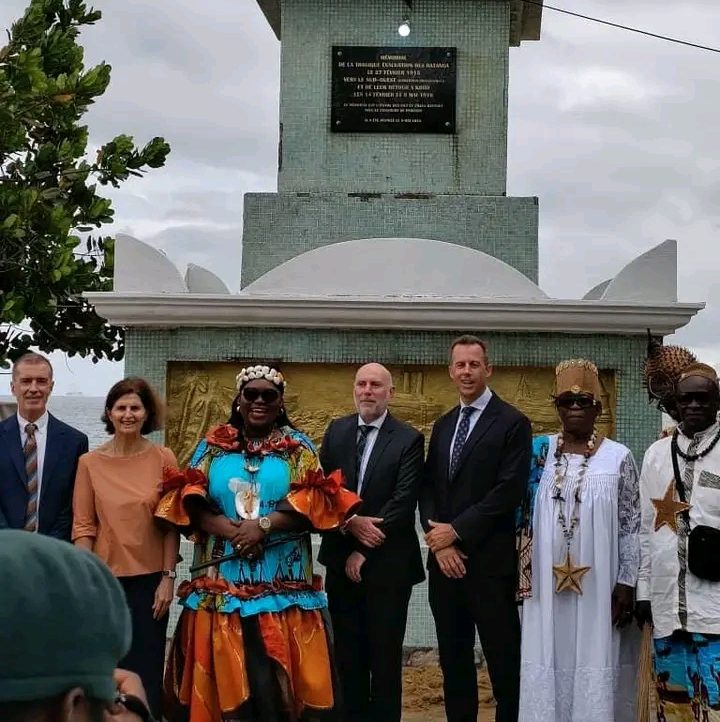
- A commemorative ceremony was held in Kribi, Cameroon, marking 110 years since the forced exile of the Batanga people under German colonial rule.
- Representatives from German, French, and British diplomatic missions attended the event at the Batanga memorial.
- The ceremony included moments of remembrance followed by cultural festivities, highlighting the enduring Batanga identity.
In Kribi, Cameroon, the 110th anniversary of the forced exile of the Batanga people served as a poignant reminder of the enduring scars left by German colonial rule. The presence of German, French, and British diplomatic representatives at the memorial ceremony is a significant gesture, acknowledging a painful chapter in history and participating in a dialogue about the complex legacy of colonialism. For the Batanga people and Cameroon as a whole, this commemoration is not merely an academic exercise but a vital act of remembrance, ensuring that this traumatic past is not forgotten and that the resilience of their identity is celebrated.
The Batanga's story, marked by forced displacement and dispersion from their ancestral lands around Kribi, is a narrative of profound loss and survival. Their gradual return after World War I did little to erase the deep wounds inflicted by colonial policies. The oral traditions and family accounts that keep this history alive underscore the importance of such commemorative events. They provide a platform for the younger generations to connect with their heritage and understand the struggles that shaped their community.
This event, as covered by local media, transcends a simple historical recounting. It is a testament to the Batanga's enduring spirit and cultural vitality, showcased through the subsequent dances, songs, and artistic expressions. The commemoration in Kribi emphasizes that memory is not static; it is a living, evolving entity that is continuously shared and reshaped. From a Cameroonian perspective, this ceremony is crucial for national identity, reinforcing the narrative of resilience against historical injustices and celebrating the rich cultural tapestry that persists despite colonial disruptions. It highlights how local communities actively engage with their history, ensuring that their stories are told and their heritage is honored, often in ways that differ from international historical interpretations.
DistantNews Editorial
Originally published by Journal du Cameroun in French. Translated, summarized, and contextualized by our editorial team with added local perspective. Read our editorial standards.
More Stories
From Our Blog

What Gets Lost (and Found) When News Is Translated

The Critical Role of Diaspora Media in Global News

What Travellers Should Know About Countries with Restricted Press

A Digital Nomad's Guide to Following Local News

How the Same Story Looks Different in Different Countries
