


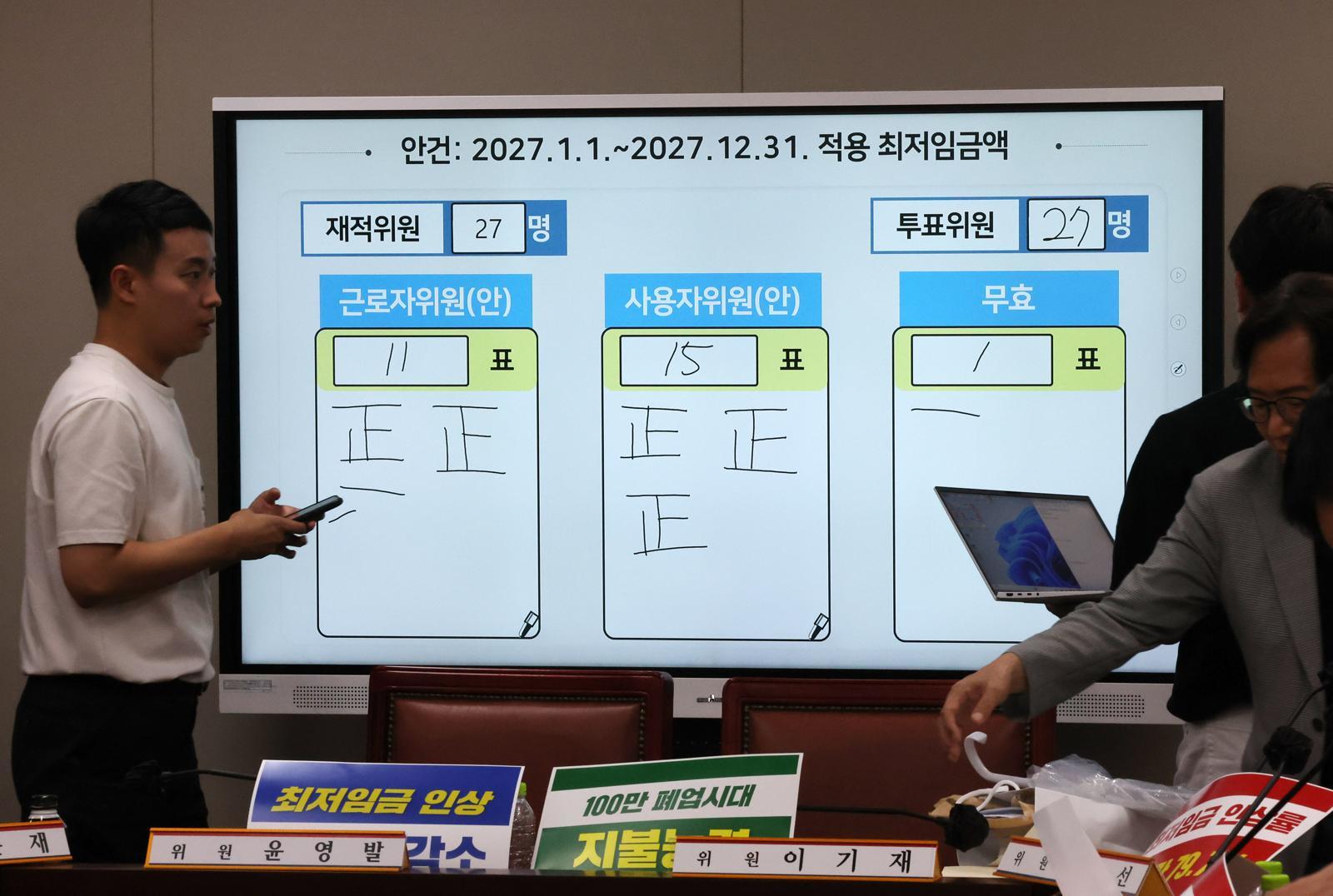
Labor, management object to next year's minimum wage; review unlikely
Translated from Korean, summarized and contextualized by DistantNews.
At a glance
News
Sources not specified
Context piece
- Both labor and management have filed objections to South Korea's newly decided minimum wage of 10,700 won per hour for next year.
- The labor union argues the increase is insufficient to cover living costs and exclude contract workers, while management claims it's an excessive burden on small businesses.
- While objections can lead to a review, this has never happened in the history of South Korea's minimum wage system since 1988.
Seoul, South Korea – South Korea faces a potential review of its minimum wage after both labor unions and employer associations lodged formal objections to the newly set rate of 10,700 won ($7.70) per hour for next year. This marks the first time in four years that both sides have simultaneously challenged the minimum wage decision.
The 3.7% increase is insufficient to recover the accumulated real wage decline and guarantee the living expenses of low-wage workers.
The Korean Confederation of Trade Unions (KCTU) argues that the 3.7% increase, which brings the monthly wage to 2.23 million won for a 209-hour workweek, is inadequate to offset accumulated real wage declines and ensure a basic living standard for low-wage workers. A significant point of contention for labor is the failure to establish a separate minimum wage for contract workers, such as delivery riders, who are paid per task or performance.
Conversely, the Korea Federation of Small Business Cooperatives (KFSBC) contends that the wage hike is unsustainable for small businesses already facing severe economic challenges. They argue that the increase, decided despite ongoing domestic consumption slowdowns, rising debt, and declining sales, places an "unprecedented crisis" on their operations. The KFSBC had initially pushed for a wage freeze or minimal increase, stating that anything above a 2% rise was unacceptable.
Despite the unprecedented crisis faced by small business owners, the largest increase in four years, 3.7%, has been decided.
Under South Korean law, the Minister of Employment and Labor can request a review from the Minimum Wage Committee if objections are deemed valid. However, historical precedent suggests this is unlikely. Since the minimum wage system's inception in 1988, no objection has ever resulted in a formal review by the committee. In a similar situation in 2022, objections to the 2023 minimum wage were also rejected by the ministry, which cited the deliberation process. Given the tight schedule for finalizing and announcing the minimum wage by early August, observers believe a review is improbable this year as well.
It is unlikely that the Minister of Employment and Labor will request a review from the Minimum Wage Committee, as it would be a significant burden.
DistantNews Editorial
Originally published by Dong-A Ilbo in Korean. Translated, summarized, and contextualized by our editorial team with added local perspective. Read our editorial standards.
More Stories


From Our Blog

What Gets Lost (and Found) When News Is Translated

The Critical Role of Diaspora Media in Global News

What Travellers Should Know About Countries with Restricted Press

A Digital Nomad's Guide to Following Local News

How the Same Story Looks Different in Different Countries
