


Lake burst risk wanes near China-Nepal disaster site as water levels drop
Translated from English and summarized by DistantNews. Read the original for the full story.
At a glance
News
From a news agency
Ongoing story
- Chinese authorities reported a decreased risk of a glacial lake bursting near the China-Nepal border following a devastating flood.
- Satellite images show the lake has shrunk, with water slowly flowing through, reducing the reservoir.
- Rescue efforts continue amidst dangerous conditions, with China's death toll at seven and 554 missing.
The immediate danger posed by a newly formed glacial lake near the China-Nepal border has subsided, according to Chinese authorities. The lake, a consequence of a massive glacier collapse earlier this week that triggered a devastating flood, showed signs of shrinking as of Saturday morning.
Satellite imagery captured between Thursday and Saturday indicated that water in the lake, which straddles the border at the confluence of two rivers, has been gradually flowing through. This natural drainage has led to a decrease in the reservoir's size. The Water Resources Ministry reported that the lake's surface area on Saturday morning was approximately 99,000 square meters, about the size of 14 football fields. This represents a reduction of 21,000 square meters since Thursday.
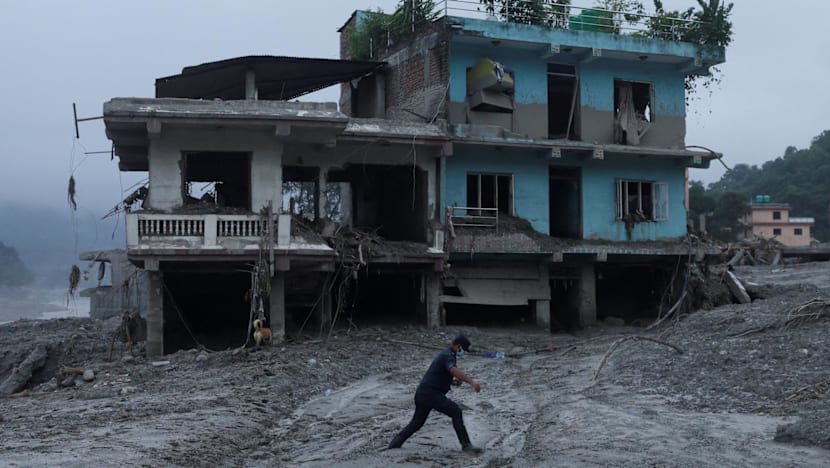
The glacier collapse on Wednesday unleashed a powerful torrent of rock, ice, and mud, devastating Himalayan river systems. It swept away a border port complex connecting China's Tibet region to Nepal, resulting in hundreds of deaths and thousands of missing persons. Experts had warned of a high risk of secondary disasters, particularly from the glacial lake, which could endanger downstream rescue operations.
China Anneng, a state-owned engineering and rescue enterprise, has been monitoring the lake. A 15-member team was dispatched on Friday with advanced equipment, including reconnaissance drones and mobile surveillance cameras, to gather more data. While an overflow from the lake on Friday temporarily halted rescue work, further assessments deemed the risks manageable. Authorities are also monitoring a larger body of water at the glacier collapse site, estimated to be over 120,000 square meters, though its depth remains unknown.
Despite the receding lake threat, rescue operations continue under challenging conditions. More than 50 rescue workers searched through debris in bleak weather on Saturday, seeking survivors. The main disaster zone faces difficulties due to destroyed roads and communication lines. China's official death toll had risen to seven by Saturday, with 554 people still missing. Nearly 500 villagers and construction workers, along with all 555 tourists, have been evacuated from the affected area.
We estimate its area to be over 120,000 square meters, but its depth is currently unknown.
About this summary
Originally published by The Straits Times in English. Translated, summarized, and contextualized automatically by DistantNews, with a note on how the source frames the story. Not individually reviewed before publishing. How this works.
More Stories


From Our Blog

What Gets Lost (and Found) When News Is Translated

The Critical Role of Diaspora Media in Global News

What Travellers Should Know About Countries with Restricted Press

A Digital Nomad's Guide to Following Local News

How the Same Story Looks Different in Different Countries
