


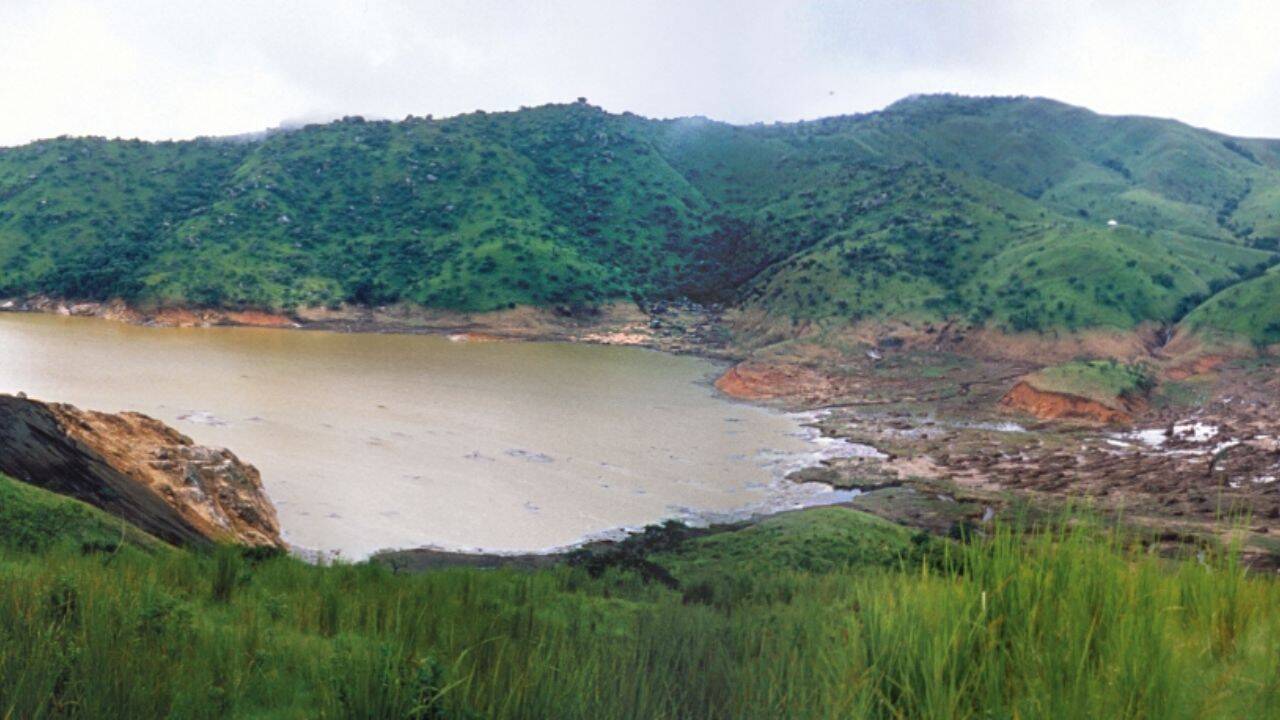
Lake Nyos: From Deadly Eruption Site to Global Research Hub
Translated from English, summarized and contextualized by DistantNews.
At a glance
News
Sources not specified
Outcome reported
- Lake Nyos in Cameroon, the site of a deadly 1986 limnic eruption that killed 1,746 people and over 3,000 livestock, has become a focus for international research into volcanic lakes.
- Scientists discovered that carbon dioxide continued to accumulate in the lake's deep water after the disaster, indicating a natural replenishment process and transforming the lake into a natural laboratory.
- The tragedy spurred the creation of the International Working Group on Crater Lakes, now the Commission on Volcanic Lakes, fostering global scientific exchange on volcanic lake hazards.
Lake Nyos in Cameroon, a seemingly tranquil volcanic lake, holds a deadly secret beneath its surface. In 1986, this geological anomaly released a massive cloud of carbon dioxide, suffocating 1,746 people and thousands of livestock in nearby communities. This catastrophic event, known as a limnic eruption, transformed the lake into a critical site for scientific study.
What made the 1986 disaster particularly significant for scientists was the continued accumulation of carbon dioxide in the lake's deep waters. This discovery revealed that the gas supply was naturally replenished, turning Lake Nyos into a unique natural laboratory. It offered an unprecedented opportunity to study the behavior of dissolved gases in volcanic lakes and the potential for seemingly calm waters to harbor dangerous conditions.
The tragedy also served as a catalyst for international scientific collaboration. Less than a year after the disaster, experts convened in Yaoundé, leading to the establishment of the International Working Group on Crater Lakes. This group evolved into the Commission on Volcanic Lakes, providing a platform for scientists worldwide to share crucial observations on volcanic lakes, their chemistry, and associated risks. Lake Nyos remains a central focus of this ongoing research.
DistantNews Editorial
Originally published by Times of India in English. Translated, summarized, and contextualized by our editorial team with added local perspective. Read our editorial standards.
More Stories


From Our Blog

What Press Freedom Means for the News You Read

What Gets Lost (and Found) When News Is Translated

The Critical Role of Diaspora Media in Global News

What Travellers Should Know About Countries with Restricted Press

A Digital Nomad's Guide to Following Local News
