

Lausitz Festival 2026 explores post-coal transformation with diverse program
Translated from German, summarized and contextualized by DistantNews.
At a glance
News
From a news agency
New plan
- The Lausitz Festival will return for its seventh edition from August 25 to September 13, 2026, across Brandenburg and Saxony.
- Under the motto "geschöpferisch" (creative), the festival explores the region's transformation after the coal phase-out.
- Events include theater, music, literature, and photography in diverse venues, from churches to a former aircraft hangar, with reduced funding impacting the number of performances.
The "Lausitz Festival" is set to illuminate Brandenburg and Saxony for its seventh iteration, running from August 25 to September 13, 2026. With 22 venues across 14 locations, the festival aims to bring literature, photography, music, and theater to the region. This year's theme, "geschöpferisch" (creative), reflects the ongoing transformation of the Lusatia region following its transition away from coal.
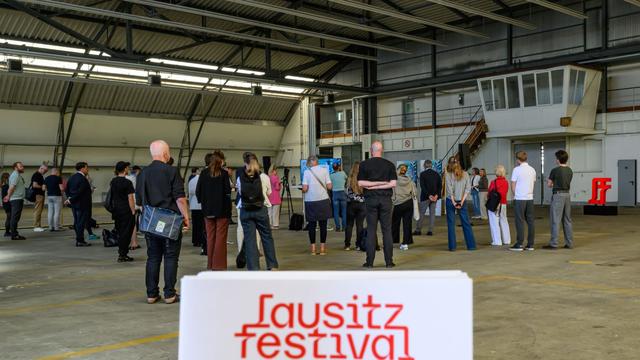
Festival director Daniel Kühnel stated that culture's role is to offer new perspectives and viewpoints, encouraging audiences to engage with these shifts. The festival will utilize a variety of unique spaces, including village churches, small theaters, a historic machine hall, and a former military aircraft hangar in Cottbus. Shakespeare's "Hamlet" will be performed four times in this hangar, featuring prominent actors like Corinna Harfouch and Götz Schubert, with a premiere already sold out.
Beyond theater, the festival will showcase Brazilian contemporary artist Jonathas de Andrade in an exhibition co-organized with the State Museum of Modern Art in Cottbus. Three Brazilian musicians will perform in Knappenrode, and literature will be represented by a reading of Boleslaw Prus's "The Doll." Philosophical discussions will take place at the "Lausitz Labor" in Cottbus, and a youth club will present a new play exploring themes of leaving and staying in one's homeland.
Despite attracting around 15,000 visitors last year, the festival faces financial challenges. Federal funding has been halved from 4 million to 2 million euros, leaving the festival with 3.3 million euros from federal, state, and foundation sources. Consequently, the number of performances has been reduced. A new "Credo Prize" will be introduced, awarded every two years to an individual who champions culture.
DistantNews Editorial
Originally published by Die Zeit in German. Translated, summarized, and contextualized by our editorial team with added local perspective. Read our editorial standards.
More Stories


From Our Blog

What Gets Lost (and Found) When News Is Translated

How the Same Story Looks Different in Different Countries

The Critical Role of Diaspora Media in Global News

What Travellers Should Know About Countries with Restricted Press

A Digital Nomad's Guide to Following Local News
