


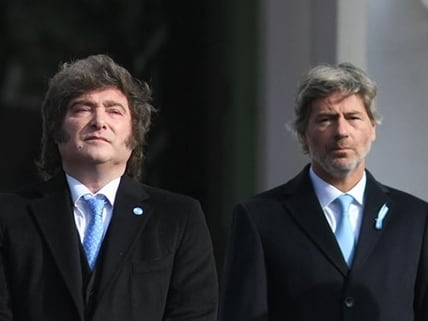
Lawsuit filed to block Milei decree limiting citizen input on judge nominations
Translated from Spanish, summarized and contextualized by DistantNews.
At a glance
News
Sources not specified
Context piece
- A constitutional lawyer filed a lawsuit to block a decree by Argentine President Javier Milei that limits public participation in judicial appointments.
- Several NGOs also rejected the measure, arguing it represents a setback for public participation and gender equality in democracy.
- The decree removed a public consultation step before presidential nominations and eliminated suggestions for gender, legal specialty, and regional diversity in candidate selection.
A constitutional lawyer has filed a lawsuit challenging Argentine President Javier Milei's decree that curtails public input in the selection of judges. The legal challenge seeks to halt the decree's implementation.
Simultaneously, a coalition of NGOs released a joint statement condemning the measure. They argue that the changes introduced by Decree 467/2026 signify a regression in citizen engagement with public affairs and gender equality, thereby undermining the quality of Argentina's democracy. The organizations include the Civil Association for Equality and Justice (ACIJ), Poder Ciudadano, the Latin American Team for Justice and Gender (ELA), Amnesty International, Democracy in Network, the Center for Legal and Social Studies (CELS), the Institute of Comparative Studies in Penal and Social Sciences (INECIP), the Center for Justice and International Law (CEJIL), and the GQUAL Campaign.
The decree in question eliminated the public participation stage within the Ministry of Justice, which previously preceded presidential nominations. It also discarded the recommendation to consider gender diversity, legal expertise, and regional background when selecting candidates for the judiciary. The government contends that this initial public consultation was redundant, as a similar process occurs when nominees reach the Senate. Critics, however, argue that the now-abolished stage was crucial for informing the executive branch about potential challenges before candidate selection.
While the government claims the dual participation process caused delays in filling judicial vacancies, the NGOs countered that the less-than-two-month timeframe for the now-removed public consultation was reasonable for decisions of such significance. They contrasted this with the years often taken by political powers to fill judicial openings. The lawsuit, filed by constitutional lawyer Andrés Gil Domínguez, specifically targets Article 11 of Decree 467/2026, which repeals citizen participation mechanisms established by previous decrees from 2003. Domínguez also requested a preliminary injunction to suspend the decree's application pending a full review.
DistantNews Editorial
Originally published by La Nación in Spanish. Translated, summarized, and contextualized by our editorial team with added local perspective. Read our editorial standards.
More Stories

From Our Blog

What Gets Lost (and Found) When News Is Translated

The Critical Role of Diaspora Media in Global News

What Travellers Should Know About Countries with Restricted Press

A Digital Nomad's Guide to Following Local News

How the Same Story Looks Different in Different Countries
