


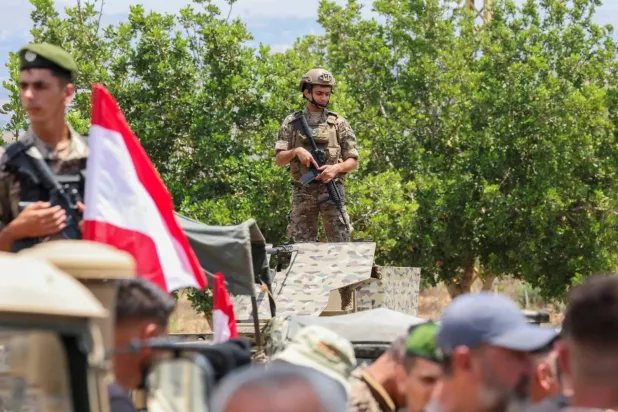
Lebanese Army Assesses Risks in Pilot Zones for Civilians’ Return
Summarized and contextualized by DistantNews.
At a glance
News
Named sources
Ongoing story
- The Lebanese army is assessing risks and securing pilot zones for civilian return, starting with Zawtar al-Gharbiyeh in southern Lebanon.
- Troops are clearing weapons and ammunition to ensure resident safety, though full return is delayed until areas are secured.
- Legal hurdles remain regarding the army's authority to search private property, with several proposals under judicial review.
Lebanon's army is actively working to secure pilot zones for the return of civilians, beginning with the southern village of Zawtar al-Gharbiyeh. Prime Minister Nawaf Salam visited the village, raising the Lebanese flag, as troops continued surveying the area to remove leftover weapons and ammunition from the conflict.
The primary goal is to ensure the safety of residents before they can return home. A security source indicated that the return of civilians is contingent upon the complete securing of the area by army engineering units, to mitigate any threats to life. This process has caused delays in residents being able to go back to their homes.
While the army deploys in areas vacated by Israeli forces under a U.S.-backed framework agreement, a significant challenge persists: the search of private property. Lebanese law requires judicial authorization for such searches, creating a procedural obstacle. Zawtar al-Gharbiyeh itself suffered extensive destruction, with no homes remaining standing.
To address this, Lebanon's judiciary is reviewing three proposals to grant the army necessary search authority while navigating legal complexities. Options range from open-ended search powers to requiring specific judicial approval for each entry, or granting permits on an area-by-area basis. The latter is considered the most likely path forward, aiming to balance security needs with legal requirements.
residents could not return until army engineering units had fully secured the area, to protect civilians from threats to their lives.
DistantNews Editorial
Originally published by Asharq Al-Awsat. Summarized and contextualized by our editorial team with added local perspective. Read our editorial standards.
More Stories


From Our Blog

What Gets Lost (and Found) When News Is Translated

The Critical Role of Diaspora Media in Global News

What Travellers Should Know About Countries with Restricted Press

A Digital Nomad's Guide to Following Local News

How the Same Story Looks Different in Different Countries
