


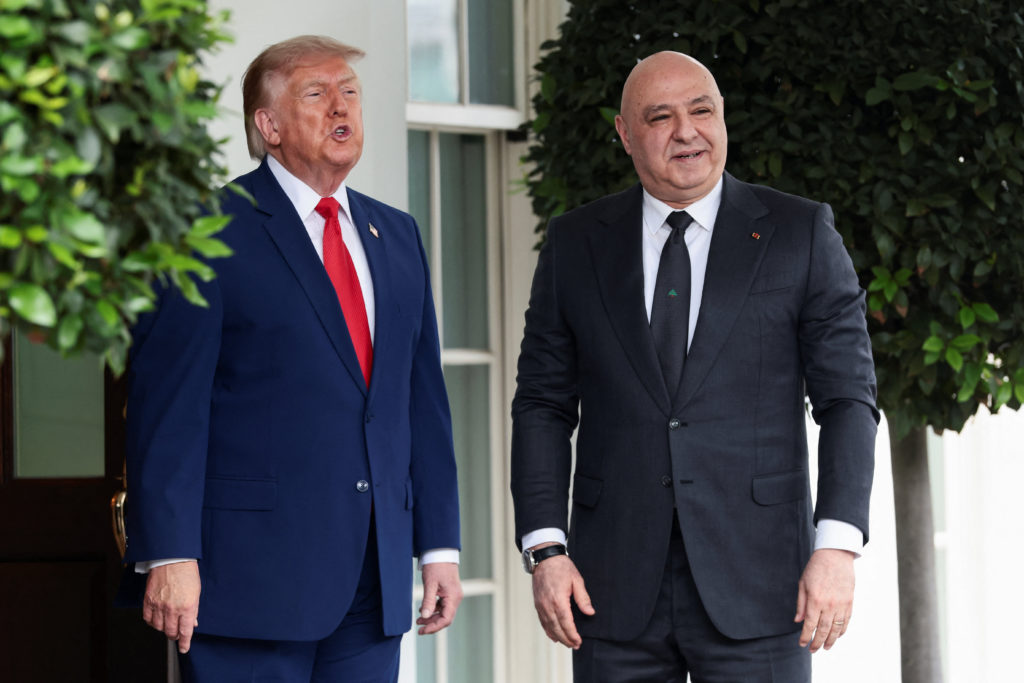
Lebanese president meets Trump amid push for Israeli troop withdrawal
Translated from English, summarized and contextualized by DistantNews.
At a glance
News
From a news agency
Ongoing story
- Lebanon's president met with U.S. President Donald Trump to discuss long-term calm amid ongoing conflict between Israel and Hezbollah.
- The meeting aimed to secure Israeli troop withdrawal from southern Lebanon and bolster the Lebanese military's control.
- Lebanon and Israel previously agreed to a framework for Israeli withdrawal and Hezbollah disarmament, with U.S.-mediated talks ongoing.
Lebanese President Joseph Aoun met with U.S. President Donald Trump in the Oval Office, seeking a path to lasting peace after months of conflict between Israel and the militant group Hezbollah. This visit marked the first time a Lebanese president has met with a U.S. president at the White House since 2009.
The villages are intertwined, so we don't feel safe because the Israelis are present there, they're on our borders and are not very far from us.
The core of Lebanon's hopes rested on securing Israeli troop withdrawal from occupied southern territories. Simultaneously, Lebanon sought U.S. support for its military to assert full control in areas previously influenced by Hezbollah. This diplomatic push follows a "framework agreement" reached on June 26, outlining a plan for Israeli withdrawal and Hezbollah's disarmament, with the ultimate goal of a peace agreement between the two nations that have been in a state of war for nearly 80 years.
Once the army gives us permission to enter Zawtar al-Gharbieh, we as civilians will go in, but only to check it out and see how things are and then we will leave.
Despite the diplomatic efforts, the situation on the ground remained tense. The U.S. State Department announced the commencement of operations in three villages designated as a "pilot zone." However, challenges emerged, including reports of Israeli troops firing near a Lebanese army deployment area, raising concerns that such actions could delay the military's planned intervention. The mayor of Zawtar al-Gharbieh expressed apprehension, stating that residents would not feel safe to return to their homes until the Lebanese army confirmed the area was secure, especially given the continued Israeli presence and nearby strikes.
We can't stay because the infrastructure is completely damaged and houses have been
DistantNews Editorial
Originally published by PBS NewsHour in English. Translated, summarized, and contextualized by our editorial team with added local perspective. Read our editorial standards.
More Stories


From Our Blog

How the Same Story Looks Different in Different Countries

What Gets Lost (and Found) When News Is Translated

The Critical Role of Diaspora Media in Global News

What Travellers Should Know About Countries with Restricted Press

A Digital Nomad's Guide to Following Local News
