


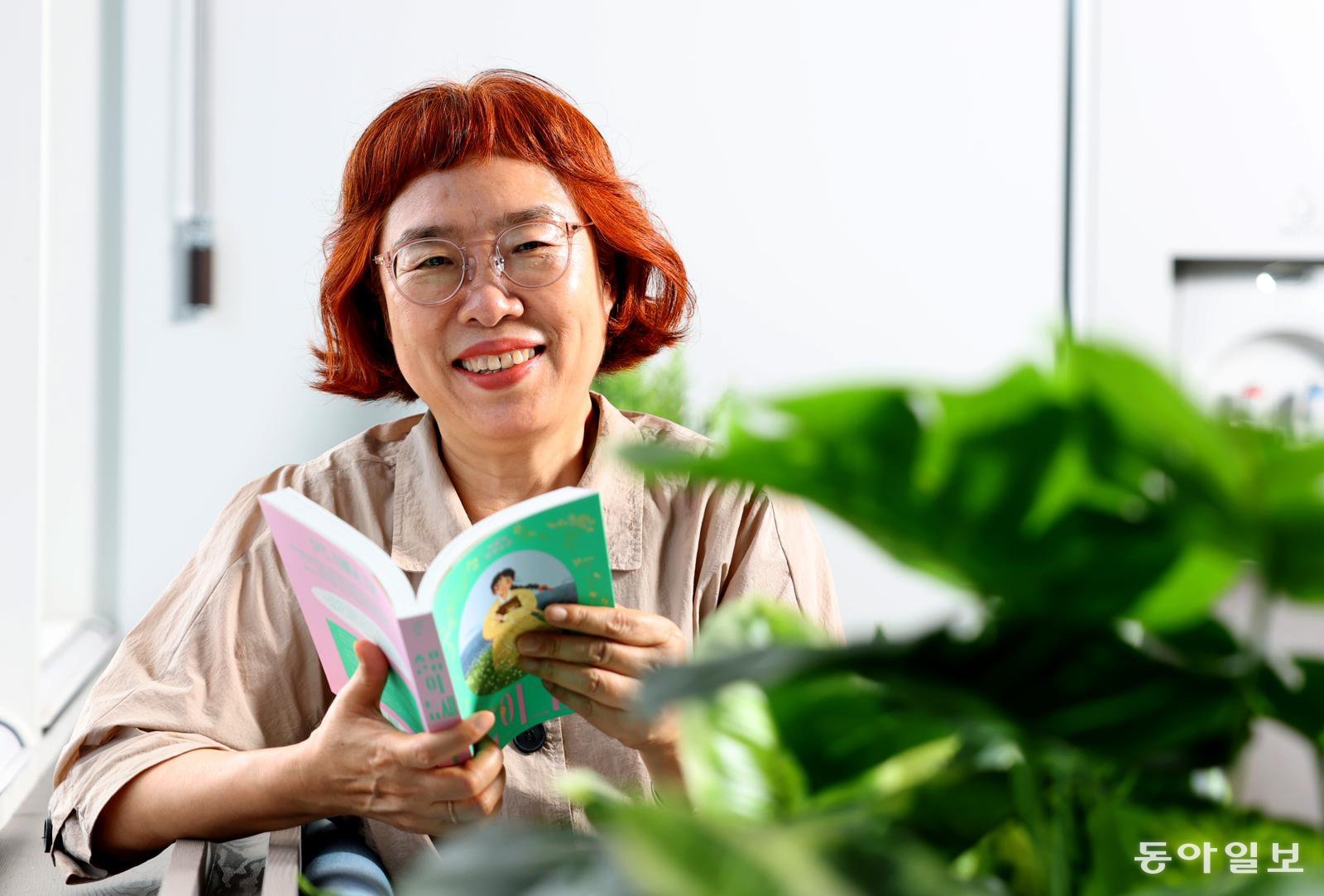
Lee Geum-yi: 'I'm happy to return to that age when writing fairy tales'
Translated from Korean and summarized by DistantNews. Read the original for the full story.
At a glance
In-depth
Named sources
Context piece
- South Korean children's author Lee Geum-yi was a finalist for the Hans Christian Andersen Award for the second time, highlighting the global recognition of Korean children's literature.
- Lee reflected on the evolution of children's literature genres and expressed her hope that books help children develop empathy and avoid prejudice.
- The 64-year-old author, who has written over 50 books in 40 years, finds joy in writing children's stories, which she says allows her to revisit her own childhood and heal herself.
Lee Geum-yi, a prominent South Korean author of children's and young adult literature, has once again been recognized on the international stage, reaching the final round of the Hans Christian Andersen Award (HCAA) in April. This prestigious award, often called the "Nobel Prize of Children's Literature," underscores the growing global presence of Korean children's literature.
I hope children who have a narrow range of experiences can grow into adults who do not lean towards discrimination and hatred by trying to understand others through books.
Reflecting on her 40-year career, Lee noted the significant expansion and development of children's literature genres, including science fiction and fantasy. She expressed a desire for books to broaden children's experiences beyond their immediate surroundings of apartments, schools, and academies. "I hope children who have a narrow range of experiences can grow into adults who do not lean towards discrimination and hatred by trying to understand others through books," she said.
Lee, who debuted as a children's author in 1984, has penned over 50 works. She finds profound happiness in writing, stating, "It is truly happy that I can return to that age at least when I am writing." She described the process as one that allows her to maintain a childlike innocence and sincerity, even when writing sad stories. "I used to think it was because I had childlike innocence, but these days I think it's because the child with wounds from my childhood keeps asking me to tell their story," she explained. "Even when I get material from daily life, I draw the emotions from within myself. So, the first person to be comforted and healed while writing is myself."
It is truly happy that I can return to that age at least when I am writing.
Her works, such as the "Big Stone House in Bamti Village" series, have shed light on the lives of the marginalized while offering warmth and comfort. Books like "You Are Also a Sky Lark" and "You Are Just a Little Different from Me" have become steady sellers. Lee also recently expanded into historical novels with a trilogy about Korean diaspora during the Japanese colonial era, inspired by her childhood reading of works by authors like Yi Gwang-su and Park Kyung-ni. She hopes to break down the "invisible boundary" that dismisses children's and young adult literature as childish.
Even when I get material from daily life, I draw the emotions from within myself. So, the first person to be comforted and healed while writing is myself.
Despite the challenges of writing, which she likens to childbirth, Lee finds joy in the creative struggle. She believes good children's literature must be fun, depict reality accurately, offer hope, and uphold humanity. "Showing those who make the right choices despite wavering, those who answer the question 'Why are we human?' is also the job of a children's and young adult literature author," she stated. While she enjoyed being an Andersen Award finalist the first time as a bonus for her 40th anniversary, she feels the increased expectations this second time. "I have already gained everything I could through writing. There is nothing happier than doing what I wanted to do my whole life," she said, but acknowledged that the award could bring more attention and opportunities to Korean children's literature.
I hope to break down the 'invisible boundary' that dismisses children's and young adult literature as childish.
About this summary
Originally published by Dong-A Ilbo in Korean. Translated, summarized, and contextualized automatically by DistantNews, with a note on how the source frames the story. Not individually reviewed before publishing. How this works.
More Stories


From Our Blog

What Gets Lost (and Found) When News Is Translated

The Critical Role of Diaspora Media in Global News

What Travellers Should Know About Countries with Restricted Press

A Digital Nomad's Guide to Following Local News

How the Same Story Looks Different in Different Countries
