


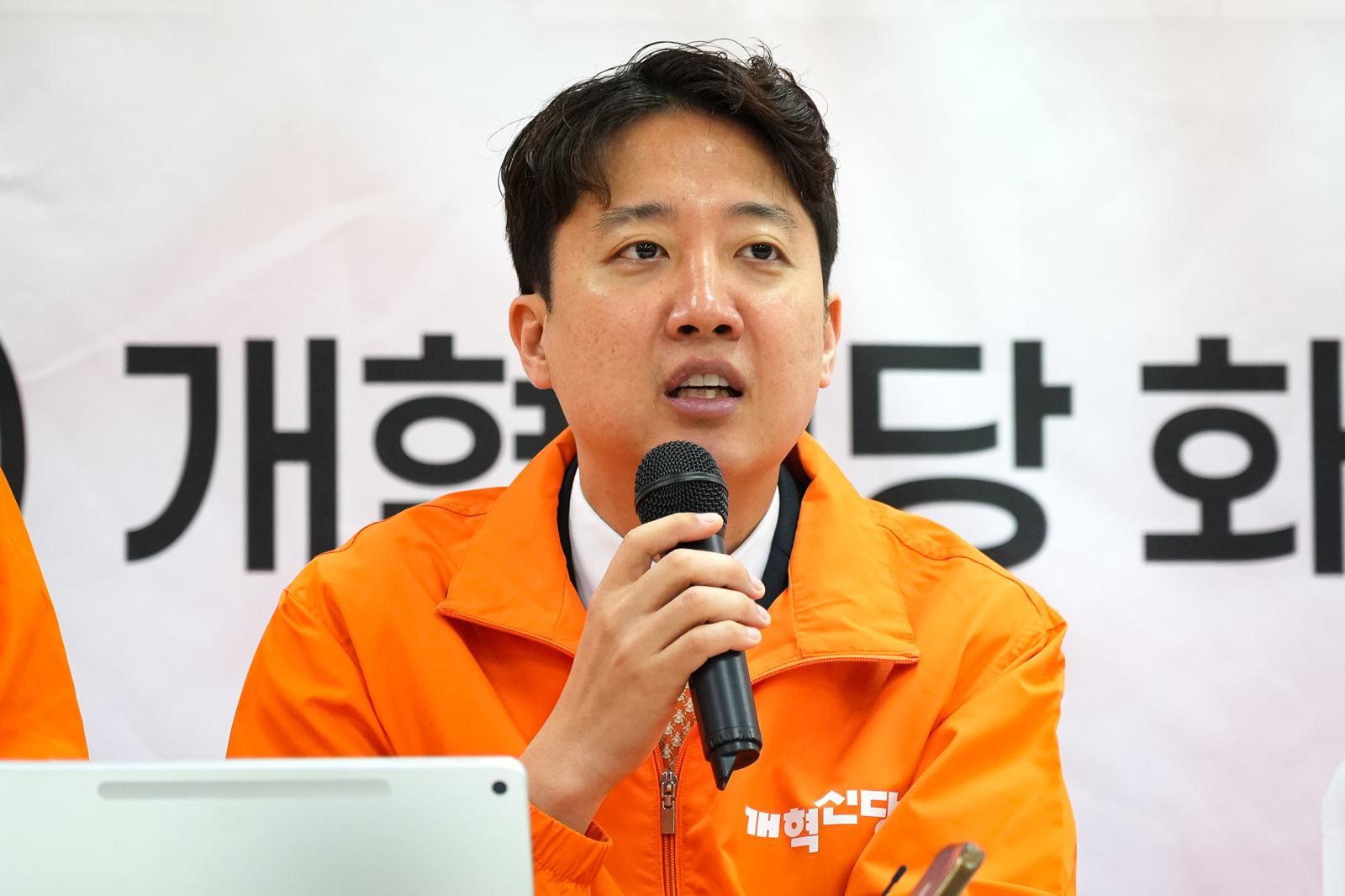
Lee Jun-seok: Ruling party must accept probe into ballot paper shortage
Translated from Korean, summarized and contextualized by DistantNews.
At a glance
News
Named sources
Under investigation
- Lee Jun-seok, leader of the Reform Party, called for an immediate parliamentary investigation into the ballot paper shortage during South Korea's recent local elections.
- He argued that if the shortage was intentional, those responsible must be held accountable, and if it was a systemic failure, the Election Commission's continued existence should be questioned.
- Lee criticized the ruling party for creating distrust in investigative agencies and urged the opposition to demand a special prosecutor if the investigation is delayed.
Lee Jun-seok, leader of the Reform Party, has demanded an immediate parliamentary investigation into the ballot paper shortage that occurred at some polling stations during the May 3rd local elections. He stated that if the issue was intentional, those responsible must be held accountable, and if it stemmed from systemic flaws, the very existence of the National Election Commission (NEC) should be scrutinized.
"The ruling party has created distrust in all investigative agencies under the Lee Jae-myung administration," Lee wrote on Facebook. He warned that if the ruling party delays accepting the parliamentary investigation, calls for a special prosecutor could erupt. He urged the opposition not to hesitate and to make clear demands, even considering the possibility of a by-election.
The ballot paper shortage led to temporary suspensions and delays in voting at several polling stations in the southeastern part of Seoul. The NEC acknowledged its "grave responsibility" for causing "great disappointment and concern" to voters due to its "mistake." However, the commission maintained that the shortage did not constitute grounds for postponing the election or holding a by-election.
The ruling party has created distrust in all investigative agencies under the Lee Jae-myung administration.
Lee criticized the notion of "election fraud" theories, stating they often lack logical coherence. However, he argued that the current ballot paper shortage presents a different scenario. "Who can accept that an organization solely responsible for managing elections could not properly predict or manage the number of ballot papers?" he questioned, highlighting the public's potential disbelief.
He further urged the opposition to escalate their demand for a special prosecutor if the parliamentary investigation is not accepted by the end of the day. This call reflects a deepening political tension surrounding the election process and the integrity of the electoral commission.
Who can accept that an organization solely responsible for managing elections could not properly predict or manage the number of ballot papers?
DistantNews Editorial
Originally published by Dong-A Ilbo in Korean. Translated, summarized, and contextualized by our editorial team with added local perspective. Read our editorial standards.
More Stories


From Our Blog

What Gets Lost (and Found) When News Is Translated

The Critical Role of Diaspora Media in Global News

What Travellers Should Know About Countries with Restricted Press

A Digital Nomad's Guide to Following Local News

How the Same Story Looks Different in Different Countries
