


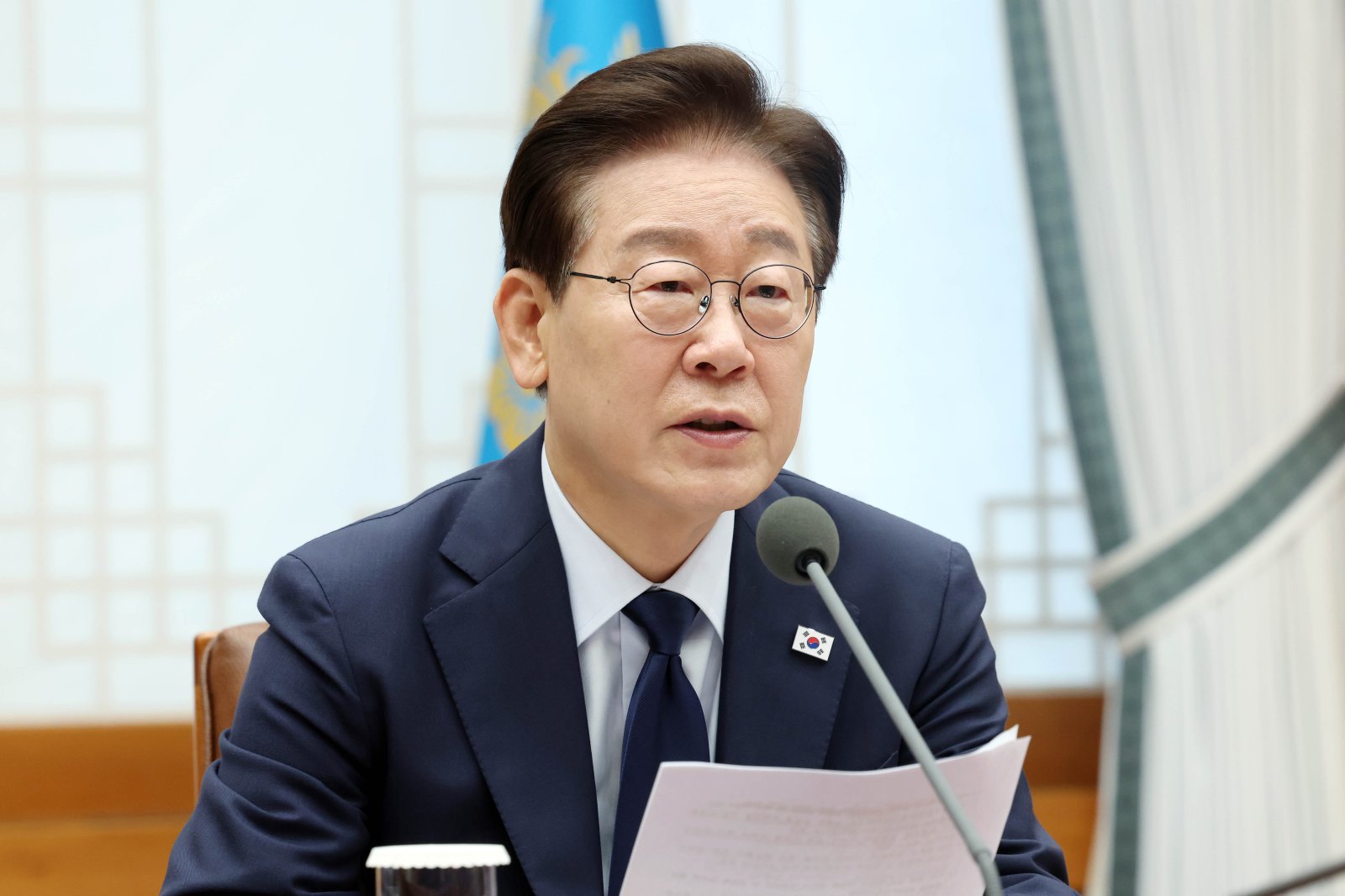
Lee: 'Lightning War' Needed for Mega-Projects, Honam Cluster Must Match Japan's Kumamoto Speed
Translated from Korean, summarized and contextualized by DistantNews.
At a glance
News
Named sources
New plan
- South Korean President Lee Jae-myung is pushing for "lightning-fast" execution of major national projects, including a semiconductor cluster in the Honam region.
- He urged for the early construction of industrial complexes near military airbase sites slated for relocation.
- The president aims to decentralize key industries and prevent regional economic disparities.
South Korean President Lee Jae-myung is demanding an accelerated pace for major national projects, likening the required effort to a "lightning war" rather than just a "speed war." A key focus is the development of a semiconductor cluster in the Honam region, which he wants to see progress with a speed comparable to Japan's Kumamoto project.
We are in a situation where we need to fight a lightning war, not just a speed war.
Lee specifically called for the early commencement of industrial complexes near sites designated for the relocation of the Gwangju military airbase. He instructed the Ministry of National Defense to ensure the airbase's functions are temporarily relocated to other military airports by mid-2028, enabling the Gwangju airbase site to be utilized for the semiconductor industry sooner.
Referencing Japan's Kumamoto, where TSMC's fab broke ground just six months after its announcement and began mass production within three years, Lee highlighted the importance of swift government and local support. Japan's government provided 40% of the investment as subsidies, while Kumamoto prefecture directly addressed issues like industrial water supply and road infrastructure.
For the Honam semiconductor cluster, I hope it will be executed as quickly as Japan's Kumamoto.
The president's overarching goal for these "mega-projects" is to reshape the industrial landscape, shifting advanced industries to regional centers and combating the "K-shaped growth" that widens disparities between regions and corporations. He stressed the need for proactive measures to prevent growth polarization and ensure that the benefits of national investment are not concentrated in a few areas or companies.
Please take measures to ensure that the Gwangju Air Base can be used early as a semiconductor industrial complex by temporarily relocating its functions to other military airports by mid-2028.
Furthermore, Lee emphasized that state investment should extend beyond the immediate beneficiaries of the mega-projects. He called for comprehensive support for the entire industrial ecosystem, including materials and components suppliers, and advocated for a broader "industrial leapfrog strategy" that leverages advancements in physical AI to enhance manufacturing capabilities.
The ultimate goal of the mega-projects is to reorganize the map of super-gap industries around the provinces.
DistantNews Editorial
Originally published by Dong-A Ilbo in Korean. Translated, summarized, and contextualized by our editorial team with added local perspective. Read our editorial standards.
More Stories



From Our Blog

What Gets Lost (and Found) When News Is Translated

The Critical Role of Diaspora Media in Global News

What Travellers Should Know About Countries with Restricted Press

A Digital Nomad's Guide to Following Local News

How the Same Story Looks Different in Different Countries
