


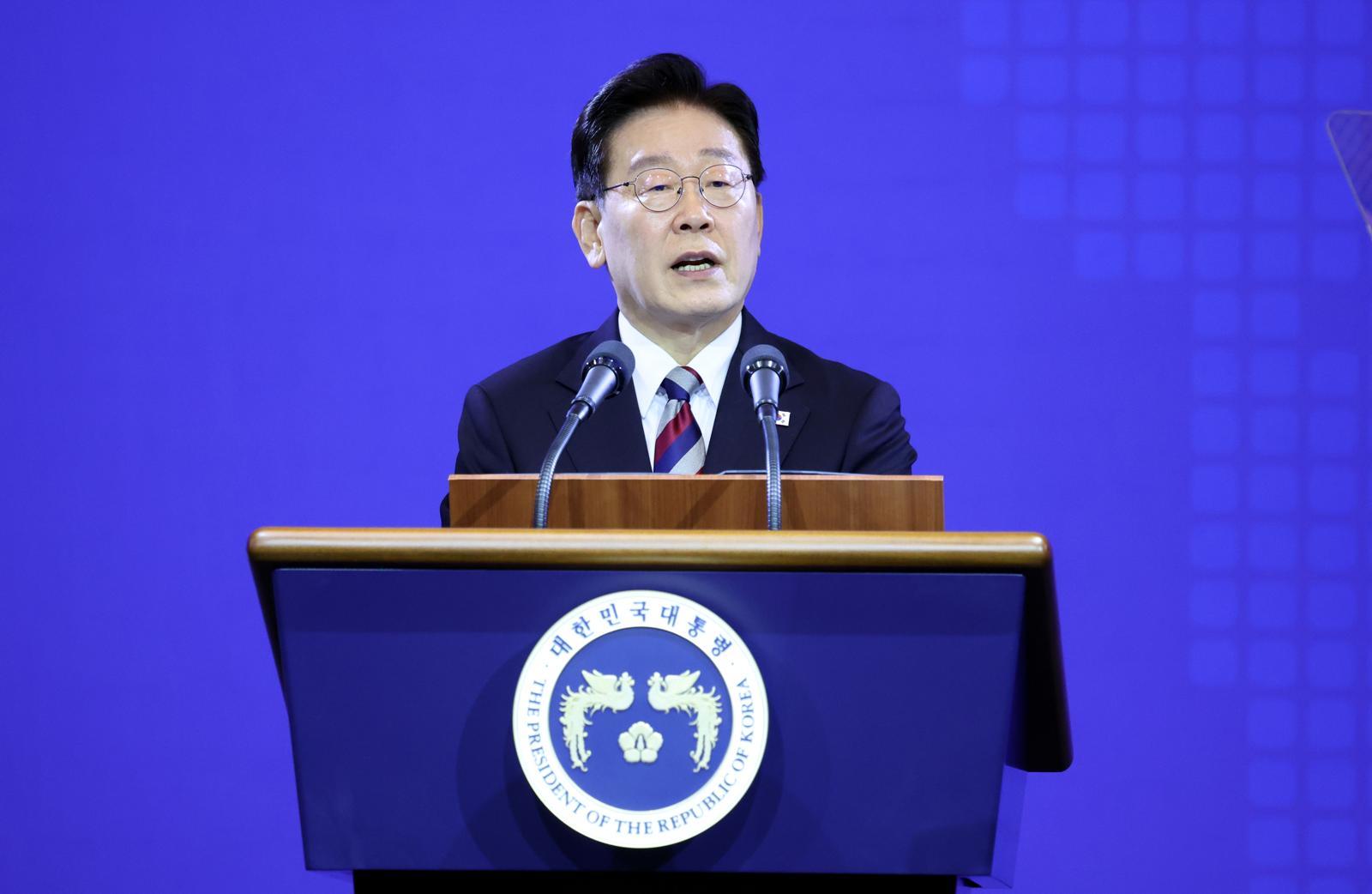
Lee pushes back on criticism of property-tax policy reversal: “Is sticking to a policy automatically right?”
Translated from Korean and summarized by DistantNews. Read the original for the full story.
At a glance
News
Named sources
New plan
- South Korea's government withdrew plans to lower the comprehensive real estate tax deduction for non-resident single-home owners from 12 billion won to 9 billion won.
- It also abandoned a proposal to raise the annual property-tax burden ceiling from 150% to 200% of the previous year's level.
- President Lee Jae-myung defended the revisions, saying policy changes should be judged by their substance and the national interest rather than demands for consistency.
President Lee Jae-myung has challenged critics who accuse his government of retreating from reform after it reversed parts of a planned property-tax overhaul.
"Is changing a policy position unjust, while sticking to it is automatically right?" Lee wrote on X on Sept. 2. He was responding to criticism that the government had abandoned consistency after revising its proposals for the comprehensive real estate tax.
Is changing a policy position unjust, while sticking to it is automatically right?
The government had planned to lower the basic deduction for a non-resident single home from 12 billion won to 9 billion won. After political and public opinion called the reduction excessive, it decided to retain the current 12 billion won threshold. It also dropped a proposal to raise the ceiling on the year-on-year increase in property taxes, including the comprehensive real estate tax, from 150% to 200%.
Lee said the criticism overlooked other changes, including revisions affecting high-priced non-resident single homes, multiple-home owners and ultra-high-priced homes. He also pointed to plans to reduce capital-gains tax exemptions for non-resident single homes, ultra-high-priced homes and multiple-home owners.
A 200% ceiling for increasing the comprehensive real estate tax is not inherently just, nor is 150% inherently unjust. It is simply a policy choice on which preferences differ.
"A 200% ceiling for increasing the comprehensive real estate tax is not inherently just, nor is 150% inherently unjust. It is simply a policy choice on which preferences differ," Lee wrote. He urged critics to examine the government's policies as a whole and consider why housing prices in areas such as Gangnam were currently falling. He questioned whether the government would have avoided criticism had it kept its original position from the start.
Lee ended by calling for politics based on truth, the interests of citizens and the national interest. He said the country needed competition over who could govern well, rather than what he described as incitement, slander and unconditional criticism based on falsehoods.
We need to restore genuine politics grounded in truth, centered on the people and the country, and competing over what best serves the national interest.
About this summary
Originally published by Dong-A Ilbo in Korean. Translated, summarized, and contextualized automatically by DistantNews, with a note on how the source frames the story. Not individually reviewed before publishing. How this works.
More Stories


From Our Blog

What Gets Lost (and Found) When News Is Translated

The Critical Role of Diaspora Media in Global News

What Travellers Should Know About Countries with Restricted Press

A Digital Nomad's Guide to Following Local News

How the Same Story Looks Different in Different Countries
