


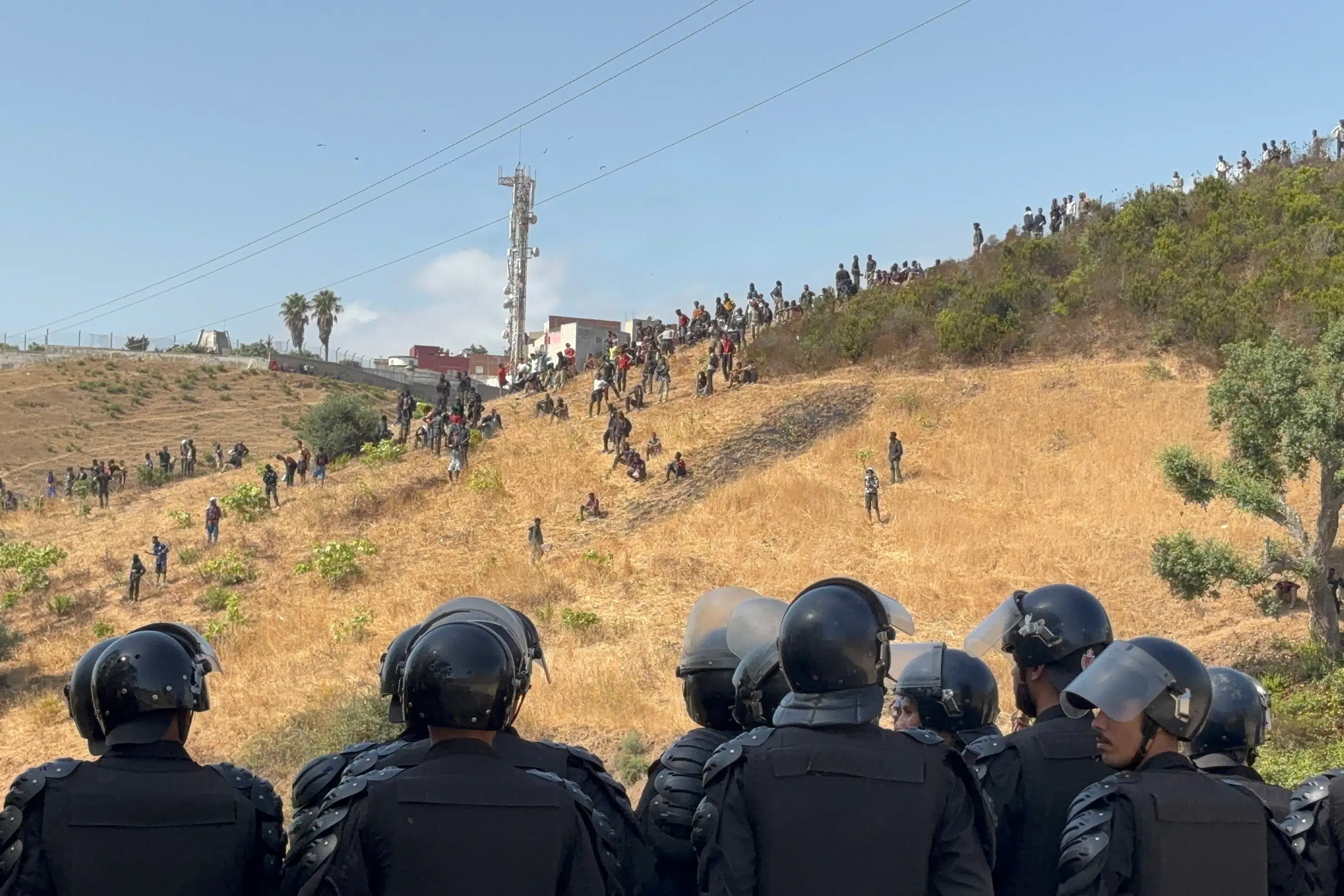
Lesson from Ceuta: EU's southern border rivals wield a powerful weapon
Translated from Danish, summarized and contextualized by DistantNews.
At a glance
Analysis
Sources not specified
Context piece
- Morocco effectively leveraged migration as a political tool during the recent crisis in Ceuta, demonstrating its influence over the EU.
- The article suggests Morocco's actions highlight its power, contrasting its role as a border guard with its ability to control migrant flows.
- This situation serves as a lesson for the EU regarding its southern border and Morocco's strategic leverage.
The recent migrant crisis in Ceuta has underscored Morocco's significant leverage over the European Union, positioning the North African nation as a powerful player in managing migration flows.
During the crisis, Morocco employed distinct tactical approaches, effectively demonstrating its control and influence. The article suggests that in a competitive scenario, Morocco would emerge victorious, highlighting its strategic advantage.
Morocco serves as the EU's de facto border guard, a role it fulfills diligently. However, the events in Ceuta revealed that when Morocco chooses to open the gates, it can significantly impact European policy and border control, demonstrating a potent, albeit sometimes controversial, form of diplomatic power.
This situation offers a critical lesson for the EU concerning its relationship with its southern neighbors and the strategic importance of migration as a political instrument. The ability of Morocco to influence European policy through the control of migrant movement is a stark reminder of the complex geopolitical dynamics at play.
DistantNews Editorial
Originally published by Berlingske in Danish. Translated, summarized, and contextualized by our editorial team with added local perspective. Read our editorial standards.
More Stories


From Our Blog

What Gets Lost (and Found) When News Is Translated

The Critical Role of Diaspora Media in Global News

What Travellers Should Know About Countries with Restricted Press

A Digital Nomad's Guide to Following Local News

How the Same Story Looks Different in Different Countries
