


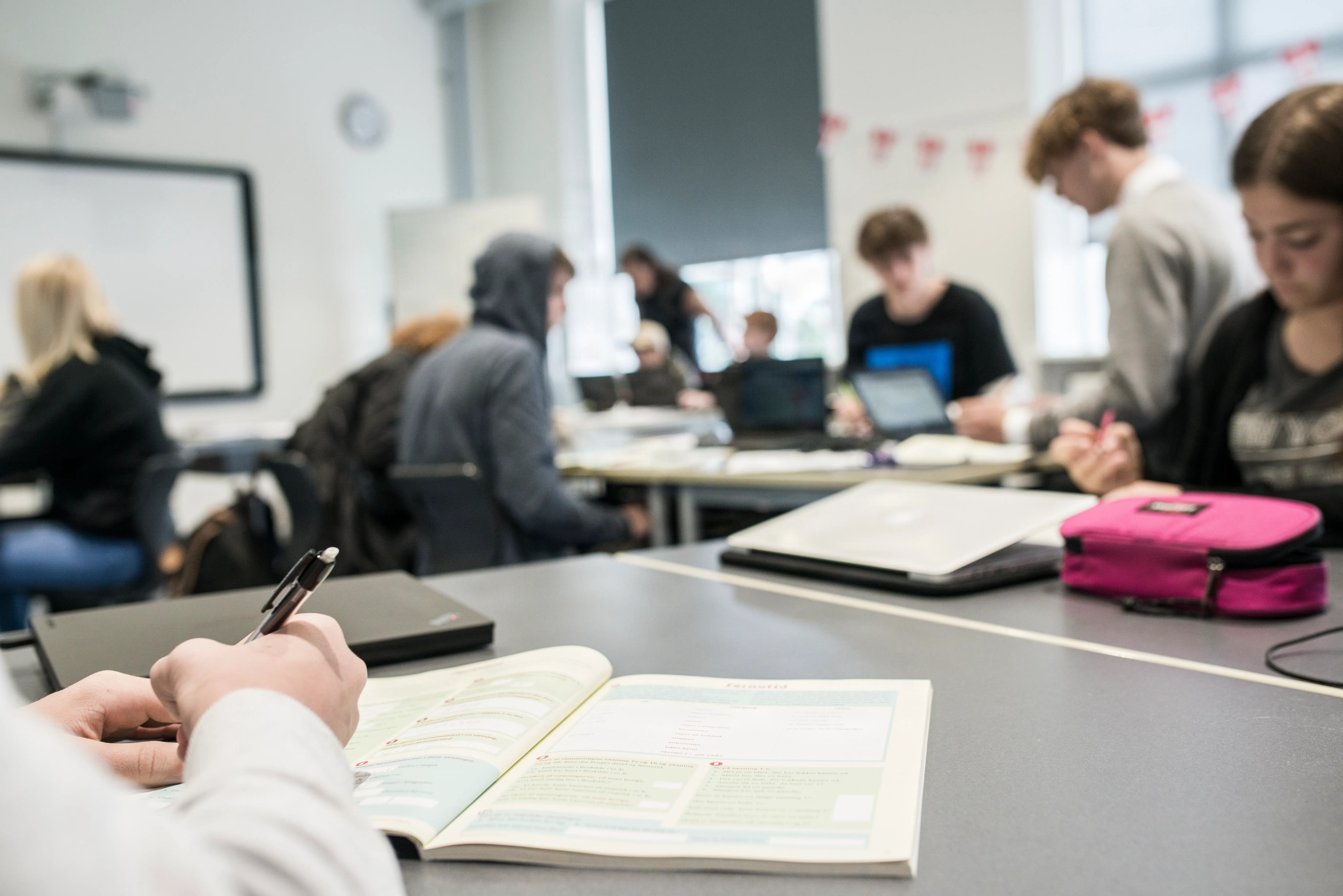
Let's Ensure Fewer Young People Become Losers in the Choice Between Theory and Practice
Translated from Danish, summarized and contextualized by DistantNews.
At a glance
Opinion
Sources not specified
Context piece
- A Danish teacher argues for the 'epx' educational reform, which combines theoretical and practical learning for high school students.
- The reform aims to provide more students with opportunities to succeed by bridging the gap between academic and vocational paths.
- The author believes 'epx' respects both manual and intellectual labor and deserves a chance to prove its effectiveness.
A Danish high school teacher is advocating for the 'epx' educational reform, a new model designed to blend theoretical and practical learning for students. The teacher, Brian Saugberg, acknowledges the intense debate surrounding the reform but ultimately sees more potential than problems, drawing from his daily experiences teaching at both 'stx' (general academic upper secondary school) and 'HF' (higher preparatory examination) levels.
Saugberg observes that for many years, education systems have tended to categorize young people as either "academic" or "practical," failing to recognize that most students don't fit neatly into such boxes. He notes that many HF students are as intelligent and ambitious as their stx counterparts but find a heavily theory-focused curriculum an unnecessary barrier to learning and well-being. Therefore, a combined theory-and-practice approach makes sense, not to lower standards, but to increase opportunities for success.
While acknowledging the existence of the 'eux' vocational program, Saugberg points out it hasn't gained widespread traction. He addresses criticism that other programs have mimicked the 'stx' culture by adopting their own caps and traditions, suggesting this reflects a desire for community and a relatable student life. He agrees with former minister Mattias Tesfaye's sentiment that students should ideally enter through a common pathway, emphasizing the importance of respecting diverse learning styles and aspirations from a young age.
Saugberg views 'epx' not as an attack on the established 'stx' model but as an effort to grant more students access to the proven qualities of a strong academic environment, including robust professional communities, social cohesion, and traditions. He concedes that 'epx' may not be flawless, as no major reform is, but argues that if it can foster greater respect for both manual and intellectual work and help more students thrive academically without closing doors to further education, it warrants a genuine opportunity.
DistantNews Editorial
Originally published by Berlingske in Danish. Translated, summarized, and contextualized by our editorial team with added local perspective. Read our editorial standards.
More Stories


From Our Blog

What Gets Lost (and Found) When News Is Translated

The Critical Role of Diaspora Media in Global News

What Travellers Should Know About Countries with Restricted Press

A Digital Nomad's Guide to Following Local News

How the Same Story Looks Different in Different Countries
