


LG Uplus Pursues International Standards for Next-Gen Secure Communication Quality
Translated from Korean, summarized and contextualized by DistantNews.
At a glance
News
Official statement
New plan
- LG Uplus is pushing for international standardization of next-generation secure communication quality management technology.
- The company proposed development directions for this technology at an ITU-T meeting in Geneva.
- This initiative aims to establish standards for managing service quality in communication environments using advanced security technologies like PQC and QKD.
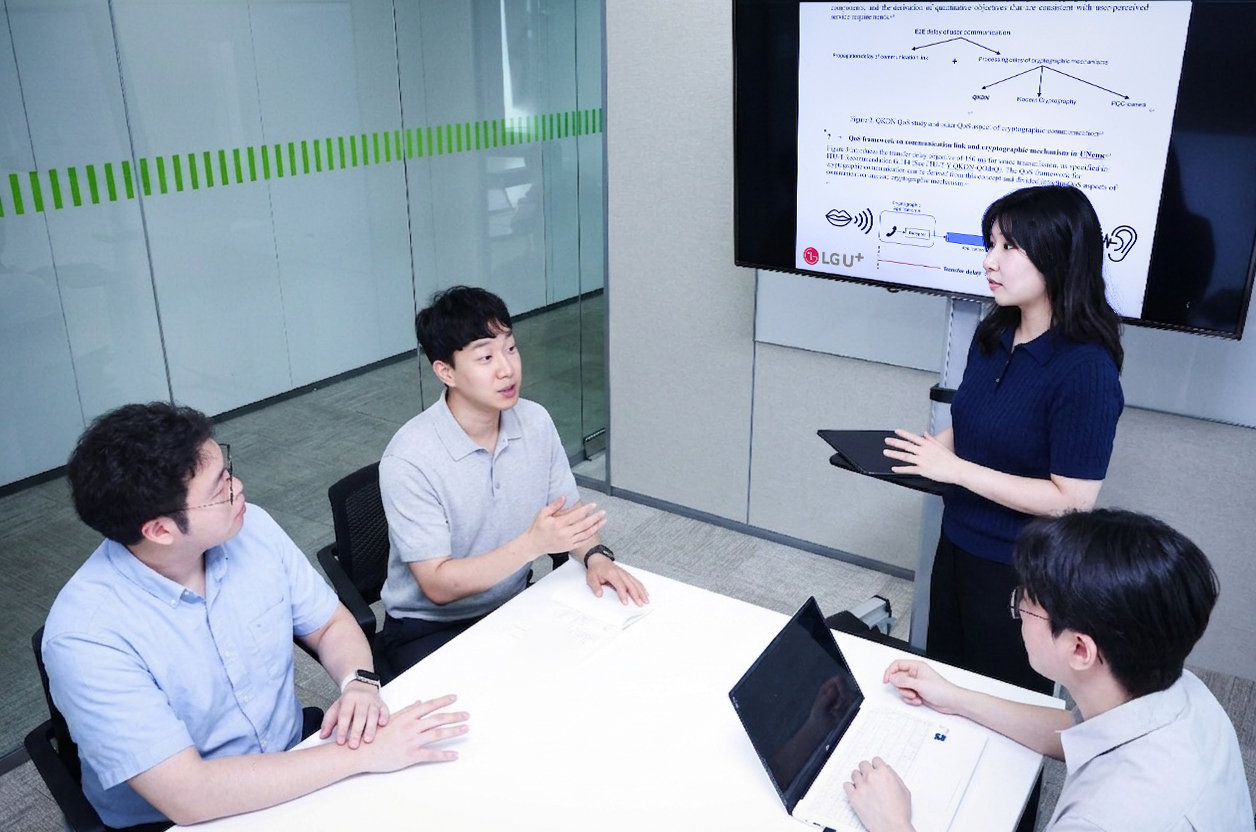
LG Uplus is spearheading efforts to establish international standards for managing the quality of next-generation secure communication technologies. The company recently participated in a meeting of the ITU-T Study Group 13 (SG13) in Geneva, Switzerland, where it proposed development directions for a technology it co-developed with IoT Communications Tech.
The International Telecommunication Union Telecommunication Standardization Sector (ITU-T) is the global body responsible for setting international standards for telecommunication technologies. SG13 focuses on research related to future networks and service quality. The proposals adopted at the meeting will be developed into international standards through consultations among member countries and companies.
The technology in question aims to create systematic quality management criteria for communication environments that utilize advanced security and encryption technologies, such as Post-Quantum Cryptography (PQC) and Quantum Key Distribution (QKD). While these technologies are crucial for next-generation secure communications, their implementation can increase latency due to added encryption, decryption, and key management processes. Maintaining quality comparable to existing communication services is therefore a key challenge.
LG Uplus has proposed quality management standards specifically addressing latency, targeting a delay of less than 0.15 seconds (150ms) for services like voice calls, ensuring users do not experience inconvenience. The company also suggested a method for comprehensively managing both transmission delays within the network and those arising from cryptographic processes. This integrated approach seeks to maintain the quality of existing communication services even with the adoption of advanced security features.
LG Uplus anticipates that if this technology becomes an international standard, global telecom operators, equipment manufacturers, and security firms will be able to systematically manage the quality of encrypted services when implementing next-generation security technologies. Kim Jong-cheol, head of wired technology at LG Uplus, emphasized the importance of both security and perceived quality for customers in future communication environments, stating that the international standardization effort will strengthen the company's technological competitiveness in the global market.
In the next-generation secure communication environment, not only security but also the quality experienced by customers is important. Through international standard development, we will strengthen our technological competitiveness in the global telecommunications market.
DistantNews Editorial
Originally published by Dong-A Ilbo in Korean. Translated, summarized, and contextualized by our editorial team with added local perspective. Read our editorial standards.
More Stories



From Our Blog

What Gets Lost (and Found) When News Is Translated

The Critical Role of Diaspora Media in Global News

What Travellers Should Know About Countries with Restricted Press

A Digital Nomad's Guide to Following Local News

How the Same Story Looks Different in Different Countries
