

Limits of American power in the Middle East: What the Iran deal says about the US's new global strategy
Translated from Romanian, summarized and contextualized by DistantNews.
At a glance
Analysis
Sources not specified
Context piece
- The US-Iran peace agreement implicitly acknowledges the failure of military force to achieve initial US objectives.
- The deal involves significant compromises from the US, including allowing Iran to continue uranium enrichment domestically.
- The agreement includes a gradual easing of economic sanctions, which critics argue could undermine the pressure Washington has built against Tehran.
The recent peace agreement between the United States and Iran signals a significant shift in American strategy, implicitly admitting that military force did not achieve Washington's initial goals. Observers note that the deal, signed in Versailles, represents a major departure from the stringent conditions the US initially demanded regarding Iran's nuclear program.
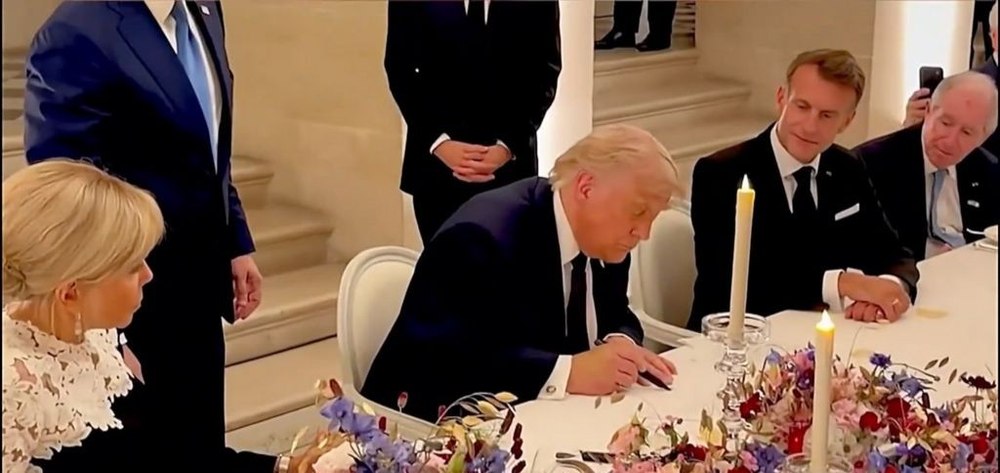
The signing of the memorandum in Versailles – a place associated in collective memory with treaties imposed after major conflicts – drew the attention of international observers.
Before the conflict, the US had insisted on the near-complete elimination of Iran's uranium enrichment capabilities, the transfer of existing enriched nuclear material out of the country, and a ban on new processing facilities. However, the current agreement reflects a much more flexible approach. President Donald Trump acknowledged that Iran would be permitted to continue uranium enrichment within its own territory, citing the nuclear programs of other regional states as a justification.
Furthermore, Washington is no longer demanding the immediate removal of Iran's enriched uranium stockpiles. US officials now accept the possibility of diluting these materials under the supervision of the International Atomic Energy Agency (IAEA), even within Iran. This represents a substantial concession from the initial maximalist demands.
President Donald Trump acknowledged, during the G7 summit in Évian, that Iran would be able to continue enriching uranium on its own territory, arguing that other states in the region also have nuclear programs.
The memorandum also outlines a phased relaxation of economic sanctions. For Iranian oil exports to resume, the US must grant waivers not only for direct trade but also for related services like transportation, insurance, and banking. Experts warn that such measures could weaken the economic pressure system Washington has painstakingly constructed against Tehran over decades. The potential lifting of primary and secondary sanctions, along with international restrictions, could redefine US-Iranian relations in ways unseen since the 1979 Islamic Revolution.
Sanctions experts warn that such a measure would affect the very architecture of the economic pressure system built by Washington against Tehran in recent decades.
DistantNews Editorial
Originally published by Adevărul in Romanian. Translated, summarized, and contextualized by our editorial team with added local perspective. Read our editorial standards.
More Stories

From Our Blog

What Gets Lost (and Found) When News Is Translated

The Critical Role of Diaspora Media in Global News

What Travellers Should Know About Countries with Restricted Press

A Digital Nomad's Guide to Following Local News

How the Same Story Looks Different in Different Countries
