

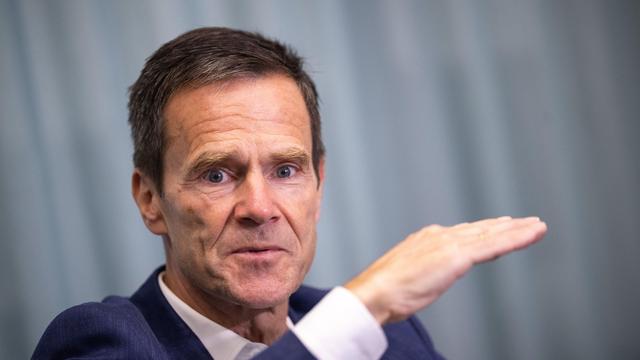

Lindner Criticizes Merz's Capital Pension Remarks, Citing Investment Risks
Translated from German, summarized and contextualized by DistantNews.
At a glance
News
Named sources
Context piece
- German Finance Minister Christian Lindner criticized statements by Friedrich Merz regarding a proposed capital-based pension system.
- Merz suggested the system would stimulate the domestic economy with at least 30 billion euros annually, but Lindner argued investments must be globally diversified.
- While Lindner supports the principle of a capital pension, he disagrees with financing it through additional contributions, citing risks to Germany's economic competitiveness.
German Finance Minister Christian Lindner has voiced criticism regarding comments made by Friedrich Merz, the leader of the conservative CDU party, about a proposed capital-based pension system.
The argument is truly surprising.
Merz had praised the plan, which involves employers and employees contributing 2% of gross income, stating it would inject at least 30 billion euros annually into the German capital market and boost domestic corporate investment. "The argument is truly surprising," Lindner responded, emphasizing that such capital should not be predominantly invested in Germany. He stressed the necessity of global diversification for secure and profitable investments.
The capital that is saved must not be invested predominantly only in Germany. It must be diversified worldwide to have a risk-spread, secure and profitable investment.
While the specifics of how the capital pension funds would be invested remain undecided, experts suggest a significant portion might need to be invested abroad to achieve returns comparable to systems like Sweden's. Anja Mikus, head of the Kenfo fund, noted the importance of disciplined, long-term diversification.
It is crucial that broad diversification is disciplinedly maintained over a long-term investment horizon.
The FDP, Lindner's party, has historically advocated for a capital pension modeled after the Swedish system. Lindner expressed general approval for the concept, acknowledging that millions would gain access to capital markets. However, he strongly opposed financing it through additional contributions, labeling increased labor costs as a "first-class location risk." Lindner believes a capital stock can be built within the existing pension system without raising contributions, through cost-containment measures.
Increasing labor costs further is a first-class location risk.
DistantNews Editorial
Originally published by Der Spiegel in German. Translated, summarized, and contextualized by our editorial team with added local perspective. Read our editorial standards.
More Stories
From Our Blog

What Gets Lost (and Found) When News Is Translated

How the Same Story Looks Different in Different Countries

The Critical Role of Diaspora Media in Global News

What Travellers Should Know About Countries with Restricted Press

A Digital Nomad's Guide to Following Local News
