


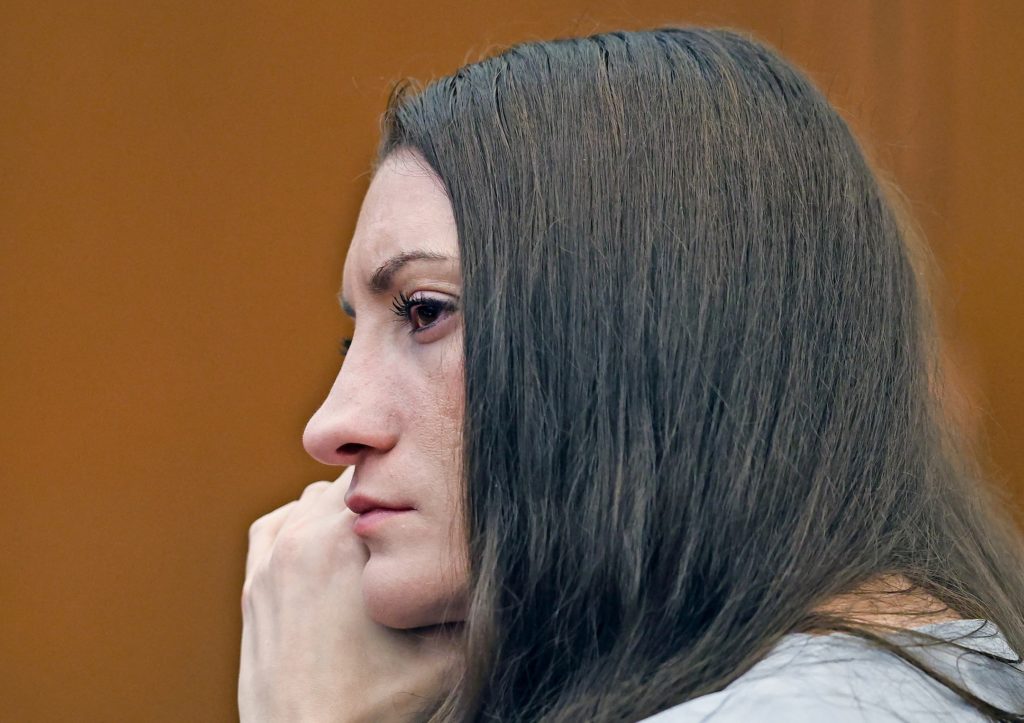
Lindsay Clancy trial: Jurors weigh postpartum psychosis defense in murder case
Translated from English and summarized by DistantNews. Read the original for the full story.
At a glance
News
Sources not specified
Under investigation
- Jurors are deliberating in the murder trial of Lindsay Clancy, a Massachusetts mother accused of killing her three young children.
- Clancy admits to the killings but has pleaded not guilty, arguing she was suffering from postpartum psychosis and cannot be held criminally responsible.
- The trial has highlighted national concerns and questions surrounding gaps in maternal mental health care.
The murder trial of Lindsay Clancy has reached a critical stage, with jurors now deliberating the fate of the former labor and delivery nurse accused of strangling her three young children in January 2023. Clancy does not dispute the act of killing her children, but her defense hinges on a plea of not guilty by reason of insanity, specifically arguing that she was suffering from postpartum psychosis at the time.
When the DA decides to charge someone with a crime, he has the burden of proof, his assistants have the burden of proof to prove that Lindsay at the time killed her children was not suffering from a mental disease or defect that caused her to have a lack of substantial capacity to appreciate, to know, to realize what was being done while she was in a psychosis.
This defense contends that Clancy lacked the substantial capacity to appreciate the nature of her actions or to know that they were wrong due to a severe mental disease or defect. The prosecution, however, argues that despite her mental illness and an attempt to take her own life, Clancy knew the difference between right and wrong and could have conformed her behavior to the law.
All of the evidence that you have heard, even the experts that the commonwealth put before you say that she was suffering from mental illness and she tried to kill herself. That's not the issue in this trial. The issue is whether, at the time she killed Cora, Dawson and Callan she knew the difference between right and wrong, and whether she could conform her behavior to the requirements of the law.
The five-week trial has featured testimony from over 80 witnesses, including family members, first responders, and Clancy's psychiatrists. The central issue for the jury is not whether Clancy committed the killings, but whether she was criminally responsible for her actions while allegedly in the throes of postpartum psychosis, experiencing hallucinations and an inability to act rationally.
So I think you heard it from the closing arguments there, is that what's at issue is not whether she killed her children, but whether she was criminally responsible, whether she was in a state where she was unable to control her actions.
Beyond the courtroom, the case has ignited a broader national conversation about the adequacy of maternal mental health care. It has brought to light critical questions about identifying and treating conditions like postpartum psychosis, and the legal ramifications when these illnesses intersect with severe criminal acts. The outcome of the trial is expected to have significant implications for how such cases are handled and the resources allocated to maternal mental health support.
And that's -- the defense's contention is that she wasn't. She was in the throes of postpartum psychosis, that she heard voices, that she was not able to appreciate what she was doing rationally.
About this summary
Originally published by PBS NewsHour in English. Translated, summarized, and contextualized automatically by DistantNews, with a note on how the source frames the story. Not individually reviewed before publishing. How this works.
More Stories



From Our Blog

How the Same Story Looks Different in Different Countries

What Gets Lost (and Found) When News Is Translated

The Critical Role of Diaspora Media in Global News

What Travellers Should Know About Countries with Restricted Press

A Digital Nomad's Guide to Following Local News
