


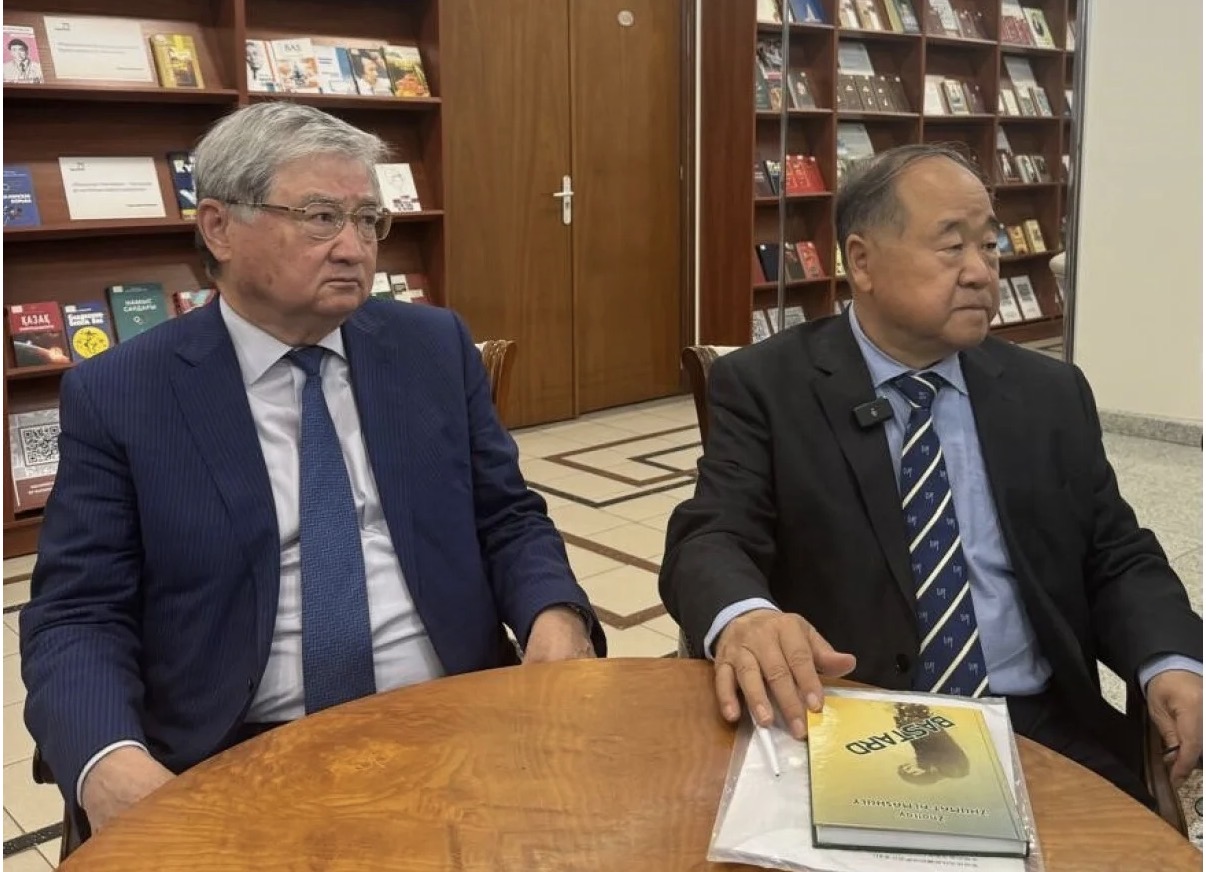
Literary Giant Mo Yan Visits Kazakhstan, Celebrated as Triumph for Eastern Culture
Translated from English, summarized and contextualized by DistantNews.
At a glance
In-depth
Sources not specified
Context piece
- Chinese novelist Mo Yan, Nobel laureate, was welcomed in Astana, Kazakhstan, in June 2026.
- The author's visit highlights China's growing influence in global literature and culture.
- Mo Yan's works, particularly "Big Breasts and Wide Hips," resonate with Kazakh cultural values, especially regarding family and the desire for sons.
Kazakhstan welcomed Chinese Nobel laureate Mo Yan in Astana in June 2026, celebrating his literary achievements and his role in bringing Eastern culture to global prominence. The visit underscores the increasing recognition of Chinese literature on the world stage.
Mo Yan, who won the Nobel Prize in Literature in 2012, has solidified his reputation through subsequent works, proving his worthiness of the award. His visit is seen as a significant moment for Eastern culture, reflecting a historical shift where the East, once perceived as "sleeping," is now awakening and making a substantial impact on the world through its cultural and scientific contributions.
The article draws a parallel between Mo Yan's creation of Gaomi County in Shandong Province and William Faulkner's Yoknapatawpha County, suggesting Mo Yan's prose will be remembered for its unique blend of Chinese folklore and magical realism. His novel "Big Breasts and Wide Hips" is compared to other great family sagas in world literature, including works by Thomas Mann, John Galsworthy, and Gabriel García Márquez.
Notably, the novel's themes deeply resonate with Kazakh cultural values. The narrative of a mother bearing a son after seven daughters strikes a chord with Kazakh traditions that traditionally place special value on sons as continuers of the family line. This shared sentiment is reflected in Kazakh naming practices, where many female names, such as Ulbosyn, Ulmeken, Ulzhan, or Uldana, express the wish for a son, mirroring the wishes of Mo Yan's heroines.
DistantNews Editorial
Originally published by The Astana Times in English. Translated, summarized, and contextualized by our editorial team with added local perspective. Read our editorial standards.
More Stories



From Our Blog

What Gets Lost (and Found) When News Is Translated

The Critical Role of Diaspora Media in Global News

What Travellers Should Know About Countries with Restricted Press

A Digital Nomad's Guide to Following Local News

How the Same Story Looks Different in Different Countries
