


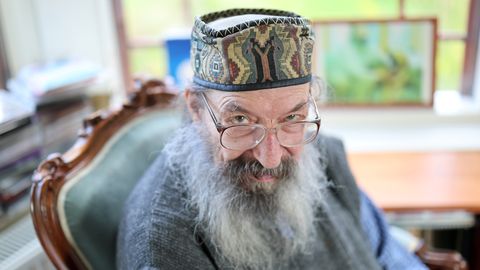

Live to eat!
Translated from Estonian and summarized by DistantNews. Read the original for the full story.
At a glance
In-depth
Documents & data
Context piece
- The article contrasts a Japanese newsroom’s harsh expectations for women with the character Kajii’s refusal to restrict what she eats.
- It cites the World Economic Forum’s 2025 gender-gap rankings, which placed Estonia 11th, Iceland first and Japan 118th among 148 countries.
- It argues that mass popularity does not automatically make a work inferior, and that entertainment can carry meaningful ideas.
Journalist Rita is the only woman in her newsroom. The work culture is so demanding that employees take a day off only once every several years, when a relative dies. Women face unrealistic expectations about their appearance: at 166 centimeters tall, gaining weight beyond 55 kilograms can bring taunts about being fat and constant demands to pull themselves together.
Kajii defies that attitude. She eats what she wants and becomes plump. The article asks where the line between right and wrong lies in a culture that imposes such judgments.
Although Japan now has a female prime minister, the country remained far behind other democratic Western countries in the World Economic Forum’s 2025 global gender-gap index. Iceland ranked first, Estonia 11th and Japan 118th among 148 countries. Pakistan ranked last.
The article discusses Asako Yuzuki’s bestselling novel Butter, first published in Japanese in 2017. It has sold more than 1.7 million copies in 40 countries. Its international success, the article argues, does not automatically make it bad literature. Entertainment, too, can contain something worth thinking about.
About this summary
Originally published by Postimees in Estonian. Translated, summarized, and contextualized automatically by DistantNews, with a note on how the source frames the story. Not individually reviewed before publishing. How this works.
More Stories

/nginx/o/2026/07/12/17778202t1hfe01.jpg)
From Our Blog

News in Translation: What Gets Lost, and How We Keep the Framing

Diaspora Media: How Communities Follow News From Home

Traveling Where the Press Is Not Free: How to Read the News There

The Digital Nomad's Guide to Local News

The Same Story, Different Countries: How Coverage Changes at the Border
