


Love Letters Between Bioy Casares and Elena Garro Published
Translated from Spanish, summarized and contextualized by DistantNews.
At a glance
In-depth
Sources not specified
Context piece
- A new book, "Adolfo Bioy Casares's Reading in Elena Garro's Archive," publishes their love letters from 1951.
- The correspondence reveals a rational yet passionate affair between the two literary figures.
- The letters offer insight into their intellectual lives and the Parisian context of their meeting.
A newly published collection of letters offers an intimate glimpse into the passionate, albeit brief, romantic entanglement between renowned writers Adolfo Bioy Casares and Elena Garro.
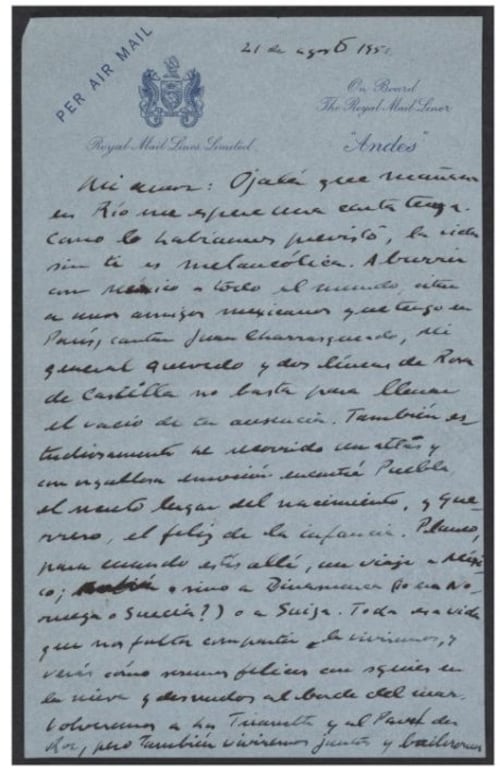
"Adolfo Bioy Casares's Reading in Elena Garro's Archive," meticulously compiled and edited by Rubén Mendieta, presents facsimiles of the original manuscripts, showcasing Bioy Casares's handwriting and occasional sketches. The letters, primarily exchanged between March and December 1951, reveal a deep intellectual connection and a fervent courtship.
All love letters are ridiculous. They would not be love letters if they were not ridiculous.
José María Espinasa's prologue frames Bioy Casares's writing as imbued with seductive intent, noting his description of the horizon as a feminine figure. The collection contextualizes their relationship within the post-war Parisian intellectual scene where they met. Despite both Bioy Casares and Garro being in existing relationships, the letters suggest Garro was prepared to leave her husband for Bioy Casares.
…he conceived the horizon as a feminine figure, although its profile changed every instant, he was not only gallant and seductive but also infatuated.
The correspondence, while documenting intense romantic encounters and a constant exchange across distance, is characterized by a rational and moderated love. Bioy Casares's letters express profound longing, desolation, and a sense of emptiness, repeatedly conveying his deep affection and need for Garro with endearments like "My dear, my love, my life, adored."
This publication not only serves as evidence of their love but also provides valuable insight into the literary and personal lives of two significant figures in Latin American literature, capturing a specific moment in their shared history and the cultural milieu of the time.
My dear, my love, my life, adored. I love you more than anyone. I need you. Do not be surprised that I love you so much. When I woke up and discovered my desolation...
DistantNews Editorial
Originally published by El Universal in Spanish. Translated, summarized, and contextualized by our editorial team with added local perspective. Read our editorial standards.
More Stories


From Our Blog

What Press Freedom Means for the News You Read

What Gets Lost (and Found) When News Is Translated

The Critical Role of Diaspora Media in Global News

What Travellers Should Know About Countries with Restricted Press

A Digital Nomad's Guide to Following Local News
