


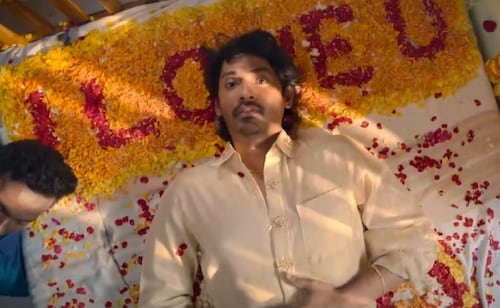
"Love, Love, Wedding" Film Exposes India's Rigorous Traditions
Translated from Spanish, summarized and contextualized by DistantNews.
At a glance
In-depth
Sources not specified
Context piece
- A new film, "Amor, amor, boda" (Love, Love, Wedding), explores the rigidity of Indian traditions surrounding marriage.
- The movie humorously depicts a newlywed couple challenging customs, such as the wife not moving to her husband's family home.
- It contrasts Western wedding norms with the multi-day, elaborate ceremonies common in India and questions the concept of marriage as an individual union versus a clan integration.
The film "Amor, amor, boda" (Love, Love, Wedding) delves into the complexities and often rigid nature of traditions in India, particularly concerning marriage. The movie, shot in southern India, uses humor to question whether any tradition should dictate the path of a newly married couple.
The central conflict arises when the bride, Pavi, refuses to move to her husband's family home after the wedding, a customary practice. Her husband, Elan, ultimately moves in with her parents instead. This decision sparks a series of comedic entanglements that simultaneously highlight and question the relevance of Indian customs.
While Western weddings are typically a one or two-day affair, Indian ceremonies span multiple days, involving numerous rituals, celebrations, and guests, often with a significant budget. The film also exposes the concept of the 'resident son-in-law,' a man who lives with his wife's family, a position often viewed negatively or even condemned in India.
Furthermore, "Amor, amor, boda" touches upon the idea that marriage in India signifies the integration of two family clans, complete with their customs, values, and opinions. This contrasts sharply with the Western perception of marriage as primarily an individual union. The film is available on Netflix.
DistantNews Editorial
Originally published by El Universal in Spanish. Translated, summarized, and contextualized by our editorial team with added local perspective. Read our editorial standards.
More Stories



From Our Blog

What Press Freedom Means for the News You Read

What Gets Lost (and Found) When News Is Translated

The Critical Role of Diaspora Media in Global News

What Travellers Should Know About Countries with Restricted Press

A Digital Nomad's Guide to Following Local News
