


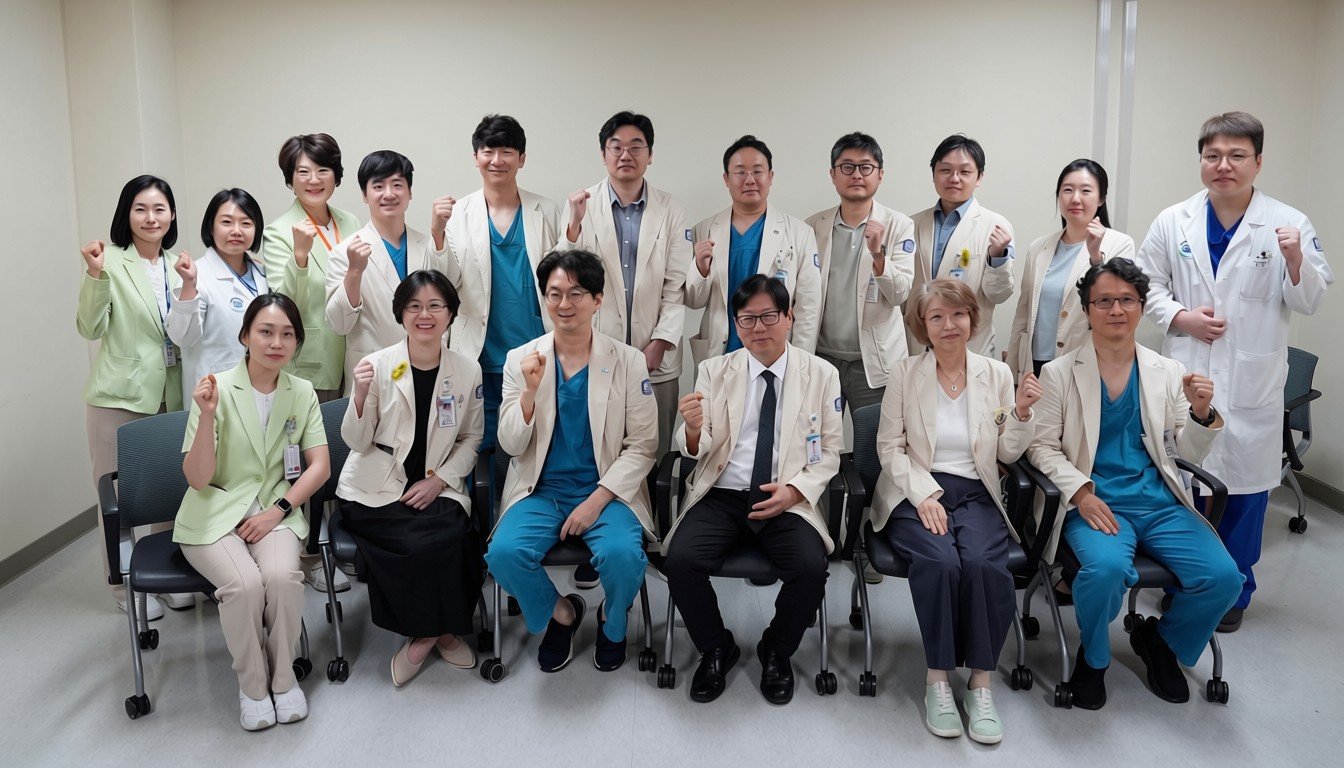
Lu-177 treatment shows promise for prostate cancer patients unresponsive to drugs
Translated from Korean and summarized by DistantNews. Read the original for the full story.
At a glance
News
Official statement
Outcome reported
- Seoul St. Mary’s Hospital has delivered 200 Lu-177 PSMA treatments to 84 patients with metastatic prostate cancer since beginning the therapy in November 2020.
- The treatment targets PSMA proteins found at higher levels on prostate cancer cells and uses beta radiation to damage cancer-cell DNA.
- The hospital combines the therapy with imaging, multidisciplinary consultations and participation in clinical trials for new PSMA theranostic drugs.
Seoul St. Mary’s Hospital has reached 200 administrations of South Korea’s first Lu-177 PSMA nuclear medicine treatment for metastatic prostate cancer, offering another option to patients whose disease no longer responds to conventional therapies.
The hospital began the treatment on Nov. 2, 2020, and had administered it to 84 patients by the 21st of the previous month. The treatment addresses metastatic castration-resistant prostate cancer, a condition in which disease continues despite therapies that suppress male hormones. As the cancer advances, treatment choices become more limited and doctors must consider each patient’s previous therapies and overall condition.
The 200-treatment milestone means that Seoul St. Mary’s Hospital has the experience and capacity to systematically carry out the entire process of prostate cancer theranostics.
Lu-177 PSMA therapy uses the PSMA protein, which appears much more frequently on prostate cancer cells, especially cells involved in advanced metastases, than on normal cells. Doctors first use imaging to assess PSMA expression and determine how far the tumor has spread. Eligible patients then receive a radiopharmaceutical intravenously. It travels through the bloodstream, attaches selectively to cancer cells and releases beta radiation over a range of only a few millimeters, damaging their DNA while limiting effects on nearby normal tissue.
For metastatic castration-resistant prostate cancer, whose treatment options are limited even after hormone therapy and chemotherapy, it is meaningful for patients that nuclear medicine treatment can be considered together with surgery, drug therapy and radiation within multidisciplinary care.
The approach is known as theranostics because it uses the same target for diagnosis and treatment. Seoul St. Mary’s says its urology, medical oncology, radiation oncology, radiology, pathology and nuclear medicine specialists regularly review treatment suitability, side effects and response together. The hospital also participates in clinical trials of PSMA theranostic drugs developed by companies in South Korea and abroad.
Nuclear medicine professor Oh Joo-hyun said the 200-treatment milestone showed the hospital had the experience and capacity to manage the full prostate cancer theranostics process. Urologist Ha Yoo-shin said nuclear medicine treatment could now be considered alongside surgery, drugs and radiation within multidisciplinary care. Hospital director Lee Ji-yeol said an on-site facility for diagnostic radiopharmaceuticals supports the link between imaging and treatment planning.
We will expand our participation in theranostics clinical trials in South Korea and abroad and help more patients benefit from radioligand therapy.
About this summary
Originally published by Dong-A Ilbo in Korean. Translated, summarized, and contextualized automatically by DistantNews, with a note on how the source frames the story. Not individually reviewed before publishing. How this works.
More Stories


From Our Blog

What Gets Lost (and Found) When News Is Translated

The Critical Role of Diaspora Media in Global News

What Travellers Should Know About Countries with Restricted Press

A Digital Nomad's Guide to Following Local News

How the Same Story Looks Different in Different Countries
