


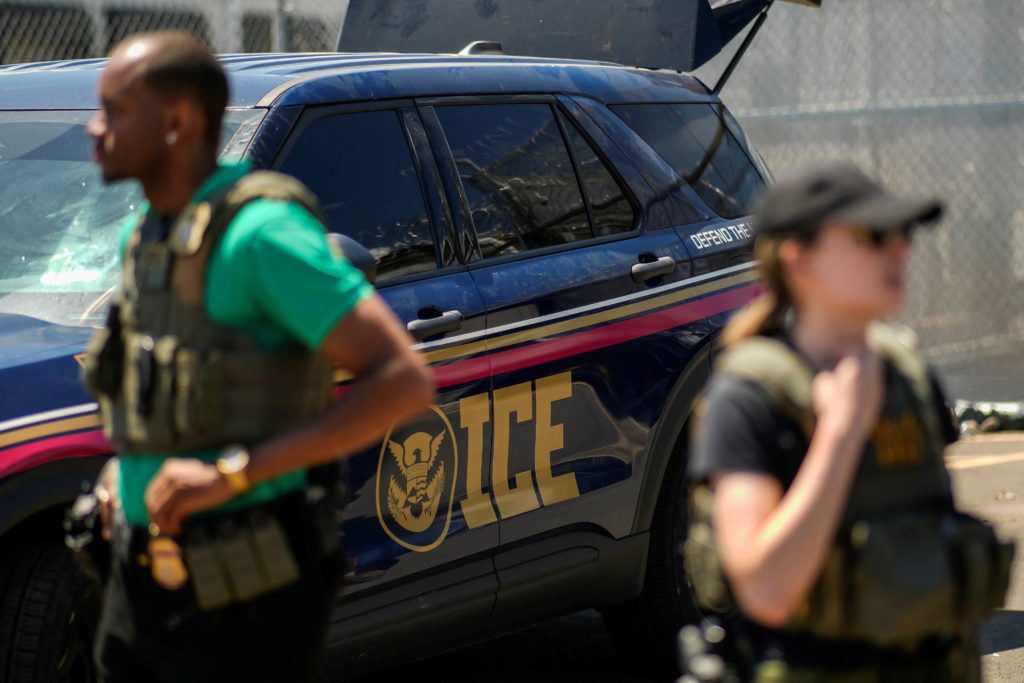
Maine shooting and officer's background raise new questions about ICE's rapid hiring
Summarized and contextualized by DistantNews.
At a glance
News
Named sources
Context piece
- Immigration and Customs Enforcement has rapidly expanded its workforce, hiring thousands of new officers under the Trump administration.
- Concerns exist regarding the agency's vetting practices for new hires, particularly after an ICE officer involved in a Maine shooting reportedly struggled with mental health issues.
- The Department of Homeland Security defends its rigorous vetting process, despite evidence suggesting some applicants with questionable histories were hired.
Immigration and Customs Enforcement has significantly expanded its workforce, hiring thousands of new officers as part of the Trump administration's push to increase immigration arrests and deportations. This rapid growth, fueled by substantial congressional funding, has prompted concerns about the agency's hiring practices and the thoroughness of vetting for new personnel.
These concerns have been amplified by revelations about the ICE officer involved in a recent shooting in Maine. Relatives of the officer, David Brouillette, told The Associated Press that he had long-standing mental health struggles and questioned whether he should have been allowed to carry a badge and firearm.
he struggled with serious mental health issues since early childhood and never should have been given a badge and gun to patrol American streets.
The precise details of Brouillette's hiring remain unclear, but his case highlights broader questions about ICE's hiring spree. While the Department of Homeland Security maintains that its vetting process is rigorous, an earlier Associated Press investigation indicated that some applicants with concerning backgrounds may not have been fully vetted or were hired despite past issues.
ICE's former acting director, Todd Lyons, previously expressed pride in the hiring campaign, which attracted over 220,000 applications. He stated that the expansion of a well-trained and vetted workforce would bolster ICE's capacity to implement the administration's agenda. The vetting process typically involves reviewing criminal histories, credit scores, and conducting background investigations, which can be time-consuming. ICE also offered signing bonuses and lowered the recruitment age to 18, while indicating that college degrees were not always required.
This expansion of a well-trained and well-vetted workforce will help further ICE's ability to execute the president's and secretary's bold agenda.
DistantNews Editorial
Originally published by PBS NewsHour. Summarized and contextualized by our editorial team with added local perspective. Read our editorial standards.
More Stories


From Our Blog

How the Same Story Looks Different in Different Countries

What Gets Lost (and Found) When News Is Translated

The Critical Role of Diaspora Media in Global News

What Travellers Should Know About Countries with Restricted Press

A Digital Nomad's Guide to Following Local News
