


Major fire at Pyeongtaek hazardous materials site triggers national mobilization
Translated from Korean, summarized and contextualized by DistantNews.
At a glance
News
Official statement
Ongoing story
- A fire broke out at a hazardous materials storage facility in Pyeongtaek, Gyeonggi Province, South Korea.
- Authorities issued a national fire mobilization order due to the large quantity of hazardous materials, including 1.91 million liters of flammable liquids.
- Firefighters contained the blaze, preventing it from spreading to adjacent buildings, and no casualties were reported.
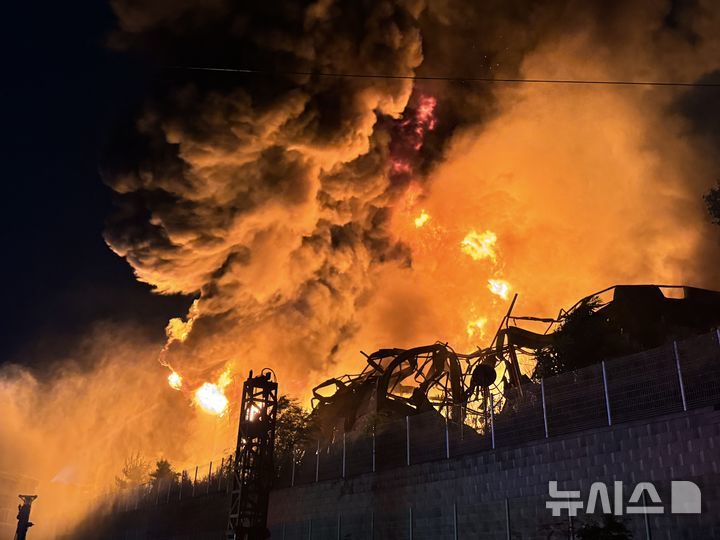
A major fire erupted at a hazardous materials storage facility in Pyeongtaek, Gyeonggi Province, prompting a national fire mobilization order. The blaze began around 12:03 AM on Tuesday at a logistics center storing approximately 1.91 million liters of hazardous substances, including alcohols and petroleum products.
The scale of the fire and the presence of vast quantities of flammable materials led the Gyeonggi Provincial Fire and Disaster Headquarters to escalate the response. Initially, a Level 1 response was declared, but as flames erupted from the building's exterior, it was upgraded to Level 2. Firefighters were instructed to maintain a safe distance and use long-range water cannons to combat the fire.
Concerns about the fire spreading led to the issuance of a national fire mobilization order at 3:39 AM. This brought in resources from neighboring provinces, including Chungnam and Daejeon, with a total of 102 pieces of equipment and 255 personnel deployed to the scene. Efforts focused on establishing a defensive line to prevent the fire from engulfing nearby warehouses and facilities.
By 5:16 AM, the fire was brought under control, and the response level was lowered back to Level 1. The fire spread to two of the facility's seven buildings but was contained. Fortunately, there were no reported injuries or fatalities. The exact cause of the fire and the extent of the damage are under investigation.
DistantNews Editorial
Originally published by Hankyoreh in Korean. Translated, summarized, and contextualized by our editorial team with added local perspective. Read our editorial standards.
More Stories

From Our Blog

What Gets Lost (and Found) When News Is Translated

The Critical Role of Diaspora Media in Global News

What Travellers Should Know About Countries with Restricted Press

A Digital Nomad's Guide to Following Local News

How the Same Story Looks Different in Different Countries
